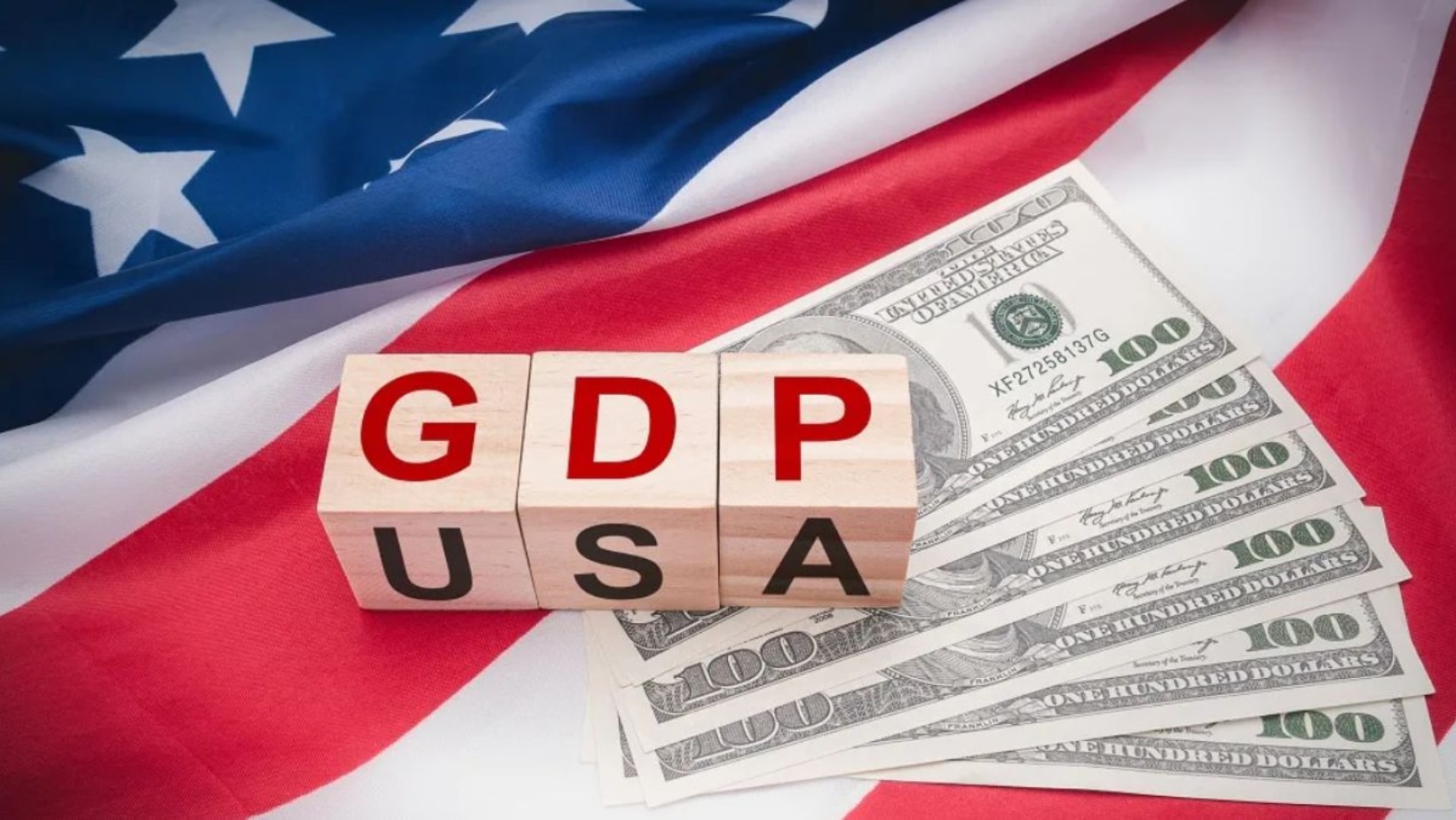
The US economy grew more slowly than previously estimated in the final months of last year. The US Bureau of Economic Analysis (BEA) said on Friday that Gross Domestic Product (GDP) expanded at an annualised rate of 0.7% in the fourth quarter, lower than the earlier estimate of 1.4%.
The revised figure also fell short of market expectations. The slowdown shows weaker activity across several parts of the economy, including exports, consumer spending, government spending and investment.
“Real GDP was revised down 0.7 percentage point from the advance estimate, reflecting downward revisions to exports, consumer spending, government spending, and investment. Imports decreased less than previously estimated,” the BEA explained in its press release.
The Commerce Department also confirmed that the economy grew at 0.7% during the October–December period, a sharp drop from the initial estimate. According to the department, the downgrade mainly came from weaker exports, consumer spending, government spending and investment.
Full-year growth slightly lower
For the full year, the US economy expanded 2.1% in 2025, slightly below the earlier estimate of 2.2%.
The weaker growth comes during the first full year after President Donald Trump returned to office. The economy had grown much faster earlier in the year, expanding at an annual rate of 4.4% in the third quarter.
When the first GDP estimate was released, Trump blamed the slower growth on the impact of a prolonged government shutdown that took place late last year. The shutdown lasted 43 days and economists say it weighed on economic activity.
Domestic demand
Another key measure of demand in the economy also weakened. Final sales to private domestic purchasers, which excludes government spending, trade and inventories, grew at a 1.9% pace in the fourth quarter. This was revised down from the earlier estimate of 2.4%.
This measure is closely watched by policymakers because it indicates underlying domestic demand. In comparison, the same measure had grown 2.9% in the July–September quarter, showing a clear slowdown in economic momentum.
Inflation remains a concern
Inflation pressures are still a concern for policymakers. The personal consumption expenditures (PCE) price index, the Federal Reserve’s preferred inflation measure, rose 0.3% in January, bringing the annual rate to 2.8%.
Economists had expected a yearly rate of 2.9%.
When food and energy prices are excluded, core PCE inflation rose 0.4% in January and 3.1% over the past year. The core figure is closely watched by the Federal Reserve as it provides a clearer picture of long-term inflation trends. The monthly reading was 0.1 percentage point higher than December.
Weak durable goods orders
Another report from the Commerce Department showed that orders for durable goods, products such as transportation equipment, appliances and computers were unchanged in January.
Economists had expected orders to rise 1.3%, though the latest figure was still better than the 0.9% drop in December. When transportation equipment is excluded, orders increased 0.4%.
“The big downward revision in GDP is a gut check going into this energy crunch, increasing the risk of stagflation,” said David Russell, global head of market strategy at TradeStation to CNBC.
“The soft January durable goods data also suggests the economy entered this crisis weaker than hoped. This creates challenges for investors with PCE inflation still running well above the Fed’s target,” he added.
Energy prices and global tensions
The data also comes at a time when global tensions are rising. Energy prices have surged since the United States and Israel launched attacks on Iran on February 28.
Brent crude, the international oil benchmark, touched $100 per barrel on Thursday, raising concerns about higher inflation and slower economic growth.
The report also comes ahead of a US Supreme Court decision that voided several tariffs imposed by President Trump under the International Emergency Economic Powers Act. Economists believe those tariffs had added around half a percentage point or slightly more to inflation.
“The inflation data tells us that the inflation picture wasn’t looking good even before the Middle East crisis,” said Sonu Varghese, chief macro strategist for the Carson Group to CNBC.
“An already large headache for the Federal Reserve is going to turn into an even larger one, and it’s likely the Fed will not cut rates in 2026 and may even start talking about rate hikes later this year,” he added.
Regardless of the slower economic growth, personal income and spending both increased by 0.4% in January. Economists had expected income to rise 0.5% and spending 0.3%.
Disclaimer: This article provides factual analysis only and is not, and should not be construed as, an offer, solicitation, or recommendation to buy or sell securities. Investors must conduct their own independent due diligence and seek advice from a registered financial advisor in the respective jurisdiction.