US markets are trading lower today as oil prices rise sharply due to the Iran conflict. Brent crude has jumped to around $106–$111 per barrel, WTI crude is trading near $97–$100.
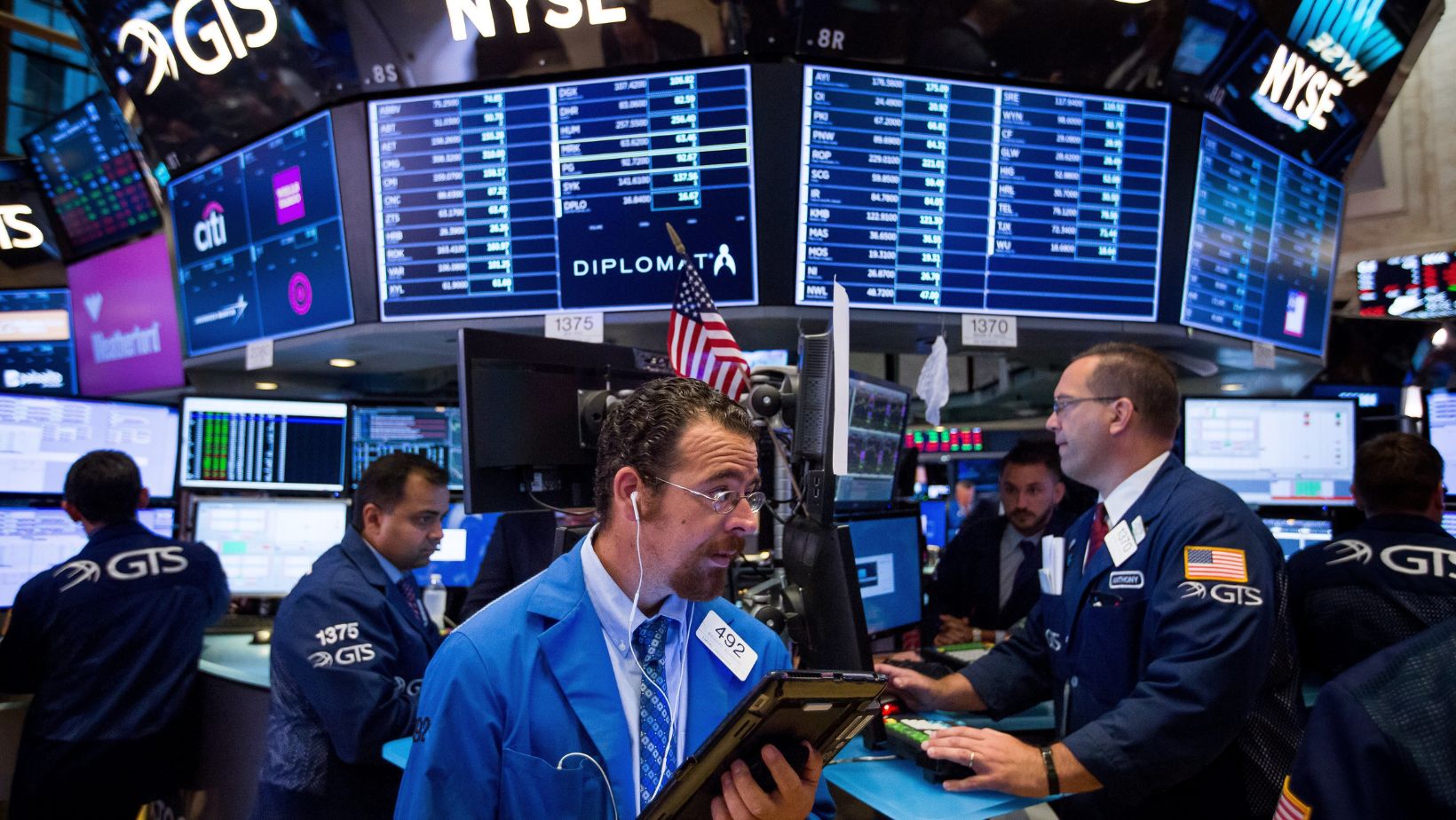
At 10:15 AM ET, major US stock market indices were in the red. The Dow Jones fell 453.10 points, or 0.98%, to 45,772.05. The S&P 500 dropped 53.03 points, or 0.80%, to 6,571.67, while the Nasdaq declined 213.36 points, or 0.96%, to 21,939.06.
War-driven uncertainty
The ongoing conflict involving Iran, the US, and Israel has increased fears of a wider regional war. Attacks on key energy facilities have raised risks for global supply chains, keeping markets on edge. US Defence Secretary Pete Hegseth said the military operation is “on plan,” but did not provide a timeline for when it may end.
Key energy routes at risk
The conflict has disrupted global energy markets and raised concerns about crucial shipping routes like the Strait of Hormuz, a key passage for global oil supply.
“The core dilemma of the entire situation remains the same: the US and Israel have ‘won’ the war in a conventional sense, but there doesn’t seem to be a military solution…,” said Adam Crisafulli of Vital Knowledge to CNBC.
Surge in oil and energy prices
Energy prices have jumped after attacks on major gas fields and facilities, including South Pars and Ras Laffan in Qatar. This has increased worries about inflation worldwide.
Higher oil prices usually push up costs across sectors, which negatively impacts markets. Natural gas prices have also increased by over 6% to $3.26, showing a strong global energy shock. Higher oil prices are increasing inflation worries and creating panic for the investors.
Inflation concerns remain strong
Recent US inflation data has been higher than expected, even before the Iran conflict escalated. This has strengthened fears that inflation will stay elevated for longer. The Fed also noted that while the economy is growing steadily, job growth is limited and inflation remains slightly high.
Pressure on gold and silver
Gold and silver prices have fallen sharply, with gold down over 5% and silver plunging more than 11%. Higher interest rates reduce the appeal of non-yielding assets like gold. At the same time, market volatility and policy uncertainty have led to a broader selloff in precious metals.
Uncertainty over future rate cuts
However, the Federal Reserve has indicated there could be one rate cut this year, the timing remains unclear. Some experts believe rate cuts may not happen soon.
“I think we’ve seen the last rate cut, and I think the next move will be a hike,” Jim Bianco, president of Bianco Research, told CNBC on Wednesday ahead of the Fed announcement.
Mixed signals on US economic growth
Fed expects the US economy to grow by 2.4% this year, slightly higher than earlier estimates. However, not everyone is convinced. Jeffrey Roach said the Federal Reserve appears to be in a holding pattern as it deals with uncertain economic conditions.
Disclaimer: This article provides factual analysis only and is not, and should not be construed as, an offer, solicitation, or recommendation to buy or sell securities. Investors must conduct their own independent due diligence and seek advice from a registered financial advisor in the respective jurisdiction.