The ending of the Iran war appears uncertain, as negotiations are ongoing, but the outcome remains unclear. For the world and the markets, if the war prolongs, it’s a worrying sign. Oil prices have already jumped over 40% since the Middle East conflict began.
US stock market leading indices, such as the Dow and the S&P 500, have been down since the war began. What is more concerning is that rising oil prices have a direct and immediate impact on other assets and economic indicators. All major financial indicators, including the US dollar, bond yields, inflation, interest rates, stocks, and gold prices, are being affected by the Iran war.
US Dollar Strengthening
The US dollar began to strengthen the day the war started, almost a month ago. The US dollar index, which weakened by almost 12% in 2025 and went to as low as 96.22, now trades around 99.60, having crossed 100 recently. In the last month, the US dollar index has gained nearly 2%.
One of the reasons for the dollar to come back strongly is that the oil trade still happens in dollars. With oil prices rising amidst supply shocks arising from bottlenecks in the Strait of Hormuz, the dollar has risen to its lost glory. Around one-fifth of global supply for oil and liquified natural gas (LNG) normally flows through the Strait of Hormuz.
Rising Inflationary Risks
The US dollar’s strengthening due to elevated oil prices is just one aspect of the situation. Rising oil costs also add to inflation. US economy has been witnessing higher rates for the last 2-3 years. Although inflation has come down from as high as June 9.1% in 2022 to around 2.4% in February 2026, it remains sticky.
US Fed was expected to cut at least twice in 2026 before the war began; however, the scenario looks just the opposite now. While the Fed officials are signalling a softer stance, some voices are pointing towards a rate hike in the months ahead. A US Fed rate hike is likely possible if war-induced oil price increases drive long-term inflation in the economy. As of now, the US Fed is projected to hold rates steady for a major part of 2026.
“Policy makers are already facing difficult trade-offs. Raising rates to control inflation risks deepening the slowdown. Cutting rates to support growth risks fuelling further inflation. “Clearly, neither path is straightforward,” says Nigel Green, CEO, deVere Group.
Bond Yields
Bond yield is another key indicator showing the rate path ahead. Markets expect rates to move higher or stay higher for longer, with focus returning to the US Fed’s FOMC meetings in the year ahead.
Both 5-year and 10-year US bond yields have spiked in the last 30 days. Federal Reserve’s policy decisions initially impact short-term rates, whereas longer-term yields are affected by growth predictions, inflation patterns, fiscal policy, and movements in market confidence. Therefore, we see the 5-year yield rising much more than the 10-year bond yield.
Gold and Silver Prices
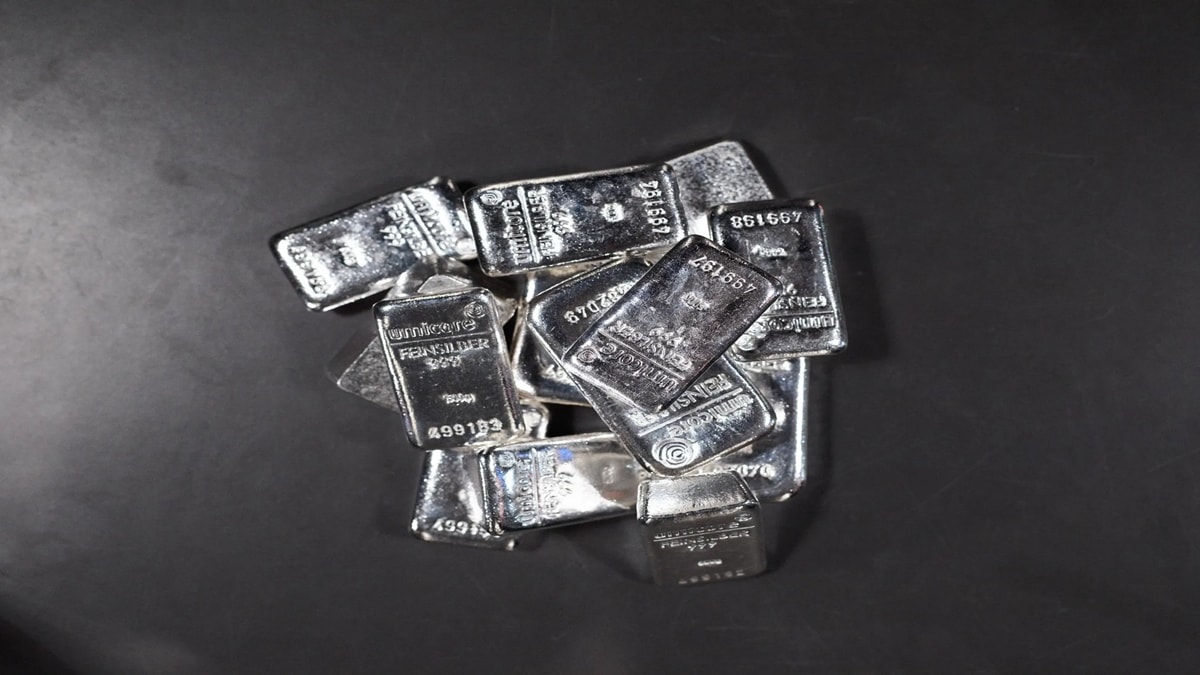
Precious metals like gold and silver thrive around uncertainty and amidst rising geopolitical risks. However, this time, both gold and silver prices fell after the outbreak of the Iran war. Silver dropped over 45%, and gold shed 20% from their peaks in the last 30 days.
During wartime, liquidity crises become a major concern, at least in the early stages. Following the bull run of the last 2-3 years, traders, investors, and institutions began selling gold and silver, on which they were sitting on profits. Increased margin calls on their positions in other assets also led to a selling spree, driving prices lower.
“I suspect we’ll continue to see ebbs and flows, but for now, the stronger dollar and elevated oil prices are creating some headwinds for gold, even as prices remain near record highs. How long those pressures persist will depend largely on the trajectory of the conflict and its knock-on effects on inflation and interest rate expectations,” says Rick Kanda, Managing Director at The Gold Bullion Company.
What’s Ahead
History indicates that oil price spikes caused by geopolitical shocks and temporary supply disruptions tend to be brief. Brent trades once again above $104, and gold and silver prices are down 2%, trading around $4,444 and $69 on Thursday.
Investors are closely watching the evolving situation in the Middle East. Negotiations are underway, with the Trump administration presenting a 15-point proposal to Iran through Pakistan. However, Iranian authorities, while reviewing the proposal, show no willingness to engage in talks, rejecting a US ceasefire offer and instead proposing a five-point plan that asserts control over the Strait of Hormuz.
“US appears open to a de-escalation pathway, Iran’s posture suggests a prolonged disruption risk, keeping energy markets tight and volatility elevated. This is already reflected in rising US bond yields and widening oil benchmarks, with second-order effects building across currencies and asset classes,” says Somnath Mukherjee, CIO, ASK Private Wealth.
Disclaimer: This article provides factual analysis only and is not, and should not be construed as, an offer, solicitation, or recommendation to buy or sell securities. Investors must conduct their own independent due diligence and seek advice from a SEBI-registered financial advisor.