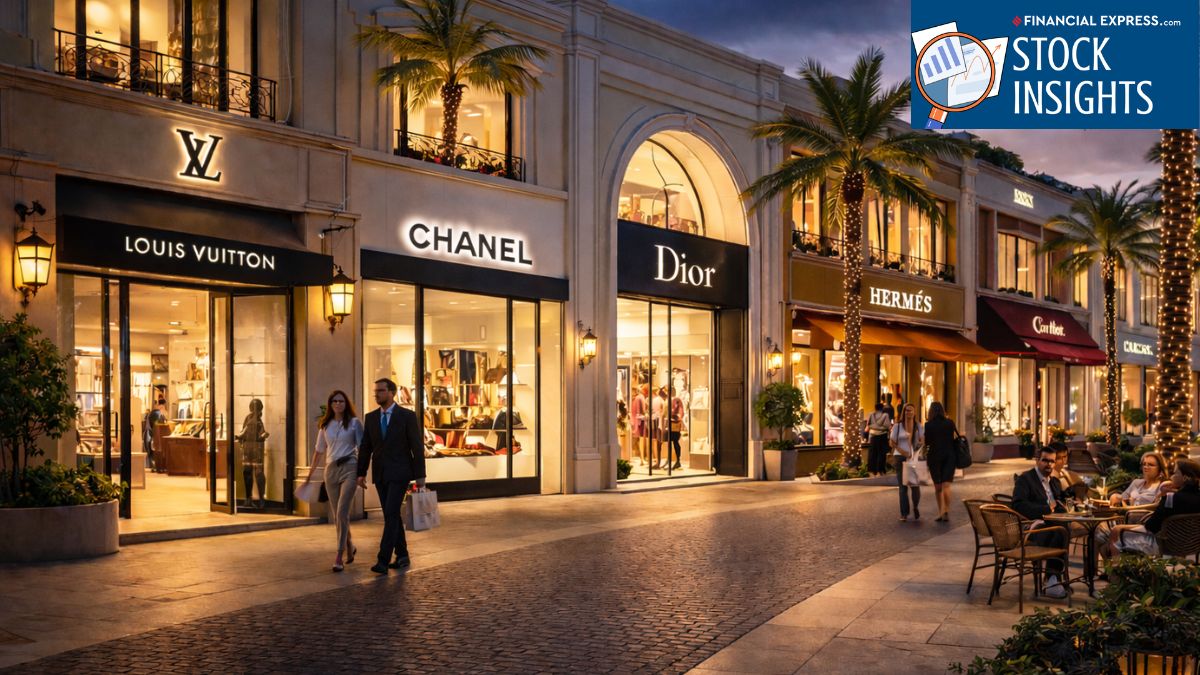
In February 2026, Cartier unveiled a high-jewellery exhibition at Dubai’s Keturah Park. Louis Vuitton staged an elaborate brand show at the Jumeirah Marsa Al Arab hotel. Sephora launched its first Saudi-origin beauty brand. These were not tentative experiments. They were deliberate, capital-heavy commitments to what Bain & Company had just called “luxury’s brightest performer.”
Days later, Iranian missiles streaked across Dubai’s sky. Debris struck a five-star hotel. And the entire premise was thrown into question.
Now, six weeks into the conflict, a two-week ceasefire offers the first real pause. Markets have responded with relief, oil prices dropped sharply, and equity futures jumped within minutes of the announcement. For the global luxury industry, the question is no longer just about damage assessment. It is about what kind of recovery is possible, and how quickly.
The $100 Billion Wipeout: LVMH, Hermès, and the Gulf Standstill
The numbers are stark. By the end of March, roughly $100 billion in market capitalisation had been erased from major luxury conglomerates. LVMH shares fell 28% in Q1 2026. Hermès fell over 20%. Cartier-owner Richemont shed 17%. Investor sentiment in luxury had become the most bearish in years.
The operational disruption was equally swift. Kering, owner of Gucci and Saint Laurent, shuttered stores across four countries. LVMH brands including Louis Vuitton and Dior shut doors. The Chalhoub Group, which operates around 900 stores across the Gulf for brands including Versace and Jimmy Choo, fully closed its Bahrain operations. Dubai International Airport, one of the world’s busiest, closed entirely on February 28.
According to Morgan Stanley, approximately 60% of luxury spending in the UAE comes from tourists. When the airport closed, that revenue pipeline collapsed overnight.
This was an industry holding its breath for a recovery. Personal luxury goods had settled at around €358 billion in 2025 after two flat years. Bain projected 3 to 5% growth for 2026. The Middle East, growing at 4 to 6% and still seeing genuine volume growth in handbags, watches, and jewellery while the rest of the world stalled, was supposed to be the tailwind. Instead, it became the headwind.
What the Ceasefire Changes
The Islamabad Accord, announced on April 7, provides a two-week window during which the US and Iran suspend hostilities and Iran reopens the Strait of Hormuz. Peace talks are scheduled in Islamabad beginning April 10. Iran’s Supreme National Security Council has accepted the agreement, though it has stressed that this “does not signify the termination of the war.”
For luxury, the ceasefire matters on multiple levels. Stores across much of the Gulf have already reopened, though foot traffic remains subdued. Sell side brokers have estimated that even a 50% decline in March sales would cost most luxury companies only about one percentage point of quarterly growth. Several brands continued serving top clients through direct outreach during the conflict, delivering products to homes. The damage, while real, may prove manageable if normalcy returns.
The bigger question is tourism. Every year, wealthy Gulf consumers travel to London, Paris, and Milan after Ramadan, shopping at flagship boutiques at above-average transaction values. This April-May spending wave could be suppressed by grounded flights and regional uncertainty. A ceasefire, if it holds, could partially restore this flow, though traveller confidence tends to lag behind diplomatic announcements.
April 13-15: The Earnings Season Reality Check
The ceasefire could trigger a sharp reversal in luxury stocks. The early market reaction supports this view. But luxury stocks don’t just need a geopolitical bounce. They need evidence that underlying demand hasn’t been permanently impaired. LVMH reports Q1 earnings on April 13, Kering on April 14, Hermès on April 15. Those numbers arrive at a moment when investors are trying to separate geopolitical noise from fundamental weakness.
The 50 Million Shopper Exodus: Addressing the Structural Pricing Crisis
Whether or not the ceasefire holds, the luxury industry’s structural challenges haven’t changed. The global customer base has contracted from 400 million in 2022 to roughly 340 million, with Bain warning that another 20 to 30 million could depart. Between 2020 and 2023, average luxury price hikes reached 36%. At Dior and Chanel, the increases were 51% and 59% respectively. The Chanel Medium Classic Flap has nearly doubled since 2019. Consumers feel betrayed by an industry that raised prices without a corresponding lift in creativity.
From €10,000 Icons to €500 Entry Points: A Strategic Philosophical Shift
But not everyone is sitting still. As BoF’s Joan Kennedy reported, Dior and Chanel are quietly recalibrating their product architecture under new creative directors, Jonathan Anderson at Dior and Matthieu Blazy at Chanel. The shift is visible in the numbers. In January 2023, 69% of Dior’s leather goods were priced under €4,000. By January 2026, that figure had risen to 87%. At Chanel, the change is even more striking: just 4% of its leather goods sat below €4,000 in early 2023. Today, that figure is 30%.
This isn’t discounting. The icons remain untouched. The Classic Flap still commands over €10,000. The Lady Dior sits at €6,200. What has changed is the architecture below them: new small flaps, compact totes, and hobo bags under €5,000, plus a growing ecosystem of bag charms, silk accessories, and small leather goods starting around €500. These are designed to create what one analyst called “first Dior” and “first Chanel” moments, the kind of emotional entry points that keep aspirational shoppers inside the brand’s orbit rather than losing them to Coach, Polène, or the resale market.
It is a significant philosophical shift. For years, the strategy was elevation at all costs, fewer products, higher prices, and a laser focus on ultra-high-net-worth clients. That approach drove most of the industry’s post-pandemic growth through price rather than volume. It also pushed over 50 million shoppers out of the market entirely. Dior and Chanel are now attempting to rebuild the middle of the pyramid without dismantling the top. Whether it works in the current environment, with consumers rattled by both geopolitics and inflation, remains an open question.
The Future of Desire: Saudi Diversification and the Aspirational Recovery
The luxury industry finds itself at an unusual intersection: a geopolitical crisis that may be easing, a structural pricing crisis that is only beginning to be addressed, and an earnings season that will reveal how much damage has actually been done.
The underlying drivers of Gulf wealth haven’t disappeared. Saudi Arabia’s diversification agenda, government investment in retail infrastructure, and the region’s growing population of ultra-high-net-worth individuals remain firmly in place. Al Tayer Insignia’s Khalid Al Tayer recently described the Middle Eastern customer as increasingly sophisticated and worth investing in deeply. The region’s story hasn’t been cancelled. It has been interrupted.
Luxury, at its best, trades in desire. And desire requires a world where people feel stable enough, optimistic enough, to choose what they want over what they need. For six weeks, that feeling was in short supply across the Middle East. The ceasefire offers a chance, however tentative, to begin restoring it.
The brands that use this pause wisely, not just to reopen stores but to genuinely rethink who they are making products for and at what price, will emerge stronger. The ones that simply wait for the storm to pass may find that the aspirational customer they once took for granted has already moved on.
Jinal Jain is an Equity Research Analyst at PPFAS Mutual Fund, specialising in consumer-facing industries across both Indian and global markets.
Disclaimer: The views and opinions expressed in this communication are solely mine and do not necessarily reflect the official policy or position of PPFAS Mutual Fund. Any content provided is for informational purposes only and should not be interpreted as professional or organizational advice.