Prior to the start of the West Asia conflict, AI news dominated the markets. The narrative was one of widespread adoption of this groundbreaking technology. And of course, an analysis of all the potential consequences, both good and good. Every week, new reports on technology’s progress come out. Recently, Anthropic announced it would hold back its latest release, Mythos, because the technology isn’t safe enough to use.
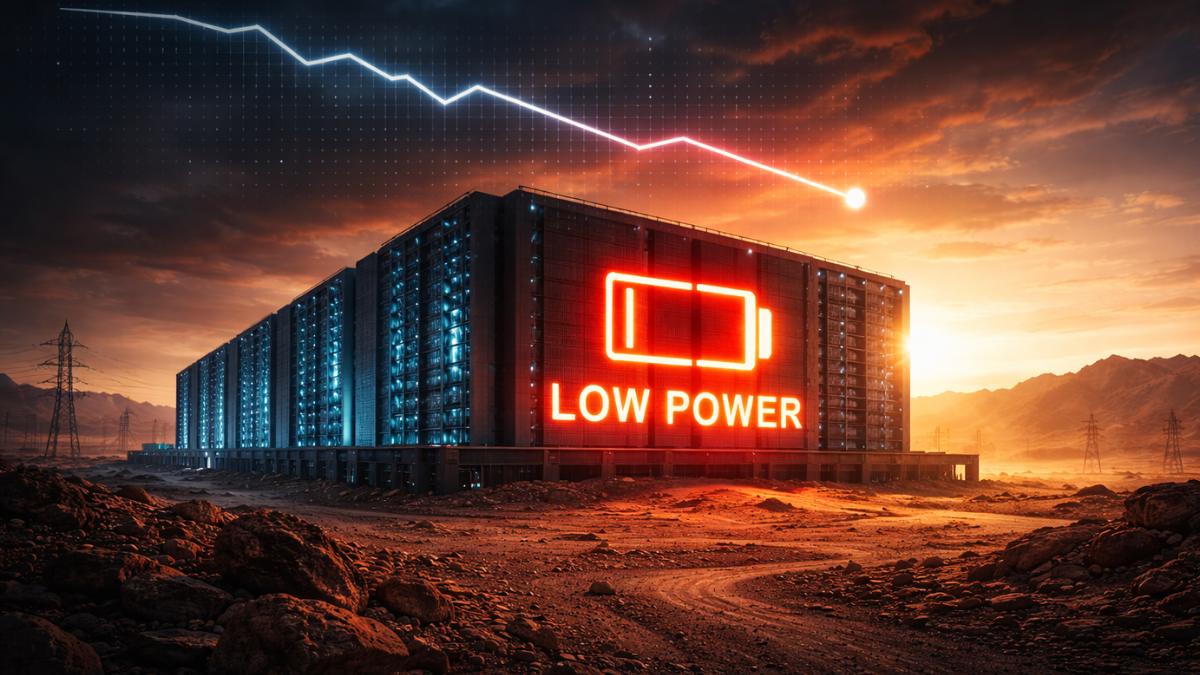
On the ground, the AI boom is not materializing as planned. Earlier this week, Microsoft announced that it would pause some of its construction of data centers. It appears that the demand for their AI services is lower than anticipated. Recent industry estimates suggest that between 30% and 50% of data center projects in the US will be delayed or cancelled.
Some of this is due to unexpected construction hurdles. Local opposition to building data centers has been increasing in the US, and this has stalled or delayed projects. But some of this is also due to lower demand.
Some AI Investments will be Loss Making
In fact, it is almost certain that some firms will cancel large scale projects. Large tech firms have invested huge sums in AI data center construction. Much of this investment is built on the winner take all model. If a particular firm’s AI ends up dominant, customers will use their product, and their large investments will pay off. But only a small number of firms can be dominant. For the rest, their investments are likely to be loss making.
This pattern is common in the technology sector. When internet search engines emerged, there were many options. Today, Google search dominates. In social media, Meta (i.e. Facebook) is dominant. The outcome of the AI race will be determined in the next few years. And in the process, there will be consolidations and a slowdown.
The Impact of the West Asia Conflict
On top of this, the West Asia conflict has added a new headwind. Unlike other software innovations, AI is energy intensive. A recent study predicts that AI energy use is expected to comprise 21% of global energy demand by 2030. This of course means that cheap energy is critical for AI’s success. And until six weeks ago, energy was cheap.
AI companies that have invested in West Asia (partially due to abundant energy) are now contending with strikes on their data centers. All signs point to a slowdown in AI in the short term.
But what about the longer term? In the medium to long term, the outlook for AI on how and when the West Asia conflict is resolved. A prolonged energy shock could mean a major bust is coming for AI. It could mean that widespread AI adoption is uneconomical due to the cost of energy.
There are two necessary conditions for a new technology to succeed. First, it must be useful. Second, it must be affordable. On the first condition, we’re confident AI has value, but still unsure how much. On the second condition, we won’t get there until the energy shock subsides.
Disclaimer:
Note: The purpose of this article is to share interesting charts, data points and thought-provoking opinions. It is NOT a recommendation. If you wish to consider an investment, you are strongly encouraged to consult your advisor. This article is for strictly educative purposes only.
Asad Dossani is an assistant professor of finance at Colorado State University. His research covers derivatives, forecasting, monetary policy, currencies, and commodities. He has a PhD in Economics. He has previously worked as a research analyst at Equitymaster, and as a financial analyst at Deutsche Bank.