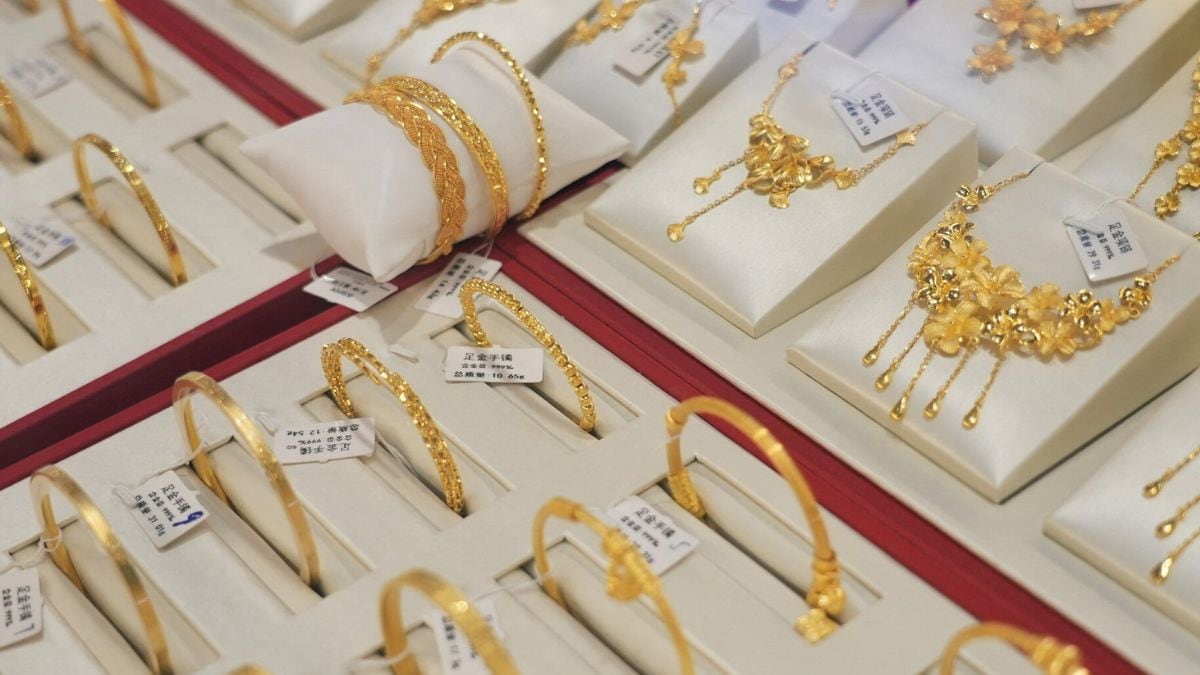
Gold buying in India has been undergoing a structural shift, with consumers becoming increasingly mindful of the kind of jewellery they purchase. The trend is particularly visible in the growing demand for lighter, studded pieces.
During Akshaya Tritiya 2025, 22K gold was priced at Rs 95,500 per 10 grams; cut to a year later, Akshaya Tritiya 2026, saw the same gold trading near Rs 1.52 lakh per 10 grams. Though off the early 2026 highs, Gold is still up over 50% in the last one year.
Gold demand resilient despite price surge
Despite this sharp rise in prices, demand remains resilient. Data from the India Bullion and Jewellers Association shows that gold sales during the festival increased nearly 56% year-on-year to 25 tonnes from 16 tonnes, while total value surged by a sharper 134% to Rs 37,500 crore from Rs 16,000 crore.
However, there is one striking change. Young-consumers are shifting towards lighter lower carat pieces and the old gold exchange programme has also been on the rise.
FinancialExpress.com reached out to some jewellery brands to get insights on the same
Lightweight studded jewellery a more practical choice
Industry players explained that demand for lightweight studded jewellery is catching up as consumers opted for pieces which are more versatile and accessible for daily wear.
Sandeep Kohli, CEO of Indriya-the jewellery brand of the Aditya Birla Group, noted that the rise in demand for lightweight studded jewellery points to a steady increase in premiumisation. “Despite the surge in gold prices, consumer demand remains resilient. They are willing to spend, driven by a strong focus on purity, quality, and contemporary design,” he added.
Nitesh Jain, Co-Founder, Ethera, a BlueStone-backed lab-grown jewellery brand reiterated the shifting trends among young consumers. “Younger buyers are making smarter purchase decisions, preferring jewellery they can wear regularly instead of pieces kept locked away for special occasions. They are placing greater value on design, versatility, self-expression and affordability, especially during occasions like Akshaya Tritiya,”he added.
Parag Shah, CEO of KISNA Diamond & Gold Jewellery noted that within this segment light-studded diamond pieces saw the highest traction for the brand, especially across daily wear rings, pendants, and lightweight bridal add-ons. “Lightweight plain gold jewellery also performed steadily, with categories such as bangles, chains, kids’ jewellery and gifting items seeing consistent demand,” said Shah.
Lower-carat segments gain traction as affordability drives demand
Ethera and Kisna Diamonds observed high traction within the lower-carat segments, noting that the rise in bullion prices has brought a broader shift in consumer behaviour.
“Customers are also inclining more towards 9KT gold, preferably for everyday wear…If gold prices stay on the upward trend, this trend is more likely to become a habit,” said Ethera’s co-founder.
“We saw rising traction in lower carat segments such as 14K, 12K and 9K, especially in affordable fashion jewellery and gifting categories,” said Kisna Diamonds CEO. He highlighted that younger consumers, particularly, showed more inclination towards lower-carat design pieces due to their accessibility and versatility.
Both these brands found a ‘strong sweet spot’ at the 18K gold segment driven by its relevance in diamond-studded jewellery. Ethera highlighted that the growing preference for 18K came largely from its affordability in comparison to the higher 22K jewellery.
Similarly, Kisna Diamonds noted that this year demand for 22K was softer in comparison to last year, but it played a vital role in bridal and essential purchases.
“Even during traditional buying occasions like Akshaya Tritiya, consumers are increasingly looking for jewellery that offers long-term usability, rather than viewing it purely as an investment,” said Jain.
Old Gold Exchange Program on rise
These industry players reported a rise in old gold exchange programmes, as consumers swapped in their existing pieces for newer contemporary designs.
“Another buying trend is old gold exchange where customers are bringing in old gold to exchange it with newer gold jewellery, sometimes for better design as well,” said Ethera’s co-founder Nitesh Jain.
Indriya also reported a rise in these exchange-led purchases, “We are also seeing an increasing number of consumers opt for gold exchange, reinforcing underlying purchase intent,” the brand’s spokesperson added. He pointed out that the demand for the same was higher around Akshaya Tritiya as the period is traditionally associated with prosperity.
Moderated ticket sizes amid high prices
All these brands reported a rise in customer footfall and demand during this year’s Akshaya Tritiya compared to last year. However, Kisna Diamond & Gold Jewellery noted that elevated gold prices moderated ticket sizes, or the average amount spent per purchase by customers.
Parag Shah of Kisna Diamond noted that coins too were purchased for their symbolic and auspicious value. However, he added that the preference was more towards smaller denominations due to this year’s price sensitivity.
He highlighted that buying intent among consumers, especially in Tier 2 and Tier 3 cities, was more value-driven.
Higher carats continue to hold their shine
Ethera added that higher-carat gold continues to hold its appeal for consumers focused on wealth preservation, resale value or legacy purchases.
“That said, we still see customers who view gold purely from the lens of investment,” said Jain.
Leaning into the marriage season with an uptick
Kisna Diamond expects an uptick of nearly 15% to 20% for the month of May, which marks the peak of the marriage season, driven by ongoing bridal jewellery purchases, strong momentum across Tier 2 and Tier 3 wedding markets, and planned buying by customers.
The brand said that consumers are increasingly leveraging exchange schemes and EMI-led buying, reflecting a more structured and confident approach towards purchases.
“Consumers were moving toward lightweight, studded and versatile jewellery, rather than purely weight-led purchases,” said Shah.
Conclusion
Despite elevated gold prices, demand for gold jewellery remains resilient. However, increasingly, Indian consumers have not abandoned their tradition of buying the precious metal but are instead shifting towards more affordable and practical purchases.
The growing preference for 9K and studded jewellery reflects a clear change in buying behaviour, particularly among younger consumers who view gold not just as a safe haven asset but also as something to be worn and enjoyed regularly.