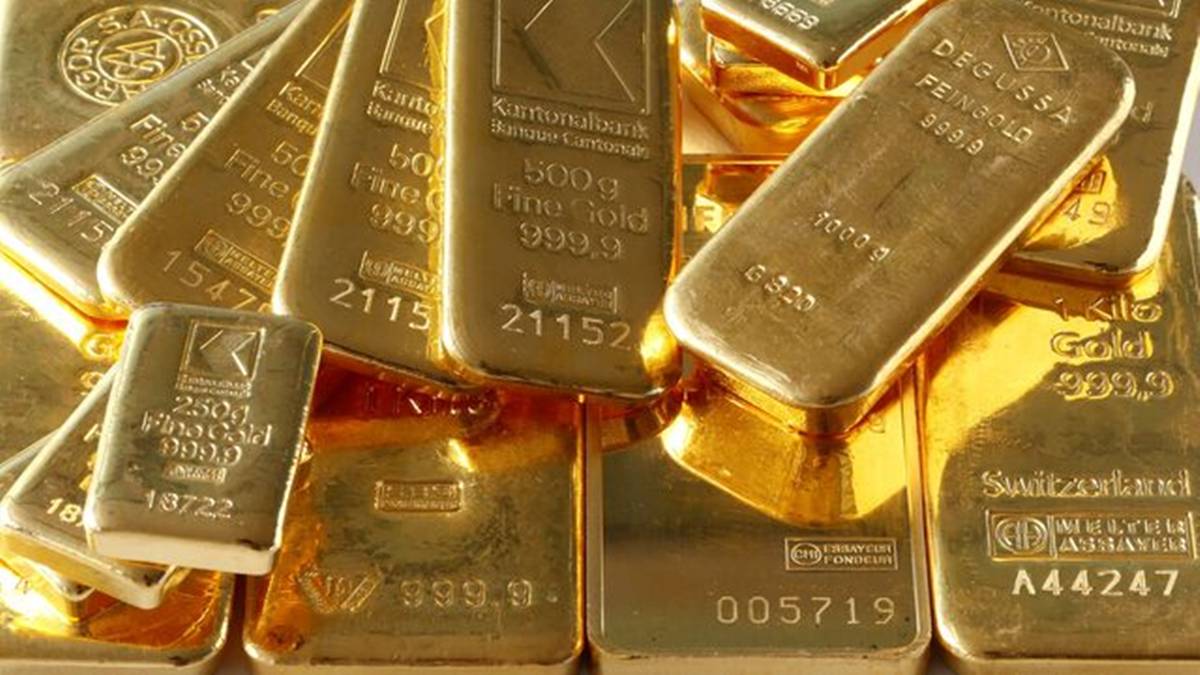
Gold’s performance in 2026 has been challenging, particularly following a strong 65% growth in 2025. As of the first half of the year, its year-to-date return is negative 4%, falling short of high expectations.
How Gold’s Year Unfolded
The start of 2026 was reasonably good. Riding on the bull run that began sometime in October 2022, gold made an all-time high of $5,602 by the end of January 2026. Then came the Middle East conflict, and everything changed.
During wartime, liquidity crises often arise, particularly in the early phases. After a bull run of 2-3 years, various market participants started selling gold and silver to realize profits, exacerbated by increased margin calls on other asset positions, resulting in further price declines.
From the January peak, gold rolled down to a yearly low of around $4,000 on June 10 — a sharp 28% fall from the top. Currently, the yellow metal is still struggling, with the gold price around $4,144, though it remains up 23% over the last 12 months.
Shifting Scenarios
The US-Iran deal regarding the opening of the Strait of Hormuz is central to current financial market stability. However, uncertainty prevails over whether the deal will hold, particularly without Israel being part of the equation.
Though pushed to the backdrop, Israel remains impossible to ignore. Israel holds the ‘trump card’ in the US-Iran nuclear deal. Still, oil prices have decreased significantly since the deal announcement, dropping nearly 15%.
So, Why Isn’t Gold Bouncing Back?
This is the bigger question on every investor’s mind. Gold prices initially fell when the Iran war broke out, but with oil prices now lower, isn’t there a reason for gold to recover?
Gold, like other asset classes, is influenced by multiple factors — inflation, interest rates, and geopolitical or economic risks — with whichever factor dominates at a given time providing direction to the asset. Right now, interest rates are calling the shots, not oil.
The US Fed Factor
So even though oil prices have fallen, the interest rate scenario in the US is keeping gold from restarting its bull run. A big dampener was the US Fed FOMC meeting on June 17, where the ‘dot plot’ signalled at least one rate hike ahead in 2026.
The new Fed Chair Kevin Warsh, was equally hawkish, reaffirming the Fed’s commitment to restoring price stability. That means rates are unlikely to be cut anytime soon and may instead be hiked to tame rising inflation.
But there was more bad news for gold. Markets reacted negatively to Warsh’s announcement regarding the absence of forward guidance. What this means in practice: under Warsh’s leadership, the Fed will respond to incoming data without committing to a specific path, potentially increasing volatility for rate-sensitive assets like gold.
The Dollar Index Tells the Story
The story of gold and the US dollar cannot be more prominent than their performance so far in 2026. The dollar index is up 2.6%, while gold is down 4%, a clear inverse relationship playing out in real time.
The dollar index regained strength and moved above 100, up over 2.6% year-to-date, after weakening nearly 12% in 2025. Any strength in the dollar index diminishes the appeal of the non-yielding yellow metal. Gold reacted sharply to this week’s FOMC news on rates remaining higher for longer, and has remained under pressure since.
Is the bull run over?
Nobody really knows. Market experts are offering mixed views on what comes next.
If inflation subsides, which is likely once oil prices stop being elevated and supply constraints ease, that could lead to a rate cut scenario, which would boost gold prices.
On the other hand, many experts also find a silver lining in rising inflation. Their view, which has historically not been wrong, is that gold may regain its significance as a store of value and an inflation hedge if stubborn inflation persists, particularly if driven by energy prices tied to Middle East tensions.
Meanwhile, global central banks have been major buyers of gold over the past 2-4 years, and they remain bullish. For retail investors, the answer lies less in timing and more in asset allocation and rebalancing, a strategy that has consistently worked. An exposure of 5-10% in gold and silver, the two precious metals, can be a part of your portfolio to meet long-term goals.
Disclaimer: This article is for general informational purposes only and does not constitute investment, financial, or trading advice. Past gold price performance is not indicative of future returns. Readers are strongly advised to consult a SEBI-registered investment advisor or qualified financial professional before making any gold-related investment decisions.