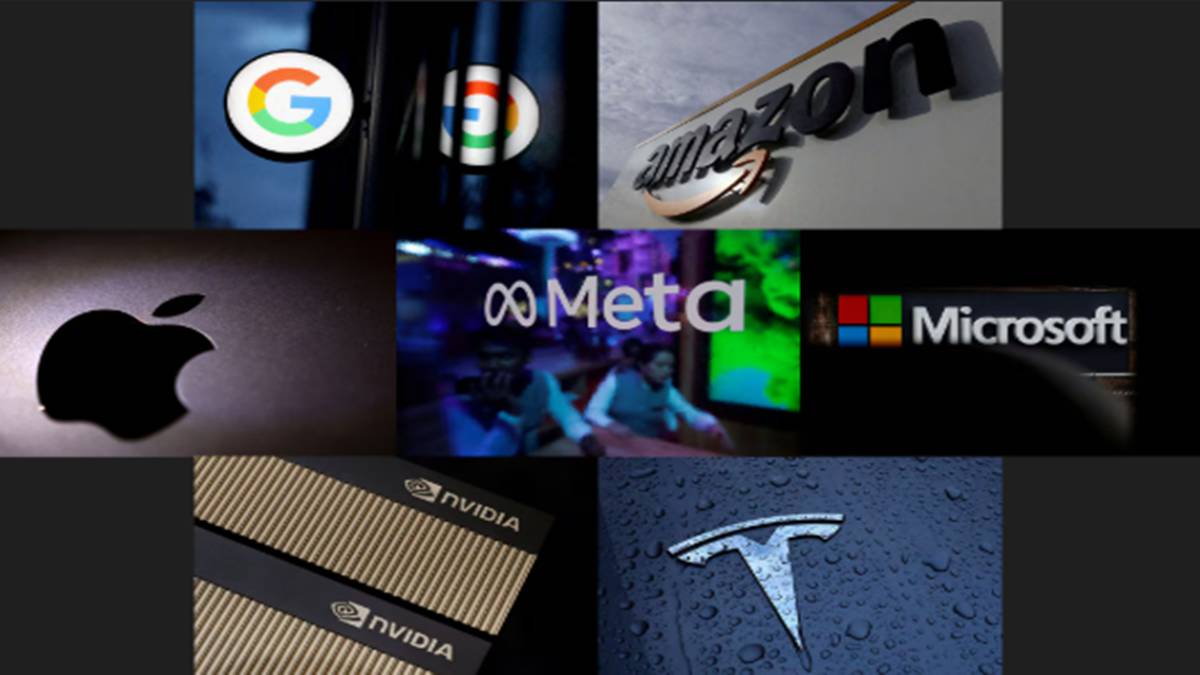
Most of the Magnificent Seven tech companies, including Alphabet, Amazon, Apple, Meta, Microsoft, Nvidia, and Tesla, are under pressure. Last month, the group lost over $2.2 trillion in combined market value, reflecting a significant shift away from companies heavily investing in AI infrastructure.
“Around $2.3 trillion has been wiped off the value of the Magnificent 7 this month, but investors should prepare for an even more profound shift: within five years, today’s Magnificent Seven could become the ‘Magnificent Three’,” warns Nigel Green, CEO, deVere Group.
How Bad Is the Damage?
The numbers tell a sobering story. The Roundhill Magnificent Seven ETF (MAGS), the first-ever ETF to track the Magnificent Seven, captures the group’s performance clearly. While the 3-year return is still over 30%, the 1-year return is about 18%, and the year-to-date performance has turned negative by nearly 2%.
The performance within the group has been sharply divided. Alphabet has jumped 100% in the last 1 year and is up over 15% year-to-date, though it has shed 2.3% in the last month. Amazon has had a dull run with single-digit returns over the last year and is down 2% in the last month. Apple, Tesla, and Nvidia have managed to stay in positive territory, but Microsoft and Meta have lost almost 19% in the last 1 year. Microsoft’s stock price has dipped 6% in the last month alone.
Why Are Investors Getting Worried?
The concern is not about what these companies have built; it is about whether the billions spent will actually pay off.
All Magnificent Seven companies have made major moves into AI, with multi-billion-dollar deals announced in recent months. Investors are now questioning whether the significant spending by these major hyperscalers will yield enough profits to justify their share price increases and high valuations. Additionally, profit margins are under pressure due to rising costs of components like memory chips and electrical equipment.
“We’re going into a more demanding phase for the tech trade. The easy phase of the AI investment story is over. Investors were happy to fund the biggest infrastructure buildout in corporate history while the narrative was simple, and the share prices kept rising. Now they want evidence. The next few weeks matter enormously because second-quarter earnings season will force markets to confront the question they’ve spent the last year avoiding: ” Where are the returns?” says Green.
What Should Indian Investors Do?
For Indian investors with significant exposure to US tech stocks, this is a moment to pause, reassess, and not panic.
“Many Indian investors entered the US markets primarily to own these seven companies. That can make a portfolio appear diversified on paper, while in reality it’s heavily tied to a single AI-driven theme across a few stocks. If a month like June feels unsettling, it’s often a sign to reassess concentration rather than a reason to walk away from global investing,” says Viram Shah, Founder & CEO, Vested Finance.
The AI trade on Wall Street also appears to be shifting, moving away from pure AI plays towards semiconductors and chips. This year, chip and memory stocks have significantly outperformed the S&P 500. Sandisk has risen by over 800%, while Micron, Intel, Western Digital, and Seagate Technology’s stock prices have all more than tripled, as memory shortages are expected to last until 2028.
Shah offers three practical steps for investors to consider: “Investors should keep 3 things in mind. First, check how much of your US portfolio is concentrated in mega-caps versus the other 490 companies in the index. If needed, consider broader-market or equal-weight funds instead of top-heavy ones. Second, remember why you invested globally. India makes up less than 2% of the world’s stock market, and that reason hasn’t changed because a few large stocks had a bad month. Third, if you’re investing through SIPs, this dip can work in your favour by letting you buy the same companies at lower prices,” says Shah.
Disclaimer: This article is for general informational purposes only and does not constitute investment, financial, or trading advice. Past performance of any stock, ETF, or index is not indicative of future returns. Investments in US stocks involve currency risk, market volatility, and regulatory considerations. Readers are strongly advised to consult a SEBI-registered investment advisor or qualified financial professional before making any investment decisions related to US technology stocks or global markets.