Tim Duy, author of ‘Tim Duy’s Fed Watch’, on the approach the Fed will take in its upcoming meeting, and impact of Iran war on the world’s largest economy
Donald Trump, during his 2024 presidential campaign, had promised to lower prices on his watch.
Heading into the 2026 midterms, the combined impact of his global tariffs, an energy shock following the Iran war, and capital spending from the AI boom has not let up the pressure on prices.
Inflation has become a key talking point among voters ahead of the key polls that will decide who will control the US Congress till the 2029 presidential elections.
In September, the Federal Reserve increased the benchmark overnight interest rate to the 3.75%-4.00% range, and the Federal Open Market Committee (FOMC) is set to meet this week to decide the future direction of the interest rate.
As the economist and analysts debate whether Fed will hold onto the rate or increase it, International Finance caught up with Tim Duy, former Professor of Economics at the University of Oregon and author of ‘Tim Duy’s Fed Watch’.
Duy, who joined SGH Macro Advisors as Chief Economist in 2021, has continued to produce the enormously popular ‘Fed Watch’ under the SGH banner.
In this exclusive interview, he discussed the factors that are driving the upward trajectory of inflation, what approach the Fed will take in its upcoming meeting, and the impact of the Iran war on the world’s largest economy.
Here are excerpts from the interview.
The latest Consumer Price Index (CPI) report points to price pressure extending beyond energy, with AI-related developments also coming into the picture. What are the principal factors driving inflation in the US economy right now?
On the surface, the obvious factors are driving inflation – energy, AI, tariffs. Under the surface, however, we think that inflation more broadly has become embedded closer to 3% than 2%.
We take a top-down view of inflation as a process driven by macroeconomic forces and believe that inflation expectations among US firms and households have risen by roughly a percentage point since prior to the pandemic.
This is, in part, due to the slow reaction by the Fed to inflation during the pandemic, and to inflation this year. It allowed inflation expectations to shift.
The inflation rate in September stood at 3.7%, up from 3.4% in August 2026. The monthly CPI change was +0.6%, compared with +0.4% in August. Do you believe inflationary pressures are becoming more persistent at this point?
Yes, we believe that inflation has become more persistent.
The Federal Reserve is set to meet at the end of October to decide its benchmark interest rate. Given the latest inflation figures and economic indicators, do you expect a rate hike, or is the Fed more likely to adopt a wait-and-watch approach?
We expect the Fed will hold rates steady in October, and hike in December.
Consumer sentiment has weakened, while President Trump’s approval rating has declined. With inflation having featured prominently in his 2024 presidential campaign, how would you assess his economic record ahead of the midterm elections?
Consumer sentiment has declined, and it’s hard not to link that decline to rising prices. Trump campaigned on a platform of lowering prices, and the failure to deliver on that platform has tarnished the economic record of his second term.
A recent Reuters/Ipsos poll found that about 78% of Americans blame Trump’s policies, including tariffs and the Iran war, for rising prices that are outpacing wages. To what extent could public concerns over the cost-of-living influence Republican prospects in the midterm elections?
Cost of living has been a significant factor weighing on Republicans as they head into the midterms. It almost appears that many voters expected Trump to lower prices, something that wasn’t going to happen without a recession. The focus for the Republicans will now be to point to the Democratic platform as a greater risk.
Gasoline prices have risen by 9.1%, accounting for more than half of the increase in the CPI over the past month, while diesel prices have also climbed sharply. The Iran war has added to volatility in global energy markets. To what extent has the conflict and the administration’s policy decisions contributed to the increase in fuel costs facing American households?
The link between the Iran war and high energy prices is self-evident. Note also that part of the rise in diesel prices reflects the ongoing Russia-Ukraine conflict, which pre-dates the Iran war.
During his 2024 campaign, President Trump promised to cut energy prices in half within his first year in office. However, an estimate from Energy Innovation suggests that American households could pay an average of USD 6,500 more for energy cumulatively through 2040. How do you assess this estimate, and what does it suggest about the long-term outlook for household energy costs?
Assessing energy costs more than a decade in the future is, of course, a challenging effort at best.
Moreover, while the Iran War has raised the prices of petroleum products, the AI boom has also been a factor in higher electricity prices.
The current and very near-term outlook for household energy costs has clearly deteriorated, but the longer-term estimates are very much still speculation.
According to one line of thinking, the Trump administration’s cancellation of new clean energy projects and incentives for purchasing more efficient, lower-emission vehicles could increase demand for natural gas and gasoline. Against the backdrop of higher energy prices, do you believe the White House needs to reassess its energy policies, particularly in terms of energy security and affordability?
Every administration should prioritise energy security and affordability.
According to the Congressional Budget Office (CBO), the rising cost of the Iran war is adding to pressure on the United States’ fiscal position. In August, total public debt surpassed USD 40 trillion. How significant are these developments, and what could they mean for the country’s fiscal outlook?
The Iran War is only one factor contributing to the long-standing issue of the US debt burden.
While the mainstream view is that US fiscal issues will eventually require a sharp reduction in spending or an increase in taxes to avoid a steep increase of inflation, we don’t know yet exactly the limits of fiscal spending.
We do believe, however, that the budget deficit is contributing to the upward pressure on US interest rates since the pandemic.
In the lead-up to the Iran war, the US poverty rate edged down to its lowest level on record, while median household income reached a record high, according to the Census Bureau. How might the Middle East conflict and the resulting economic pressure affect these gains in household income and poverty reduction?
Higher inflation will erode real income growth all else being equal and will hamper efforts at poverty reduction. But, of course, the Iran conflict is just one of many factors that affect poverty and real wages.
According to the latest inflation data, food prices were unchanged and grocery store prices in certain categories dipped, while beverages, fruits, and vegetables became more expensive. Meanwhile, average hourly earnings for workers declined by 0.7%. How could these trends affect household budgets and consumer spending in the coming months?
Income growth adjusted for inflation has slowed, and this puts downward pressure on household spending. Yet, spending has outperformed expectations, in part because a growing portion of the population – retirees – depend in part on distribution from retirement savings to support spending.
In addition, we think that income may be underestimated, particularly proprietor’s income, which is estimated from past tax returns.
Overall, our position has been that fears of a consumer retrenchment at a macro level are overblown barring substantial job losses, which the low levels of initial unemployment claims indicate is not currently the case.
With the cost of living remaining a concern, the Social Security Administration has announced a 3.6% cost-of-living adjustment for Social Security and Supplemental Security Income benefits for 2027. While the programmes benefit nearly 72 million Americans, Social Security retirement benefits will increase by an average of USD 75 per month. To what extent will this adjustment help beneficiaries cope with rising living costs?
While everyone’s personal inflation rate is different, this year’s adjustment likely only partially offsets the rising costs facing social security recipients.
The US labour market slowed sharply in September, with employers adding just 29,000 jobs in the final update before the midterms. The unemployment rate rose slightly from 4.1% in August to 4.2% in September. How would you assess the state of the labour market, and what do these figures indicate about the broader economy?
There is considerable monthly variation in the employment numbers. We see the labour market as generally improving relative to this time last year. Remember, last November, the unemployment rate was 4.5%.
Lower immigration has reduced what economists call the breakeven rate, or the amount of job growth necessary to hold the unemployment rate constant, to a range closer to around 30,000.
At that rate, given the normal variation in the jobs report, we would expect to see some negative prints even with the unemployment rate holding steady.
Overall, we see the labour market as stable though still caught in the low hire, low fire dynamic that has dominated over the past year.
According to the Bureau of Labor Statistics, the US economy added 29,000 jobs in September, down from 133,000 in August. Does this slowdown suggest that labour market conditions are cooling, and how much weight is the Federal Reserve likely to give these figures when making its interest rate decision?
The Fed recognises the monthly variability in the employment report and, as noted above, we don’t see this data as changing the overall assessment that the labour market is generally stable.
That said, the Fed does not see the labour market as a source of inflationary pressure given low wage growth and likely sees it as somewhat fragile given the low hire, low fire dynamic.
We believe this explains why the Fed hasn’t been more aggressive in managing persistently high inflation.
The Fed is a dual mandate central bank and needs to manage the trade-off between the employment and inflation sides of the mandate.
It’s moving at a cautious pace because it doesn’t want to trigger unnecessary or excessive damage to the labour market.
Fed Chair Kevin Warsh recently expressed optimism about the strength of the US economy, saying that global economies, including that of the US, have been ‘hanging in there’ amid continued energy shocks and tighter monetary policy to fight inflation. How do you assess his outlook, and what risks could challenge this relative resilience in the months ahead?
The US economy has been resilient to shocks this year. One factor that is often overlooked is that the US is now a net exporter of petroleum products. That means that an increase in oil prices has a positive impact on US growth.
It’s a transfer from consumers to producers internally rather than a transfer to producers abroad. This is very different from the oil shocks of the 1970s.
There is almost certainly a point where rising energy costs derail the US economy, but we note that oil prices remain below the peak reached in 2008, almost twenty years ago now.
Still, the business cycle has not been eliminated. There are two obvious risks on the horizon. The first is that the Fed tightens enough to trigger a recession, either accidentally over-tightening, or deliberately to reduce inflation. The second is that investment in AI infrastructure slows dramatically.
Bio:
Tim Duy, author of “Tim Duy’s Fed Watch” and former Professor of Economics at the University of Oregon, joined SGH Macro Advisors as Chief Economist in 2021, a role in which he continues to produce the enormously popular Fed Watch under the SGH banner.
Professor Duy received his B.A. in Economics in 1991 from the University of Puget Sound, and his M.S. and Ph.D. in Economics in 1998 from the University of Oregon.
Following graduate school, Tim worked in Washington, D.C. for the United States Department of Treasury as an economist in the International Affairs division.
Tim returned to the University of Oregon in 2002, where in addition to teaching he was Senior Director of the Oregon Economic Forum.
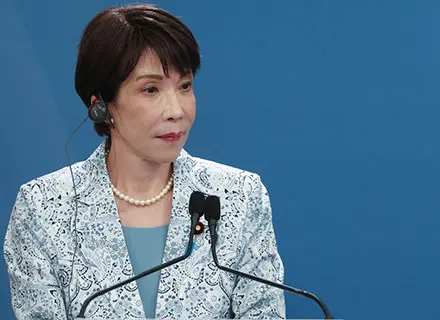
Tim Duy. Image Courtesy: SGH Macro Advisors