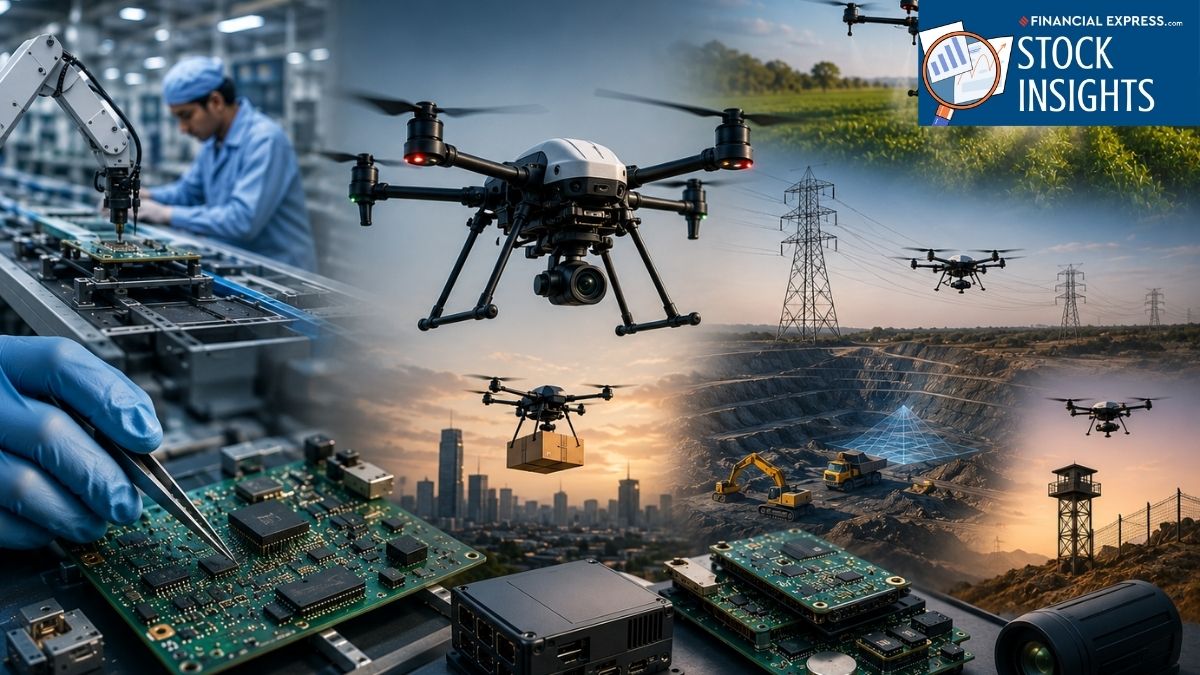
India is building a drone ecosystem at a rapid pace. Meanwhile, investors are seeking good drone businesses to ride this. The change is for real, and the opportunities too. But where the most lucrative opportunities sit is probably not obvious to many.
Let’s dig into this ecosystem and assess where one needs to focus on.
What was once restricted to defence testing and a few commercial purposes, drones are now becoming part of the country’s manufacturing and infrastructure story. Drones are used today for mining surveys, power-line inspections, agricultural spraying, land mapping, logistics, and border surveillance.
The production-linked incentive (PLI) scheme, Drone Rules 2021, and defence indigenisation are pushing Indian manufacturers. India’s drone market could reach ₹5.20 lakh crore by 2030, growing at an annual rate of 7.3%, according to the India Brand Equity Foundation (IBEF). The broader environment, including modules, software, services, and exports, could become even bigger.
But who’s really winning?
Of course, investors have started seeking companies that could gain from this development. The obvious section would be the drone manufacturers. After all, if India is creating a drone industry, shouldn’t the businesses manufacturing drones be the biggest gainers?
History shows it doesn’t usually work that way. The smartphone transformation shaped global handset brands, but it also established semiconductor titans. India’s auto boom not only gave successful carmakers, but also ancillary firms that built equally impressive businesses.
The evolution of electric vehicles has equally benefited battery and component manufacturers, as well as vehicle producers. Technology cycles seldom create value only at the last fabrication stage.
India’s drone story may be moving in the same direction. Because a modern drone is no longer just an aircraft. It is a microelectronics platform that happens to fly.
The market is chasing the aircraft. The value may sit inside it.
Most investors imagine drones as flying machines. The fans, the cameras, and even the airframe are evident. The electronics are not. Yet modern drones need aircraft controllers, communication systems, radio frequency components, fixed electronics, routing systems, sensors, electronic assemblies, and power systems.
As drones become more independent and intelligent, the electronic components and software inside them rise. That modifies the financial side of the industry.
A drone manufacturer may compete on design, value, and technology. An electronics supplier can sell to several manufacturers. A drone company may lose market share, but a supplier can continue supplying the industry. This distinction becomes important because India is chasing four different ambitions at once.
Electronics manufacturing, defence indigenisation, semiconductor expansion, and drone localisation. The intersection between these themes may, in time, generate openings outside typical drone companies.
Three companies, Kaynes Technology, Cyient DLM, and Centum Electronics, stand out. What’s more intriguing is that none of them currently earns meaningful revenue from drones. And that is exactly why they may deserve more attention.
Kaynes Technology: The electronics factory that could quietly benefit the business today
The market currently evaluates Kaynes Technology as an electronics manufacturing services (EMS) company. That description is precise, but also incomplete. The company deals in industrial and locomotive electronics, railroads, health devices, aerospace, and defence.
They also work as an Electronic System Design Manufacturing (ESDM) partner to produce command and control systems for large unmanned aerial vehicles (UAV) and printed circuit boards (PCB), and box builds to support production of tactical drones for firms like OIS-Advanced Technology.
The business has transformed rapidly over the past few years. Revenue grew to ₹3,626 crore in FY26 from ₹706 crore in FY22. This growth has been driven by robust order inflows and growing production capabilities.
Moreover, the aerospace and defence sectors have become progressively significant contributors. Though drone revenues remain negligible, it may, ironically, be the big opportunity.
The numbers tell a bigger story.
Revenue grew at a compounded annual growth rate (CAGR) of more than 48% over the past three years, while profit has grown at 57%. The operating margin for the year was 15.8%.
Kaynes Financial Snapshot FY26
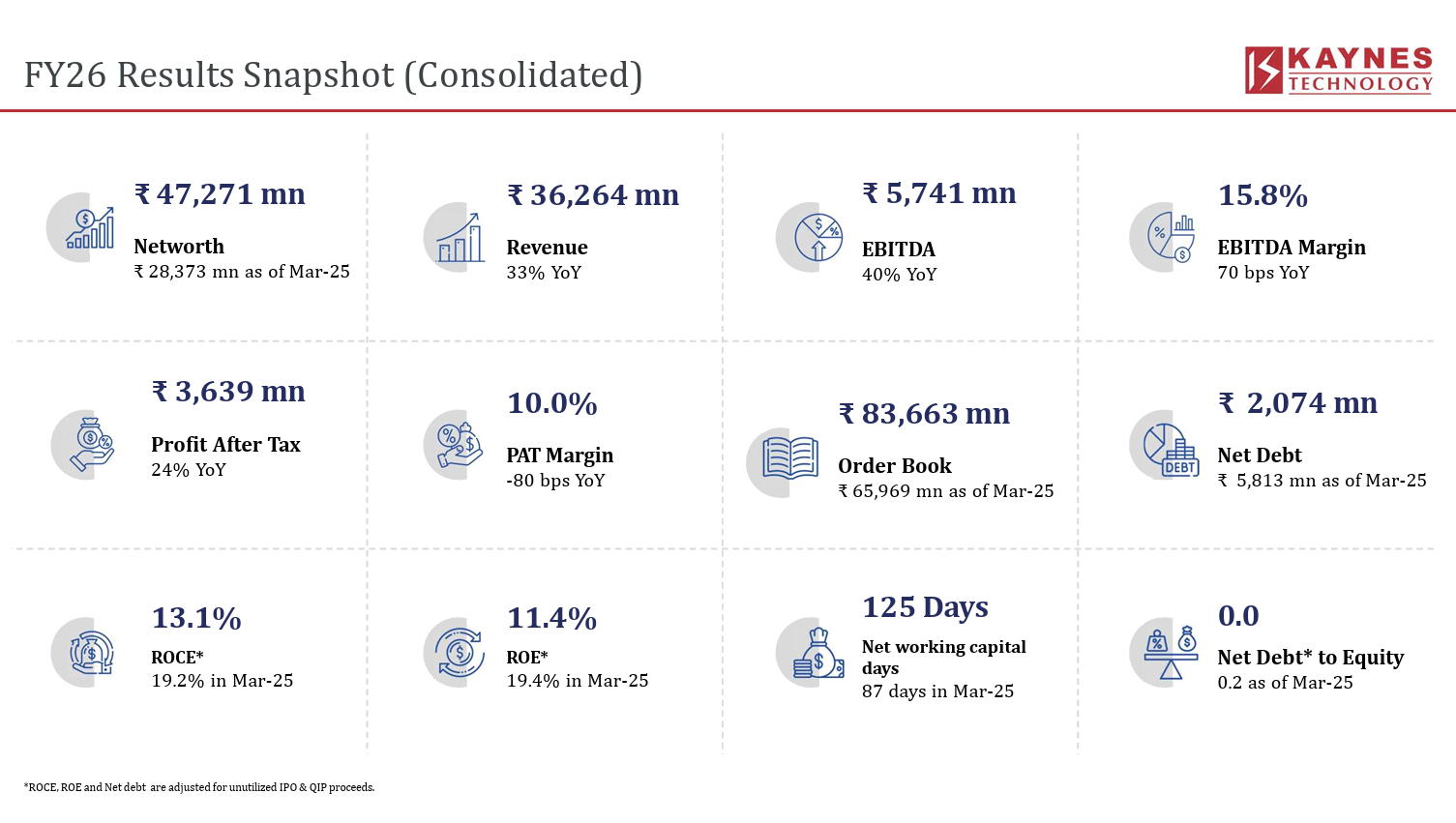
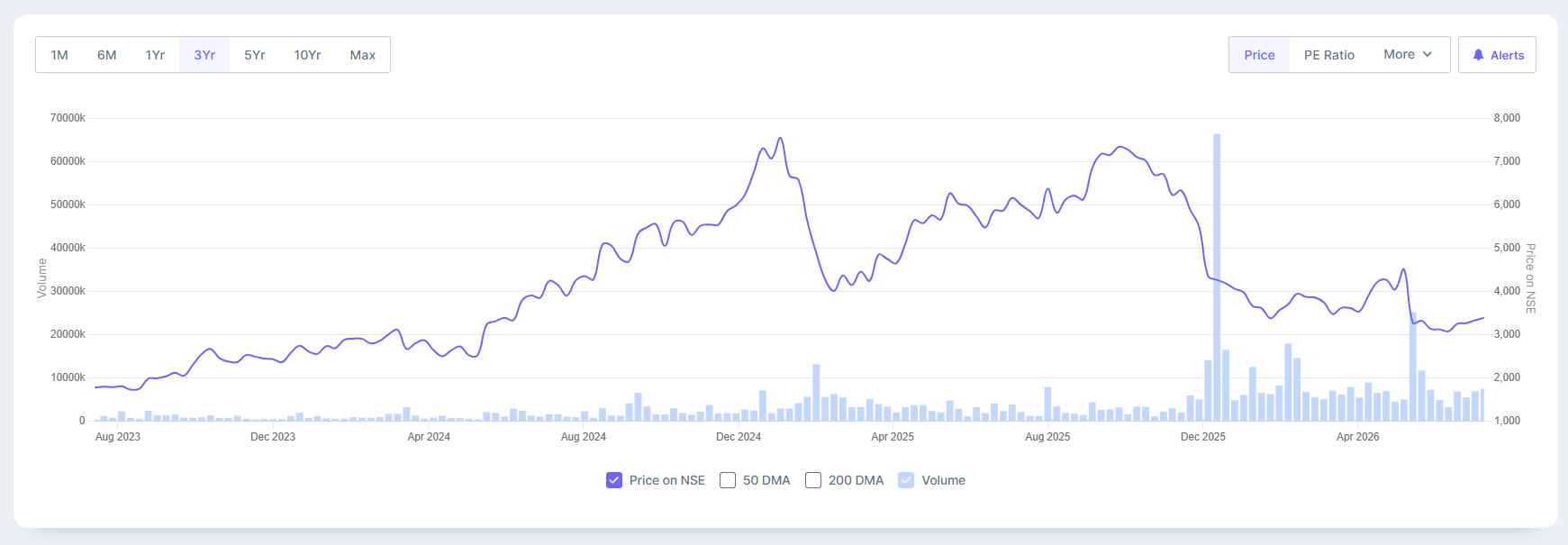
The company has a market capitalization exceeding ₹22,000 crore. Its order book has crossed ₹8,366 crore, which shows almost two years of revenue visibility. The market values Kaynes as a high-growth manufacturing business. The stock price also reflects the trend. It has grown at a CAGR of 28% in the last three years.
Kaynes 3-Year Share Price Trend
However, investors often forget that the same expertise that serves auto and industrial customers may, eventually, become valuable to drone manufacturing. Embedded systems, electronic assemblies, printed circuit board (PCB) fabrication, and system incorporation. All these capabilities are what drone ecosystems need.
Why drones may become another customer category
India wants to cut dependence on foreign electronics. It wants native manufacturing and regional value addition. The drone industry lies completely within this policy framework.
If drone creation ultimately scales, companies such as Kaynes may not need to produce drones themselves. They only need to create the microelectronics inside them, which will reduce business risk.
A drone manufacturer depends upon market share. An electronics supplier depends upon industry growth. The distinction is important.
What investors should watch
The biggest risk remains valuation. The stock already trades at a premium multiple of 62x, almost twice the sectoral median at ~33x as of 10th July 2026. Growth outlook remains exceptionally high.
Investors should observe order book growth, aerospace influence, margin strength, and performance. The drone opportunity alone does not support the valuation. But it may ultimately become another growth lever.
Cyient DLM: Could drones craft the next aerospace ancillary story?
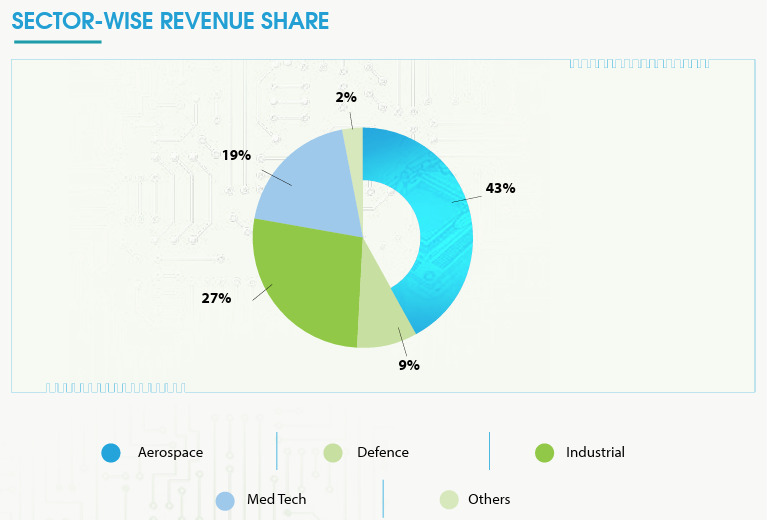
India’s automobile industry created component suppliers. The drone industry may eventually create aerospace suppliers. Cyient DLM already derives nearly 60% of its revenue from aerospace and defence. They offer end-to-end design, certifications, and production solutions for UAVs and drone-based systems.
This growing revenue share makes it one of the few listed firms already operating inside the ecosystem that advanced drones increasingly resemble.
The company manufactures products used in aerospace systems, defence equipment, medical electronics, and industrial applications. These industries demand consistency. Failure is not an option, ultimately building entry barriers.
The numbers behind the business
The revenue in FY26 was ₹1,261 crore, though it declined 17% YoY compared to ₹1,520 crore in FY25. The company has increased profitability over the past few years to reach ₹73 crore excluding exceptional items in FY26, rising 8% YoY.
The return on capital employed was 11.4%. The company won several aerospace manufacturing deals, improving order visibility. Aerospace contributes nearly 43% of revenues. Defence adds another 27%.
Cyient DLM Revenue Share Breakup FY26
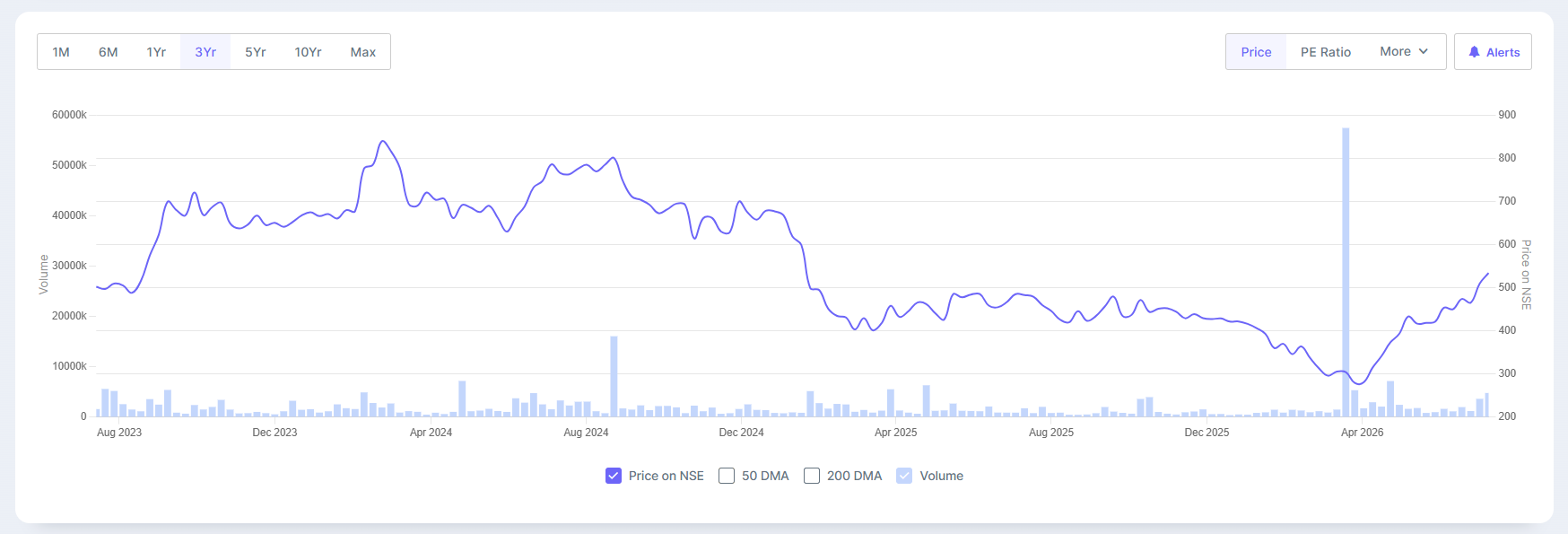
These are not average manufacturing firms. They require accreditations, consumer approvals, and long product cycles. Every customer relationship can last many years, which also decreases competitive pressure. This lets the company grow steadily, and the share price growth at a CAGR of 7% over the past three years indicates the same.
Cyient DLM 3-Year Share Price Trend
Why drones may become another customer category
Advanced drones increasingly seem like aerospace products rather than consumer electronics. They need consistency, strength, qualified components, and precision production.
Cyient DLM has these abilities. However, the company earns little from drones right now. It lowers risk. Investors are exposed to an existing space business instead of a future drone opportunity.
What’s more, if the drone industry grows, Cyient benefits. If they do not, their core business continues to grow. That same thought appears to be driving valuation. Cyient DLM trades at a P/E of 58x, almost at par with the industry median at 59x as of 10th July 2026.
What investors should watch
Customer concentration is still a crucial threat. Large aerospace plans often move slowly. The sequence of orders could impact profitability. Investors should screen everything from growth in the aerospace sector, defence revenues, and margins to order inflows.
If India’s drone ecosystem progresses just like the auto industry, Cyient DLM may, in time, become one of its key suppliers.
Centum Electronics: The intelligence layer inside the machine
A difficult period may have generated a chance. Centum hasn’t always had a smooth financial history. The company faced several years of unreliable profitability.
Margins were unpredictable, the return ratios had diminished, and the market slowly stopped giving premium valuations to the business. The revenue reached ₹953 crore in FY26 from around ₹740 crore in FY25. Business has expanded, so have the profits.
Operating margins have improved to 14.22%. ROCE has recovered from its lows to 25.6%. The company’s order book has also expanded. Electronics manufacturing for defence and aerospace continues to contribute significantly.
Centum Electronics Order Book Share
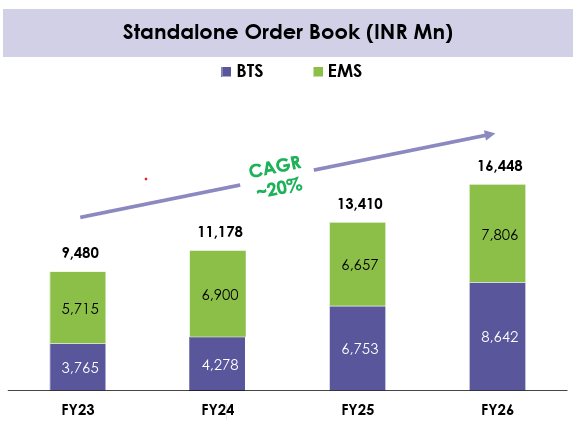
The profit grew at a CAGR of 117% while the share price grew at 38% over the past three years.
Centum Electronics 3-Year Share Price Trend
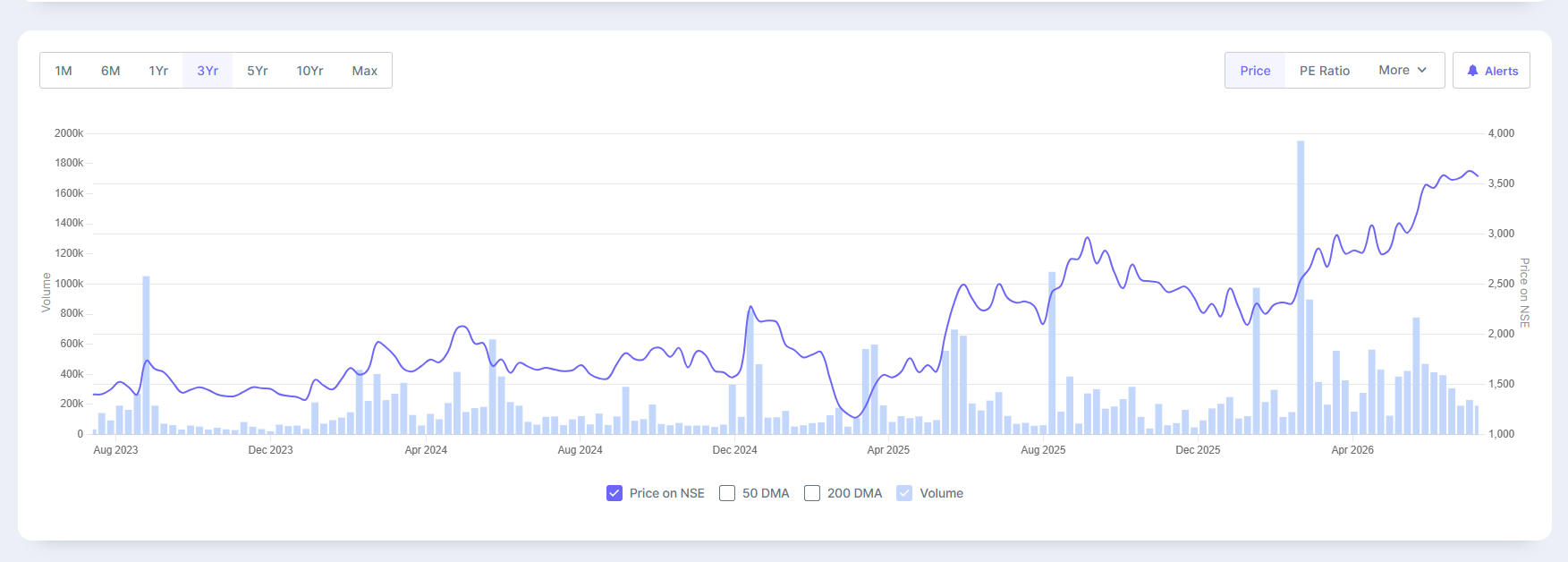
This progress matters because the market still values the company based on its difficult years, rather than its current trajectory. It trades at a P/E of 52x, much lower than the sector median of 59x as of 10th July 2026.
The shift toward higher-value products
Centum has transformed and focuses on mission electronics, sensors, RF systems, defence electronics, avionics, and aerospace subsystems. It also builds advanced electronics and subsystems, especially for unmanned aerial platforms and anti-drone systems.
These products have more engineering parts than conventional manufacturing products. Higher engineering content often means stronger margins.
It also creates customer stickiness. Unlike product businesses, defence electronics suppliers frequently work with customers for many years. This creates entry barriers.
Why the value may eventually shift toward electronics
The first generation of drones competed on hardware. The next generation may contest on communication, self-sufficiency, intelligence, and electronic competence. Physical airframes may ultimately become a commodity, but the electronics inside them may not.
This creates a fascinating opportunity. The value chain may gradually shift from hardware to electronic systems. And Centum lies inside this intelligence layer.
What investors should watch
The biggest risk is still consistent performance. The company must show maintainable profitability. Investors should track order execution, margins, defence revenues, and earning steadiness. If profitability continues to improve, the market may eventually value the business differently.
The market may be asking the wrong question
Investors now ask: Which business will become India’s largest drone manufacturer? That may not be the most important question. A better question may be: Which companies gain if the entire industry succeeds?
Drone companies will vie for the pie. Technology will advance. Market leaders will change. But the demand for electronics, aerospace manufacturing, communication systems, and intelligent sub-systems may keep rising. That, in theory, may create more lasting businesses.
The real winners may only become visible later.
The first phase of India’s drone story goes to companies creating aircraft. The second phase may go to companies building the electronics, systems, and intelligence inside them.
History shows that technological revolutions seldom reward only the final product. The auto industry generated component suppliers. The smartphone industry created semiconductor companies. The electric vehicle industry created battery manufacturers.
India’s drone industry may ultimately craft aerospace and electronics businesses. A few years from now, India’s largest drone company may not be the same as today’s market favourites. But the factories producing its microelectronics, systems, and subsystems already exist.
Investors may spend years searching for the company building the drone. The larger opportunity may already be sitting inside companies that nobody currently calls drone stocks. And as the industry develops, these companies may stop being considered suppliers.
They may become the next generation of India’s aerospace and electronics businesses. Because when tech industries transfer from models to production, value often migrates. The market may still be looking at the drone. The bigger opportunity may already be sitting inside it.
Want to keep an eye on these not entirely drone companies? Add them to your watchlist.
Disclaimer:
Note: We have relied on data from the May 2026 investor presentation, www.Screener.in, throughout this article. Only in cases where the data was not available have we used an alternate, but widely used and accepted source of information.
The purpose of this article is only to share interesting charts, data points, and thought-provoking opinions. It is NOT a recommendation. If you wish to consider an investment, you are strongly advised to consult your advisor. This article is strictly for educative purposes only.
Archana Chettiar is a writer with over a decade of experience in storytelling and, in particular, investor education. In a previous assignment at Equentis Wealth Advisory, she led innovation and communication initiatives. Here, she focused her writing on stocks and other investment avenues that could empower her readers to make potentially better investment decisions.
Disclosure: The writer and her dependents do not hold the stocks discussed in this article.
The website managers, their employees (s), and contributors/writers/authors of articles have or may have an outstanding buy or sell position or holding in the securities, options on securities, or other related investments of issuers and/or companies discussed therein. The content of the articles and the interpretation of data are solely the personal views of the contributors/ writers/authors. Investors must make their own investment decisions based on their specific objectives, resources, and only after consulting such independent advisors as may be necessary.