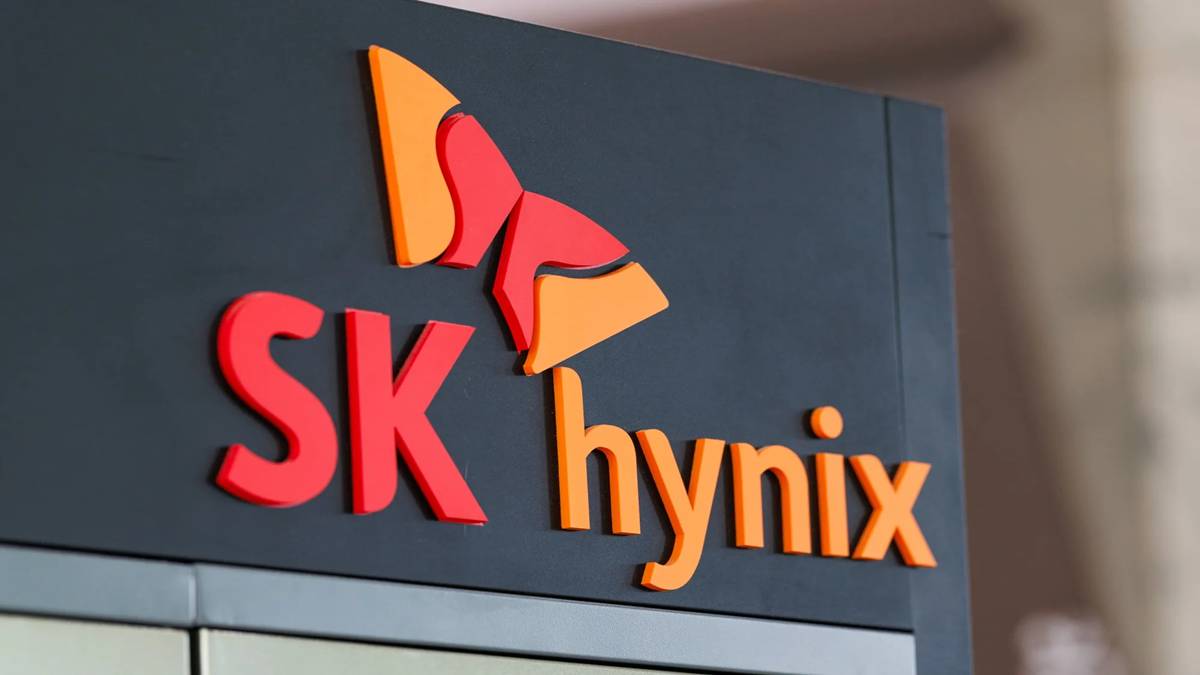
South Korean chip giant SK Hynix is ready to take Wall Street by storm. SK Hynix, the world’s second-largest memory chipmaker, aims to raise approximately $29 billion on the Nasdaq through the issuance of American Depositary Shares (ADSs).
SK Hynix plans to list on the Nasdaq Global Select Market on July 10, under the ticker symbol SKHY. The Nasdaq Global Select Market is reserved for public companies that meet the highest listing standards in the world, with measures including market value, liquidity, and earnings.
The IPO Details
SK Hynix will offer 17.79 million American Depositary Shares (ADSs) on Nasdaq under the ticker SKHY. This is a relatively small offering, representing only approximately 2.50% of the company’s total issued and outstanding common shares of 712,702,365 shares. A 90-day lock-up period will apply to the company and its affiliates post-listing.
The initial public offering price has not yet been established and will be decided through negotiations between the company and underwriters. However, according to Investing.com, as of July 3, 2026, SK Hynix common shares were trading at ₩2,425,000 on the Korean exchange. At an exchange rate of ₩1,533.44 per $1.00, SKHY shares are likely to be listed at around $158.14 per ADS.
Where Does SK hynix Currently Trade?
Currently, SK Hynix is listed on the South Korean Stock Exchange (KRX) under the symbol 000660, while its depositary receipts are listed on the Luxembourg Stock Exchange. The Nasdaq listing under SKHY will be an entirely new market entry for the company.
SK Hynix’s stock on the KRX has delivered extraordinary returns — up over 700% in the last 1 year and by 250% so far in 2026.
On July 7, South Korea’s KOSPI and KOSDAQ experienced significant declines of 4.10% and 3.62%, respectively, driven by drops in tech stocks like Samsung Electronics and SK Hynix, amidst concerns about AI valuations and substantial foreign investor selling. SK Hynix (000660) closed 6% lower than the previous day’s price.
The decline in Korean-listed SK Hynix shares could be attributed to a recent UBS Group AG advisory urging investors to buy SK Hynix Inc.’s upcoming American depositary receipts and sell the company’s South Korean stock, anticipating that the new securities will trade at a premium, reports Bloomberg.
US-listed ADRs may trade at a premium to their foreign listings if not fully exchangeable, with Taiwan Semiconductor Manufacturing Co.’s ADRs trading at a 16% premium over their Taiwanese shares this month, according to Bloomberg data.
Why SK Hynix Matters in the AI World
SK Hynix is not just any chipmaker — it is at the heart of the global AI infrastructure buildout. The company is the number 1 producer globally in High-Bandwidth Memory (HBM) with a 56.4% market share, number 2 in DRAM overall with a 29.1% share, and number 2 in NAND flash with an 18.5% share, per IDC data cited in the filing.
HBM is the memory type critical to AI accelerator chips — including those from Nvidia — which means SK Hynix is positioning itself as a core AI-infrastructure supplier, not just a traditional memory maker.
The Financial Story
SK Hynix’s financial turnaround has been nothing short of remarkable. In Q1 2026, revenue reached ₩52,576 billion (US$34,510 million) — up sharply from ₩17,639 billion in Q1 2025 and ₩97,147 billion for the full year 2025. Profit for Q1 2026 alone reached ₩40,346 billion (US$26,482 million), compared to ₩8,108 billion in Q1 2025.
To put the turnaround in context: the company recorded an annual loss of ₩9,138 billion in 2023, swung to a profit of ₩19,797 billion in 2024, and then surged to ₩42,948 billion (US$28,190 million) in annual profit in 2025.
The Risks
As impressive as the numbers are, SK Hynix comes with a set of risks that investors need to understand clearly.
Memory chips can be a boom-bust business — and SK Hynix is not immune. The company was posting losses as recently as 2023 before swinging into record profits.
A significant portion of its revenue comes from US and Chinese customers, placing it squarely in the path of export controls and tariff risk. Customer concentration adds another layer of concern, with just two customers accounting for roughly 27% of Q1 2026 revenue.
The company’s fortunes are also closely tied to AI infrastructure spending — meaning any slowdown in data centre or GPU demand could hit results hard. On top of all this, currency swings between the Korean won and the US dollar can meaningfully move margins in either direction.
Disclaimer: This article is for informational purposes only and does not constitute financial, investment, or legal advice. Investment in foreign securities involves significant risks, including currency fluctuations, different financial reporting standards, and varying regulatory environments. It is not a recommendation to invest or not to invest in any specific US listed stock or ADRs. Readers are advised to consult a qualified financial advisor before making any investment decisions.