Indians are travelling more than ever before. The numbers clearly show this shift. According to a report by the Ministry of Tourism around 3.3 crore Indians travelled abroad in 2025, up from 3.1 crore in 2024. That is the highest ever. Countries across Asia are seeing this surge. Reportedly, Thailand alone is expecting around 2.5 million Indian tourists. Travel is no longer occasional. It is becoming a regular part of spending.
Travel patterns are also changing. Short-haul destinations are gaining traction. Countries like Vietnam have seen bookings jump by over 130%. Even closer markets like Nepal and Sri Lanka are seeing strong growth of 88% and 68%. Domestic travel is also picking up. Cities like Udaipur saw bookings rise by 69%, while others like Jodhpur and Srinagar also saw strong momentum. Travellers now prefer shorter, flexible trips. Convenience matters more than ever.
This shift directly benefits platforms that sit at the center of bookings. Every ticket, every hotel stay, and every itinerary now flows through a digital layer. These companies do not own planes or hotels. But they control how bookings happen. As travel volumes rise, transaction volumes on these platforms also increase. That makes this space interesting to track.
The listed universe here is still limited. But it captures the key parts of the booking journey. Some platforms cater directly to consumers. Some help with discovery and pricing. Others connect travel agents with global supply. Together, they represent the core booking layer of India’s travel ecosystem, where demand is discovered and converted into actual transactions.
#1 Easy Trip Planners: Profit crashes 90% even as hotel bookings double
Easy Trip Planners offers a comprehensive range of travel – related products and services under the flagship brand ”EaseMyTrip”.
Easy Trip Planners reported steady growth in the December quarter, supported by strong traction in the ticket booking ecosystem. Revenue from operations stood at Rs 151.7 crore in Q3 FY26 up 0.7% year-on-year (YoY). Gross booking revenue rose to Rs 2,213.2 crore, indicating continued scale-up in transaction volumes.
Net profit for the quarter crashed by 90% to Rs 3.4 crore, down from Rs 34 crore in the same period last year, indicating significant margin pressure. Profit dropped sharply as expenses surged ahead of revenue, leading to a steep fall in operating margins, even though booking volumes remained stable.
The business continues to be largely driven by flight bookings, which account for over 64% of revenue, reflecting the company’s core positioning in the ticketing layer of travel. At the same time, non-air segments are gaining traction. Hotel and holiday bookings grew 84% YoY to 4.6 lakh room nights, showing a clear shift towards higher-margin offerings.
Product Mix & Global Footprint
International operations are emerging as a key growth driver. The Dubai business reported gross booking revenue of Rs 397.6 crore in Q3, up 133.2% YoY. This reflects rising outbound travel demand and the company’s efforts to scale its overseas presence. The company has expanded across markets such as the UAE, UK, Thailand, and the US, and continues to build localised platforms to capture regional demand.
On the strategy front, Easy Trip is focusing on expanding its product mix and strengthening its distribution network. The company is investing in hotel inventory, holiday packages, and B2B platforms, while also leveraging AI-led tools for pricing, customer engagement, and booking efficiency. Initiatives such as ONDC integration and corporate travel solutions are aimed at widening its reach across customer segments.
Going ahead, growth will depend on scaling non-air segments and sustaining international momentum. The company continues to operate with a lean cost model and strong cash flows, which supports expansion without heavy external funding. However, as competition intensifies in the online travel space, maintaining margins while growing volumes will remain a key monitorable.
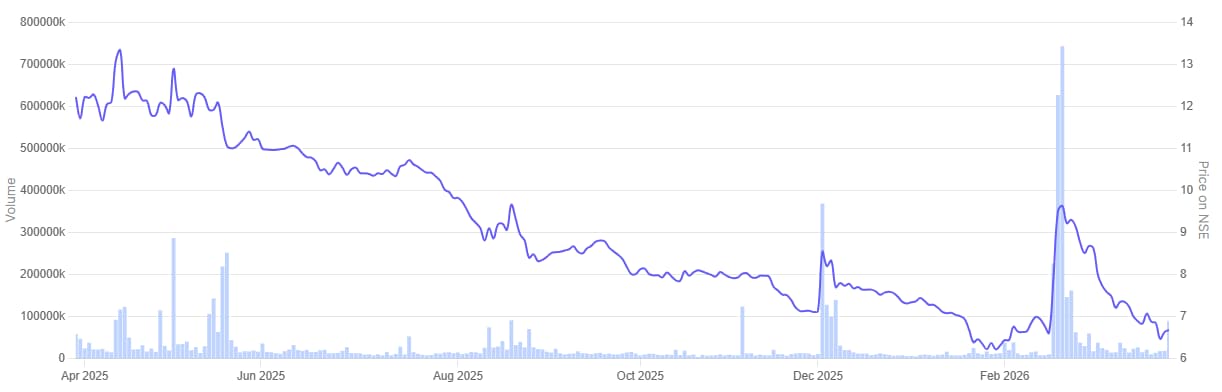
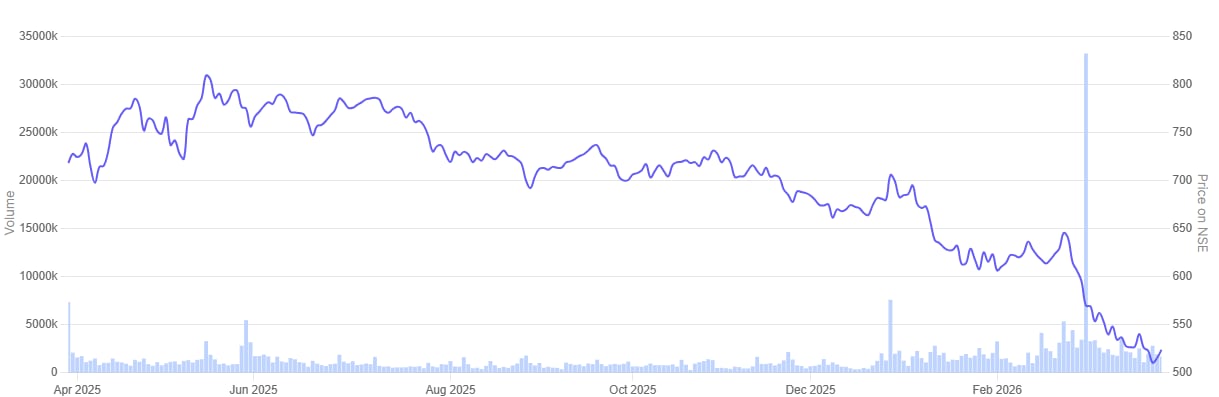
In the past year, the share price of Easy Trip Planners tumbled 45.2%.
Easy Trip Planners 1 Year Share Price Chart
#2 Le Travenues Technology: Tier II demand drives a 54% profit surge
Incorporated in 2007, Le Travenues Technology aka Ixigo is running online platforms to provide information and booking services for the travel industry. It also provides software development & maintenance services to its customer.
Le Travenues Technology reported a strong December quarter. The performance reflects rising activity in India’s ticket booking ecosystem. Revenue from operations stood at Rs 317.6 crore in Q3 FY26, up 31% year-on-year. Net profit came in at Rs 24 crore, rising 54% YoY. Gross transaction value (GTV) was Rs 4,902.9 crore, showing steady growth in bookings.
Growth Drivers in Tier II & III Cities
Flights remained the key growth driver. The segment performed well despite disruptions in the aviation sector. Flight revenue grew 49% YoY. The company also gained market share during this period. International bookings are picking up fast. International flight GTV grew over 50% YoY and now contributes more than 20% of total flight bookings. Demand is now coming from Tier II and III cities as well.
The company continues to follow a multimodal strategy. It operates across trains, flights and buses. The train segment remains a steady base. The bus segment is growing faster and scaling up. This mix helps the platform capture demand across price segments. It also reduces dependence on a single category.
AI Integration & Supply Partnerships
On the supply side, the company is expanding its global reach. It has tied up with platforms like Amadeus and Travelport. It has also onboarded multiple airlines through NDC integrations. This helps improve pricing and inventory access. At the same time, the company is investing in AI-led tools. These tools are used for pricing, support and real-time tracking. During the quarter, most customer queries were handled through AI systems.
The company is also looking at global expansion. A Singapore subsidiary has been set up for overseas investments. The focus is on travel tech and AI-led opportunities. In hotels, the business is still evolving. The company is working on improving product-market fit. It is also adding direct supply through partnerships with channel managers and hotel chains.
Going ahead, growth will depend on international travel and new user additions. Technology investments will remain a key focus. Mature segments are showing operating leverage. New segments will need continued investment. Competition in the online travel space remains high and will be a key monitorable.
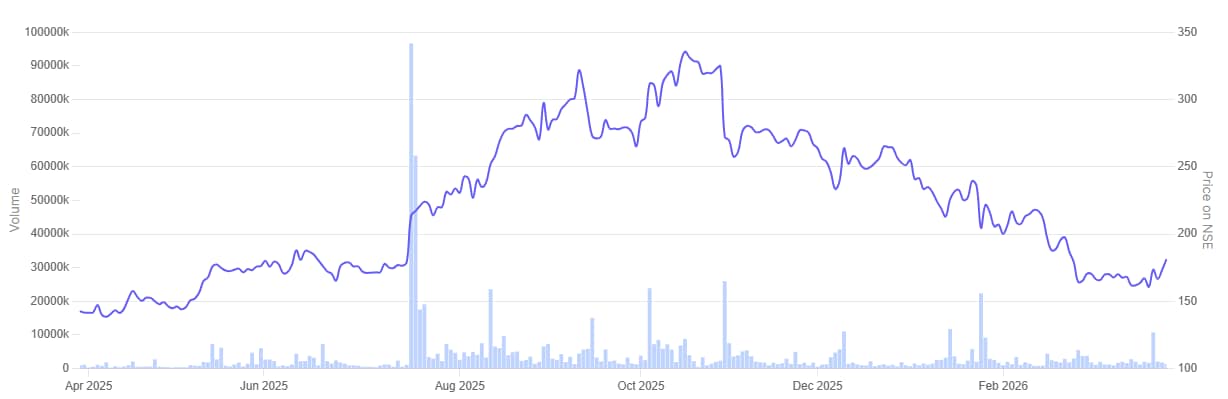
In the past year, share price of Le Travenues Technology is up 26.2%.
Le Travenues Technology 1 Year Share Price Chart
#3 TBO Tek: Revenue jumps 85% on North American expansion
Incorporated in 2006, TBO Tek is in the business of operating multiple online technology platforms and providing access to book global travel inventory aggregated through travel suppliers like airlines, hotels, etc.
TBO Tek reported a strong December quarter, supported by scale-up in the global ticket booking ecosystem. Revenue from operations stood at Rs 784 crore in Q3 FY26 up 85.8% YoY, reflecting the impact of both organic growth and consolidation of Classic Vacations. Net profit for the quarter stood at Rs 54 crore, up 8% YoY.
The business continues to be driven by transaction volumes across its B2B booking platform. Growth in the air segment remained steady, with management indicating mid-teen organic growth and continued momentum into the next quarter. The platform maintained its gross profit discipline even while scaling volumes. This highlights the company’s focus on balancing growth with unit economics in a highly competitive booking market.
Impact of Classic Vacations Acquisition
A key development during the quarter was the integration of Classic Vacations. The acquisition has expanded TBO’s presence in the North America market and added access to around 10,000 high-value travel advisors. Early cross-sell between the two platforms has already started. However, full benefits will take time due to long booking cycles. Platform migration is underway and is expected to be completed over the next few quarters.
The company is also strengthening its supply side. It is connected to multiple global distribution systems and channel managers. Direct sourcing remains a focus area, especially in hotels, as it supports better margins over time. The business continues to operate with negative working capital in hotels, which supports cash flow generation as volumes increase.
Operational Leverage & Efficiency
From an operational standpoint, the company is focusing on improving efficiency. A large part of costs remains fixed in nature, which supports operating leverage as the platform scales. Management expects earnings before interest, tax, depreciation and amortisation (EBITDA) growth to outpace gross profit growth in the near term, driven by this leverage in the core business.
Going ahead, growth will depend on execution in international markets and successful integration of acquired businesses. The ticket booking layer continues to remain a volume-driven model, where scale and efficiency are key. While demand trends remain supportive, margin discipline and integration timelines will be important factors to watch.
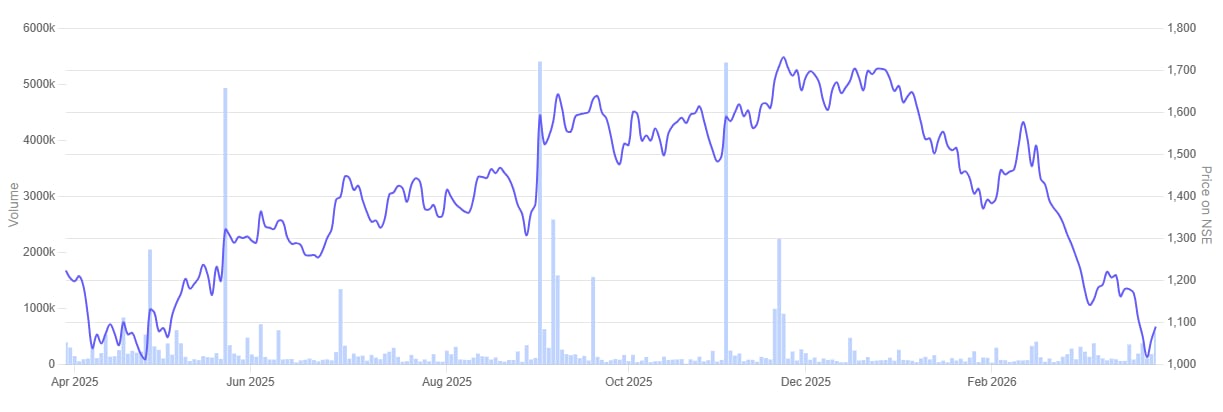
In the past year, share price of TBO Tek is down 10.8%.
TBO Tek 1 Year Share Price Chart
#4 Indian Railway Catering and Tourism Corporation: Digital ticketing dominance as UPI share hits 50%
Incorporated in 1999, Indian Railway Catering and Tourism Corporation (IRCTC) is a Navratna (Category 1, Central Public Sector Enterprises) and the only company authorized by the Indian government to provide online railway tickets, catering services, and packaged drinking water at railway stations and trains in India.
IRCTC reported a strong performance in the December quarter, supported by sustained traction in India’s digital ticket booking ecosystem. Revenue from operations stood at Rs 1,449 crore in Q3 FY26, up 18.2% YoY. Net profit came in at Rs 394 crore, rising 15.5% YoY. The performance was driven by steady growth across ticketing, catering, and tourism segments.
Ticketing Dominance & Scale
Internet ticketing remained the core business. Revenue from this segment stood at Rs 401 crore, growing 13.2% YoY. Nearly 89% of reserved railway tickets in India are now booked online, highlighting the scale of the platform. Average daily ticket bookings increased to around 14.6 lakh tickets, up from 13.6 lakh last year. This reinforces IRCTC’s position as the central gateway for rail travel transactions in India.
The company is also focusing on expanding its monetisation layer around ticketing. Non-convenience revenue grew 26% during the quarter, supported by advertising, loyalty programs, and other value-added services. UPI-based transactions crossed 50% share, reflecting a shift towards digital payments. The company is also working on a payment aggregator business, with regulatory approvals expected over the coming months.
On the expansion front, IRCTC is strengthening its catering and packaged travel offerings. The addition of new trains, including Vande Bharat services, supported growth in catering revenue. The company expects further traction as more trains are introduced over the next few years. In tourism, segments such as Bharat Gaurav and Maharaja Express continue to see strong demand, supported by rising travel activity.
Digital Payments & Future Monetization
The company is also working on building a unified digital platform to cross-sell services such as hotels, flights, and tour packages to its existing user base. With around 1.6 million daily ticket bookings, the platform offers significant scope for monetisation beyond rail tickets. This positions IRCTC not just as a booking utility, but as a broader travel platform.
Going ahead, growth will be driven by higher ticket volumes and expansion of value-added services. The core ticketing business is already mature, with high digital penetration. Future gains will depend on monetisation and cross-selling. While the platform benefits from strong scale and network effects, sustaining growth will require continued innovation in services and pricing.
In the past year, share price of Indian Railway Catering and Tourism Corporation is down 27.1%.
Indian Railway Catering and Tourism Corporation 1 Year Share Price Chart
Valuation Gap: Why IRCTC looks ‘reasonable’ vs Ixigo’s 79x multiple
Let’s now turn to the valuations of the companies in focus, using the Enterprise Value to EBITDA multiple as a yardstick.
Valuations of Companies in focus
| Sr No | Company | EV/EBITDA Ratio | Industry Median | ROCE | ROE |
| 1 | Easy Trip Planners | 48.4 | 22.5 | 20.9% | 16.2% |
| 2 | Le Travenues Technology | 79.0 | 12.6% | 9.7% | |
| 3 | TBO Tek | 27.7 | 26.7% | 24.6% | |
| 4 | Indian Railway Catering and Tourism Corporation | 20.5 | 49.0% | 37.2% |
Return ratios are not uniform here. IRCTC is clearly ahead with ROCE of 49.0% and ROE of 37.2%. TBO Tek also shows strong numbers at 26.7% ROCE and 24.6% ROE. Easy Trip is decent with 20.9% ROCE and 16.2% ROE. Ixigo is lower at 12.6% ROCE and 9.7% ROE, which suggests it is still in a growth phase.
Valuations look stretched for some of them. Easy Trip is at 48.4x EV/EBITDA, well above the industry median of 22.5x. Ixigo is even higher at 79.0x. TBO Tek is at 27.7x, which looks more balanced. IRCTC is at 20.5x, and that feels relatively reasonable.
The trend is straightforward. More people are booking tickets online. Travel itself is increasing. So the number of bookings is going up.
Each company fits in differently. Easy Trip is largely into flight bookings. Ixigo is spread across trains, flights and buses. TBO Tek works more with agents and supply. IRCTC remains the main rail booking platform. All of them are part of the same system. Growth is visible, but margins will decide how things play out.
Conclusion
Travel is clearly picking up – though in the near term the impact of the war in West Asia could dampen growth temporarily. More people are booking online. So volumes are going up across platforms. That part is not very difficult to see.
There are not many listed names, but they still show how this space works. One is strong in rail. One focuses on flights. One is building usage across segments. One works more with agents. Different roles, same flow of bookings.
There is also a gap in how these businesses look today. Some are already generating strong returns. Some are still in the growth phase. Valuations also reflect that gap.
From here, it is more about discipline. Growth should come with travel demand. The question is how much of that growth turns into profits. That is what needs to be watched.
You can track how these companies are progressing by adding stocks to your watchlist.
Disclaimer:
Note: We have relied on data from www.Screener.in throughout this article. Only in cases where the data was not available, have we used an alternate, but widely used and accepted source of information.
The purpose of this article is only to share interesting charts, data points and thought-provoking opinions. It is NOT a recommendation. If you wish to consider an investment, you are strongly advised to consult your advisor. This article is strictly for educative purposes only.
Ekta Sonecha Desai has a passion for writing and a deep interest in the equity markets. Combined with an analytical approach, she likes to deep dive into the world of companies, studying their performance, and uncovering insights that bring value to her readers.
Disclosure: The writer and her dependents do not hold the stocks discussed in this article.
The website managers, its employee(s), and contributors/writers/authors of articles have or may have an outstanding buy or sell position or holding in the securities, options on securities or other related investments of issuers and/or companies discussed therein. The content of the articles and the interpretation of data are solely the personal views of the contributors/ writers/authors. Investors must make their own investment decisions based on their specific objectives, resources and only after consulting such independent advisors as may be necessary.