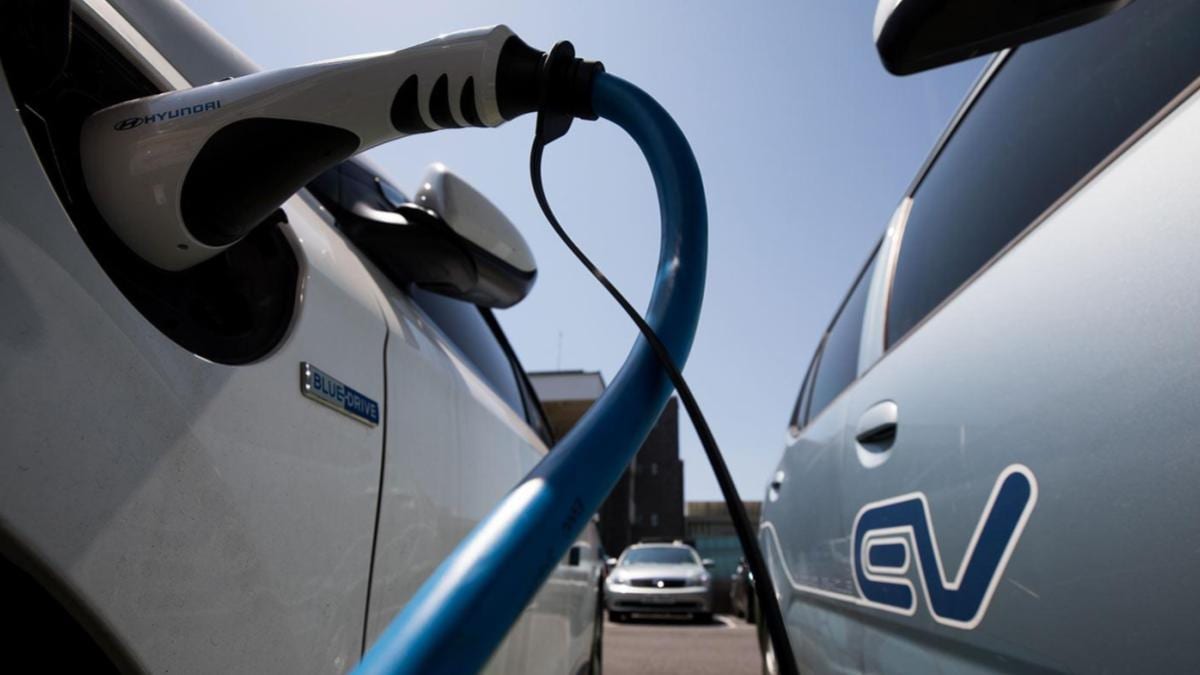
A week after Delhi’s draft EV policy landed, the conversation has largely been about the policy itself, how to avail the subsidies, the timelines, and the infrastructure mandates. What hasn’t been said loudly enough is what the policy does to the equity story in India’s auto sector. According to a recent report by brokerage firm Axis Securities, this policy will essentially separate companies that spent years building EV platforms from those that didn’t.
The report stated that Delhi may account for only about 3-4% of national two-wheeler and passenger vehicle sales. Still, it punches far above its weight as a leading indicator for EV penetration in India.
EV purchases: Demand dip likely
It is important to note that the policy is still under consideration and is open for public comment for 30 days. Axis Securities flags that EV purchases are likely to be deferred in the near-term as buyers wait for policy clarity before committing.
Front-loaded incentives for two-wheelers, which is set at Rs 10,000 per kWh in Year 1, and capped at Rs 30,000, are generous enough that a buyer watching the news will simply wait. Once the policy is confirmed, however, Axis expects a sharp uptick in EV sales driven by pent-up demand.
Delhi Draft EV Policy: The winners
The policy doesn’t leave much to imagination about who benefits. In two-wheelers, Bajaj Auto, TVS Motor Company and Ather Energy are identified as well-positioned, thanks to established EV portfolios and the product traction, as per the brokerage firm.
In passenger vehicles, Tata Motors and Mahindra & Mahindra, early movers in a segment where first-mover advantage compounds, retain their edge. In three-wheelers, the mandate for 100% electric registrations by January 2027 effectively cements the position of already-dominant players.
From the upcoming launches table in the Axis report, Tata Motors has three EV launches lined up: the Sierra EV in May 2026, the Safari EV and Avinya both in November 2026. M&M has three as well, including the Thar.e in August and two Vision models in January 2027.
Delhi Draft EV Policy: The quiet losers
Japanese OEMs, the Axis report highlights, lainly, may need to accelerate EV strategies to remain competitive. Put simply, the report added that companies that built their dominance on fuel-efficient petrol engines are now staring at a challenge.
Honda’s Activa Electric, arriving in October 2026, and Suzuki’s Burgman-street Electric in December 2026 suggest some urgency is registering. Launching one EV model is no longer enough. The real advantage lies with companies that already have a full portfolio, an EV-ready service network, and the ability to price competitively, the report noted.
From a market standpoint, Axis Securities flags a clear split in preparedness. Players such as Ather, TVS, Bajaj, Tata Motors and Mahindra & Mahindra are better positioned, having invested early and built scale, while others risk playing catch-up as the transition accelerates.
The Rs 40,000 crore question
The government has stated that this DraftEV policy will have a Rs 40,000 crore outlay until March 2030. A big part of this comes from scrappage incentives. Buyers can get up to Rs 1 lakh for electric cars (with a cap on beneficiaries), Rs 50,000 for small commercial trucks, and higher payouts for two- and three-wheelers compared to the earlier policy. The idea is to push consumers to replace older vehicles sooner, rather than delaying the shift to EVs.
For passenger vehicles, the policy moves away from upfront subsidies to a more targeted approach built around scrappage benefits and tax relief.
EVs priced below Rs 30 lakh will continue to get full road tax and registration waivers, keeping the incentives focused on the mass market where volumes lie. At the same time, offering a 50% road tax cut for strong hybrids in the same price band reflects a practical stance, acknowledging that not every buyer will shift to full electric immediately, and hybrids can act as a stepping stone in the transition, the report added.
EV Infrastructure – The hidden constraint
The policy’s ambition could still be undone by the one thing no subsidy can instantly fix: charging. Delhi Transco Limited has been designated as the nodal agency to manage public charging infrastructure. The report also noted that OEMs are mandated to deploy at least one public charging station per dealer. Battery traceability and Extended Producer Responsibility norms will be enforced by the Environment Department and DPCC.
Building charging infrastructure is far more complex than mandating it on paper. With the 2027 and 2028 deadlines approaching, the risk is that supply could run ahead of infrastructure. Whether the grid can handle the load and charging stations can be rolled out fast enough remains an open question, the report added.
What the Market should do with this
According to the brokerage firm, staying selective and backing companies that already have scale, pricing power and a credible EV playbook. Within its coverage, it prefers TVS Motor and Bajaj Auto. While it does not rate Ather Energy, Mahindra & Mahindra or Tata Motors’ passenger vehicle business, it flags all three as relatively well placed in the transition.
It further noted that Delhi will be treated as a signalling market, and if implementation goes well, other cities may likely follow.
Disclaimer: This analysis is based on a brokerage report and contains specific mentions of listed stocks and investment themes within the automotive sector. It is intended for informational purposes only and does not constitute a formal recommendation or solicitation to buy, sell, or hold any security. Investors are advised to consult with a SEBI-registered investment advisor to assess how these sector transitions and policy changes align with their individual risk profile and financial goals.
This disclaimer has been generated using AI to support user well-being and responsible content consumption.