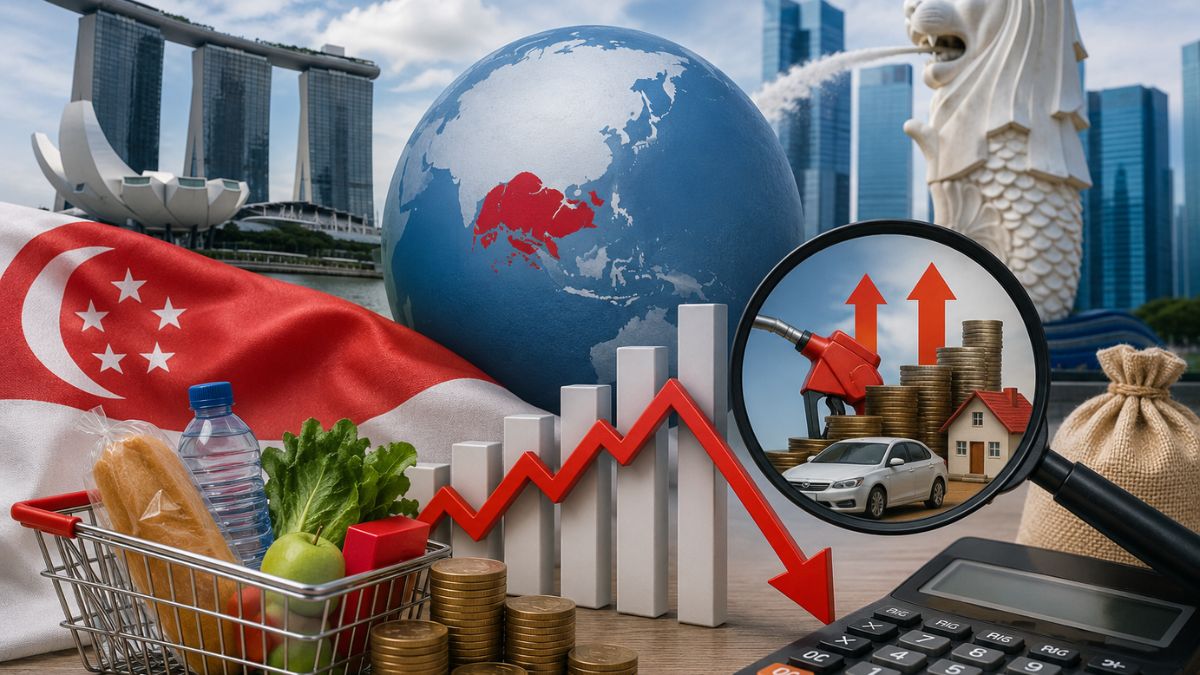
Singapore’s inflation rate remained unchanged at 1.8 per cent in May, coming in below economists’ expectations of 2 per cent. The latest reading matched April’s figure and showed a mixed trend in prices across different sectors of the economy.
Core inflation, which excludes accommodation and private transport costs, also stayed steady at 1.4 per cent in May. This was lower than the 1.6 per cent forecast by economists surveyed by Reuters.
According to the Monetary Authority of Singapore (MAS) and the Ministry of Trade and Industry (MTI), higher food prices as well as increases in retail and other goods costs were largely offset by lower services inflation. On a monthly basis, core consumer prices rose 0.7 per cent in May.
Transport, housing and food costs increase
Overall inflation, measured by the Consumer Price Index-All Items, remained at 1.8 per cent as higher prices in private transport, accommodation, food, and retail goods were balanced by softer services inflation.
Government data showed that private transport inflation was driven by higher prices for cars and motorcycles. Accommodation costs also rose, contributing to the overall increase in consumer prices.
Zaiver Wong, market analyst at eToro told CNBC, elevated fuel prices linked to tensions involving Iran and higher vehicle ownership costs likely played a role in keeping inflation elevated.
Singapore limits growth in its vehicle population, which has increased pressure on car ownership premiums in recent months, Wong noted.
MAS warns of impact from higher energy costs
While inflation remained relatively subdued, Singapore’s central bank cautioned that rising energy costs could push up prices in the coming months. The MAS said energy prices have eased recently but are still higher than levels seen in 2025.
“As higher energy costs pass through global supply chains with a lag, they are expected to raise production and transport costs for a wider range of Singapore’s imported goods and services over time,” the central bank wrote in the press release.
The MAS also said wage growth is expected to slow this year, which could help limit increases in service-sector costs. At the same time, households may become more cautious with spending because of ongoing economic uncertainty.
Central bank keeps focus on inflation risks
The inflation figures come after the MAS tightened monetary policy in April. The central bank cited inflation risks linked to the conflict in the Middle East. Unlike many central banks that use interest rates as their main policy tool, the MAS manages monetary policy through the exchange rate. It allows the Singapore dollar to move within an undisclosed band against a basket of currencies from major trading partners.
In April, the central bank raised its inflation forecasts for 2026. It now expects both core and headline inflation to average between 1.5 per cent and 2.5 per cent for the year, up from its previous forecast range of 1 per cent to 2 per cent.
Economic growth remains strong
The inflation report follows stronger-than-expected economic growth in Singapore during the first quarter. The country’s economy expanded 6 per cent from a year earlier, surpassing the 5.1 per cent growth forecast in a Reuters poll.
Though they had a solid start to the year, the Ministry of Trade and Industry maintained its full-year GDP growth forecast of 2 per cent to 4 per cent. However, it warned that “downside risks have risen significantly as a result of the U.S.-Israel-Iran conflict.”
Disclaimer: This article provides factual analysis only and is not, and should not be construed as, an offer, solicitation, or recommendation to buy or sell securities. Investors must conduct their own independent due diligence and seek advice from a registered financial advisor in the respective jurisdiction.