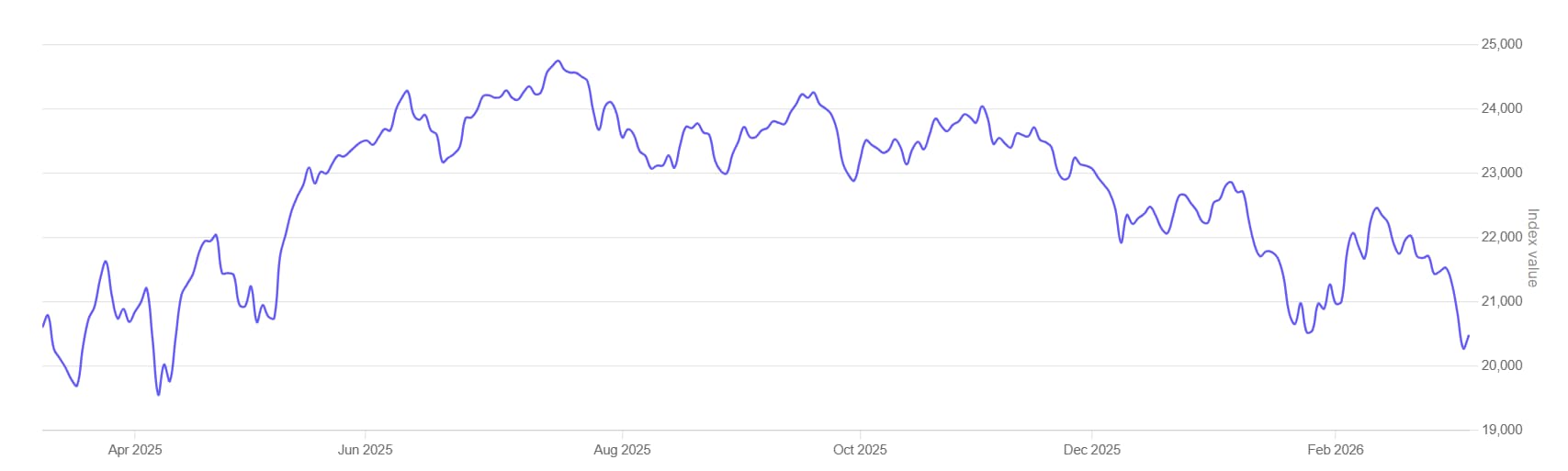
Due to the geopolitical developments in the past few days Nifty 50 has sunk around 1.8% in the past five days, while BSE Sensex tanked more than 3.5% during the week. However, the broader market were the worst hit with Nifty Microcap 250 index falling sharply by around 5% in the past week.
T he Nifty Microcap 250 index has been falling slowly since June mid from a high of around the 24,750 level, and currently it is at the 20,484 level. During the October-December quarter, the index dipped by around 2.8%.
1-year Nifty Microcap 250 Chart
Having said that, domestic institutional investors (DIIs) seem quite fond of these microcaps even when the overall investor sentiment has subdued .
During the Q3FY26, DIIs invested heavily in select microcap stocks, and in this article, we will cover five such stocks where they raised stake by more than 5% points during the quarter.
#1 Ujjivan Small Finance Bank Limited: A Bank for the Masses
Ujjivan Small Finance Bank Ltd., focused on catering to the underpenetrated regions and working towards financial inclusion, saw DIIs raise their stake by 8.54% points during the quarter, taking the total holding to 28.7% at the end of the quarter.
Exponential Growth
During the quarter, the gross loan book jumped by 21.6% Year-on-year (YoY) to ₹37,057 crore, while the quarterly disbursement hit an all-time high of ₹8,293 crore with a generous mix of both secured and unsecured loans.
Microbanking disbursements grew massively by 62.4% YoY to ₹4,688 crore, while the individual loans gross loan book grew to ₹5,687 crore, up by 14.8% YoY. Affordable housing gross loan book grew by 40.3% YoY to ₹8,231 crore as well.
The bank has been expanding its reach amongst the MSMEs, and that is evident from a whopping 69% YoY rise in the MSME gross loan book to ₹2,865 crore, and disbursement for the quarter stood at ₹457 crore, which also jumped by 37.4% YoY.
Financials and Returns
Total revenue for the October-December quarter surged to ₹1,752 crore, up from ₹1,591 crore recorded in the corresponding quarter in the last fiscal. Net profit of the bank jumped significantly by 71% during the quarter from ₹109 crore to ₹186 crore.
All these growing numbers indicate why DIIs are so keen about this small finance bank.
Return on equity (ROE) of the bank is 12.4%, which is slightly higher than the industry median of 10.4%, again indicating a probable reason for DII’s interest.
Valuation
Coming to the valuation, the stock is currently trading at a price/earnings (PE) of 22.4x, which is slightly above the industry median of 21x. Even the price-to-book value (PBV) ratio is 1.7x, more than the industry median of 1x.
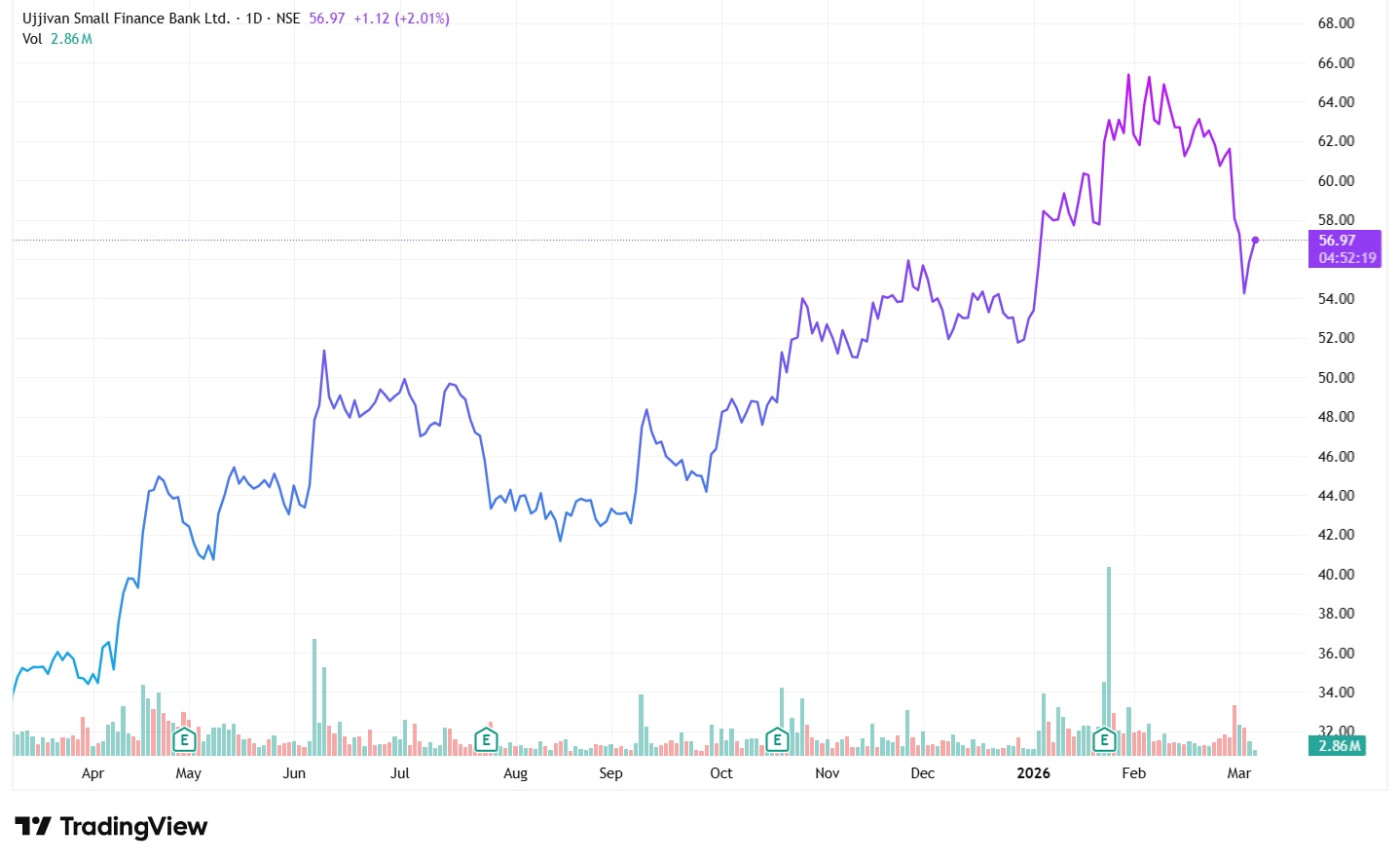
1-Year Share Price Chart of Ujjivan Small Finance Bank Ltd.
#2 Tega Industries Limited: Innovating Critical Mining Consumables
Tega Industries Ltd. is one of the leading manufacturers and distributors of ‘critical-to-operate’ consumables, which primarily include mill liners, made from different products such as rubber, steel, polyurethane, and ceramics, critical for the mineral processing industry.
DIIs raised 7.9% points stake during the third quarter of FY26, taking the overall holding to 18.6% at the end of the quarter. It is to note that during the quarter, the company raised ₹1,713 crore via preferential allotment.
The Molycop Tega Merger
The monies were raised particularly for acquiring Molycop, which is a leading global supplier of grinding media for the mining industry. This acquisition helped Tega Industries debut in the international market. In this journey, above 400 mines of Molycop will be of great importance, which are strategically located across 40 different countries. This acquisition is expected to unlock 26 manufacturing facilities for the company across the globe.
Financials and Returns
Sales declined marginally from ₹409 crore in Q3FY25 to ₹404 crore in Q3FY26; however, profits tanked drastically during the period from ₹54 crore to ₹20 crore.
Perhaps, it is not the sales or profit figures that drove DIIs to this stock during Q3, and probably it is the merger that places Tega at a strategic position to gain from the upcoming demand surge in the mining industry.
Even though the profit reduced massively, the return on capital employed (ROCE) at 17.8% is still marginally above the industry median of 17.1%.
Valuation
The stock is currently trading at a PE of 64.5x. which is way higher than the industry median of 28.1x, indicating a premium valuation. The price/earnings to growth ratio at 3.3x also suggests the same, as the industry median is just 0.5x, which means that even if adjusted for growth, the stock is currently overvalued.
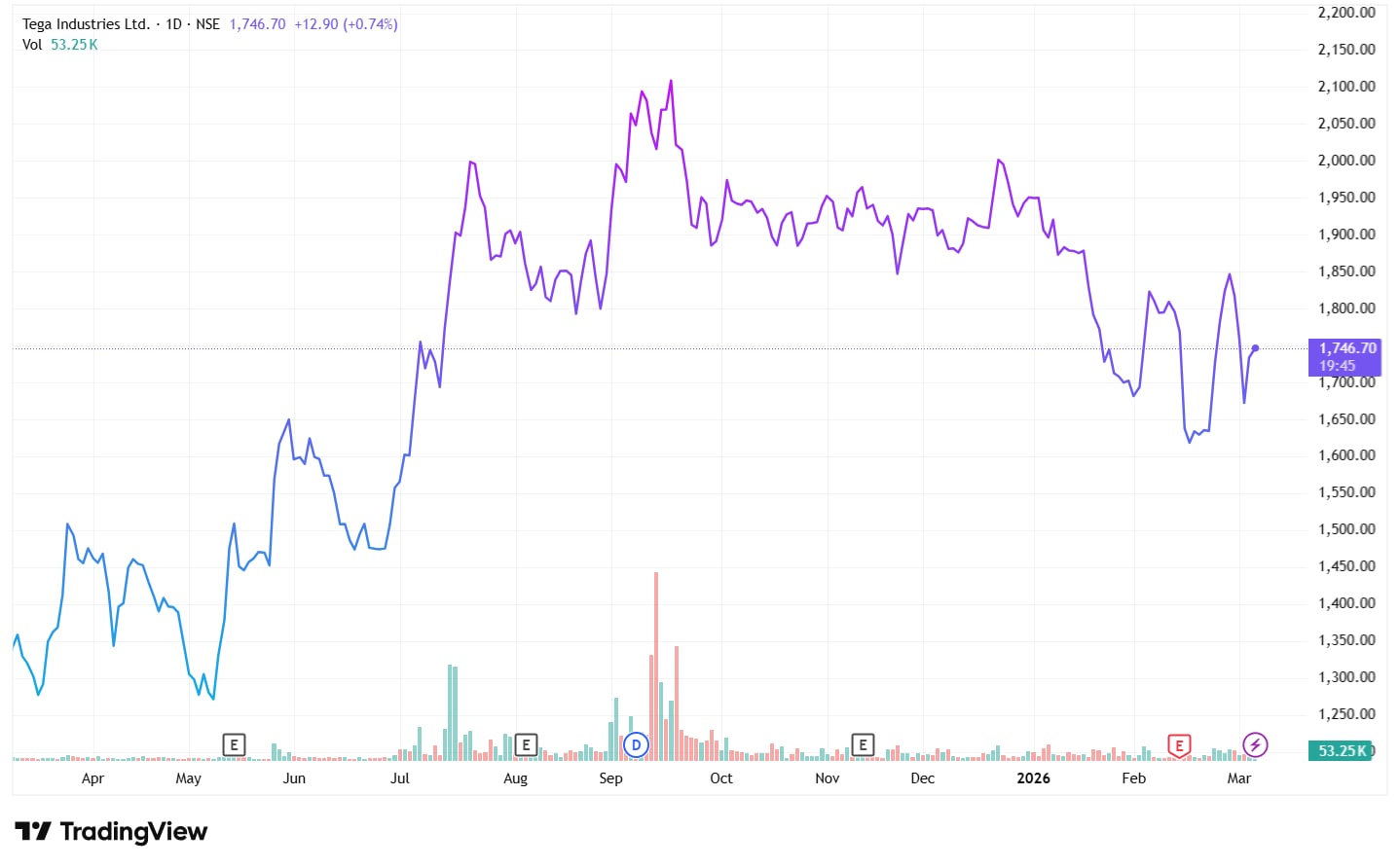
1-Year Share Price Chart of Tega Industries Ltd.
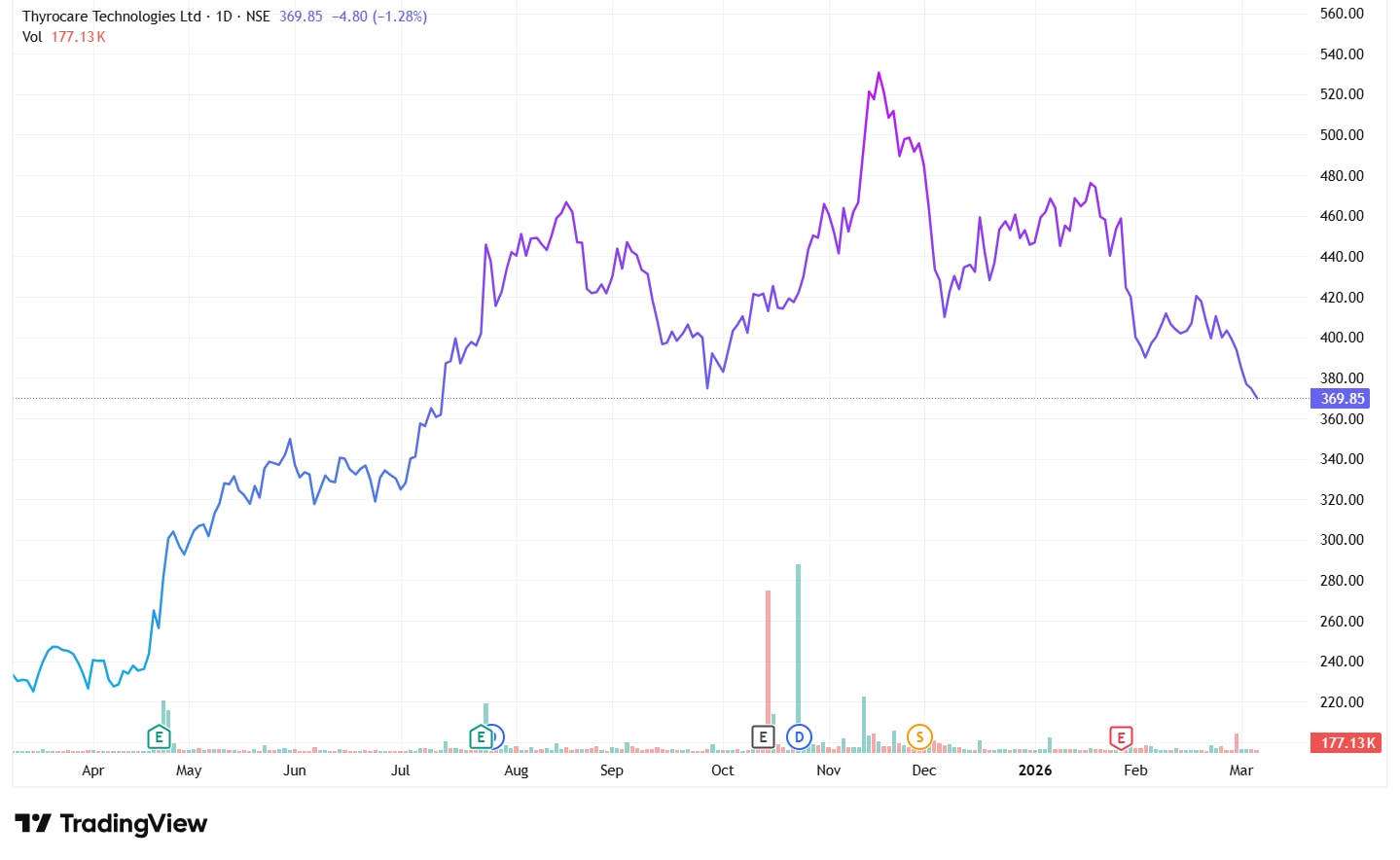
#3 Thyrocare Technologies Limited: With a Dedicated Fleet of 2000 Phlebotomists
Thyrocare Technologies Ltd. is a leading Pan-India diagnostic chain that offers a wide range of tests and profiles along with different wellness packages via their own brand “Aarogyam”.
One of the interesting aspects of this diagnostic chain is that it offers a dedicated phlebotomy fleet for corporate clients, which is quite rare in India. Currently, Thyrocare is the only company offering a fleet of 2,000 phlebotomists which offers an edge to the business.
DIIs raised their stake by 7.1% points in this healthcare company during the quarter ended on 31 December 2025, taking the total holding to 20.5% at the end of the quarter.
Steady Business Growth
During the quarter, the number of patients taking tests from Thyrocare jumped to 4.5 million from 4 million recorded in Q3FY25, logging a 14% YoY growth. While the number of tests performed jumped from 40.5 million to a whopping 49.6 million during the period, growing at 22% YoY.
As Thyrocare runs its business via franchises, the number of franchises grew from 9,158 to 10,278 during the same period, logging 12% YoY growth.
The revenue per patient grew by 6% from ₹371 to ₹394 during the period; however, revenue per test marginally dropped by 2% from ₹36.6 to ₹35.9.
Financials and Returns
During the period, the overall sales went up from ₹166 crore in Q3FY25 to ₹196 crore, logging a 17.9% YoY growth. Net profit for the period went up from ₹19 crore to ₹28 crore, growing at a whopping 75% YoY.
While the profit has surged significantly, the ROCE is slightly lower than the industry median, suggesting the company could utilize the capital more efficiently. The current ROCE of Thyrocare is 24.8% while that of the industry (median) is 25.3%.
Another interesting thing about this microcap company is that it pays dividends to its shareholders, even when most of its peers don’t. It has a dividend yield of 1.9% and a dividend payout ratio of 121.6%, while the industry median is 0.
Valuation
The stock is currently trading at a PE of 41.4x, way higher than the industry median of 29.6x, suggesting a premium valuation.
1-Year Share Price Chart of Thyrocare Technologies Ltd.
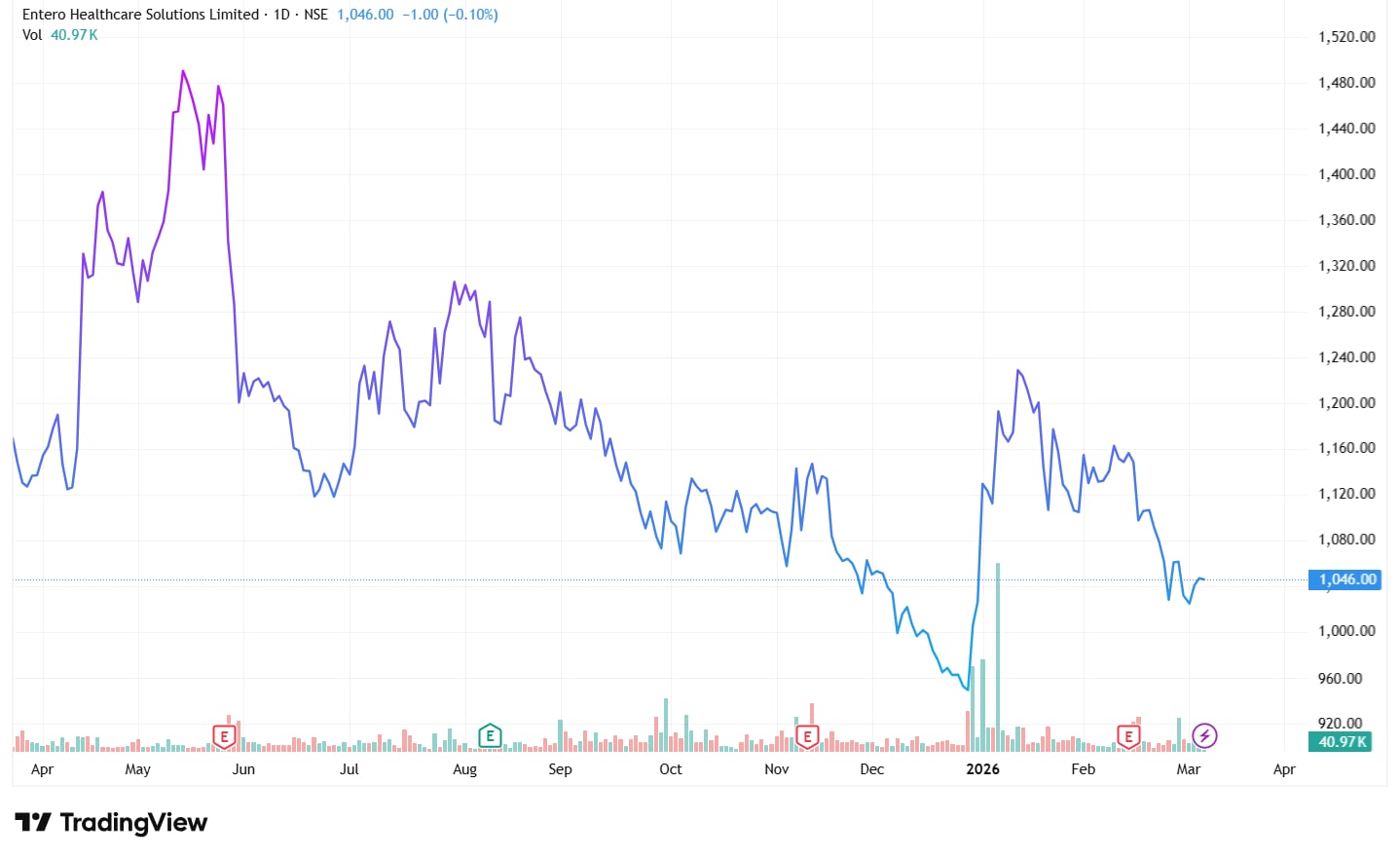
#4 Entero Healthcare Solutions Limited: One of India’s Top 3 Healthcare product distributors
Entero Healthcare Solutions Ltd., another microcap healthcare stock on the list of DIIs, offers healthcare products, including both pharmaceutical and surgical products and allied services.
DIIs raised their stake by 6.8% points in this company, taking the total holding to 16.4% by the end of the Q3FY26.
Major MedTech Push
During Q3FY26, the company made three acquisitions across the MedTech space. The three companies acquired include Anand Medilink Pvt. Ltd., Bioaide Technologies Pvt. Ltd., and Ace Cardiopathy Solutions Pvt. Ltd. In the first two, Entero acquired 80% stake and 60% in the last one.
Another acquisition, though completed this February, was started in November 2025, and it is Anand Chemiceutics Pvt. Ltd., where Entero bought 51.5% stake.
With these major acquisitions, Management is expecting the MedTech revenue of the firm to cross ₹1,000 crore in FY27.
Financials and Return
Sales jumped from ₹1,359 crore in Q3FY25 to ₹1,706.5 crore in Q3FY2 6, growing at 25.6% YoY. Profit for the period surged from ₹29.4 crore to ₹34 crore, growing at 15% YoY.
Coming to the returns, ROCE of Entero Healthcare stood at 8.7%, slightly lower than the industry median of 9.5%.
It seems DIIs are looking beyond these return ratios and perhaps are more focused on the growth in the MedTech space that the company is anticipating.
Valuation
The stock is currently trading at a PE of 39.1x, lower than the industry median of 44x. While the PEG ratio is at 0.5x, way lower than the industry median of 1.8x. This indicates that adjusted for growth, the stock is undervalued at the current market price of ₹4,554.24 per share (as of 6 March 2026).
1-Year Share Price Chart of Entero Healthcare Solutions Ltd.
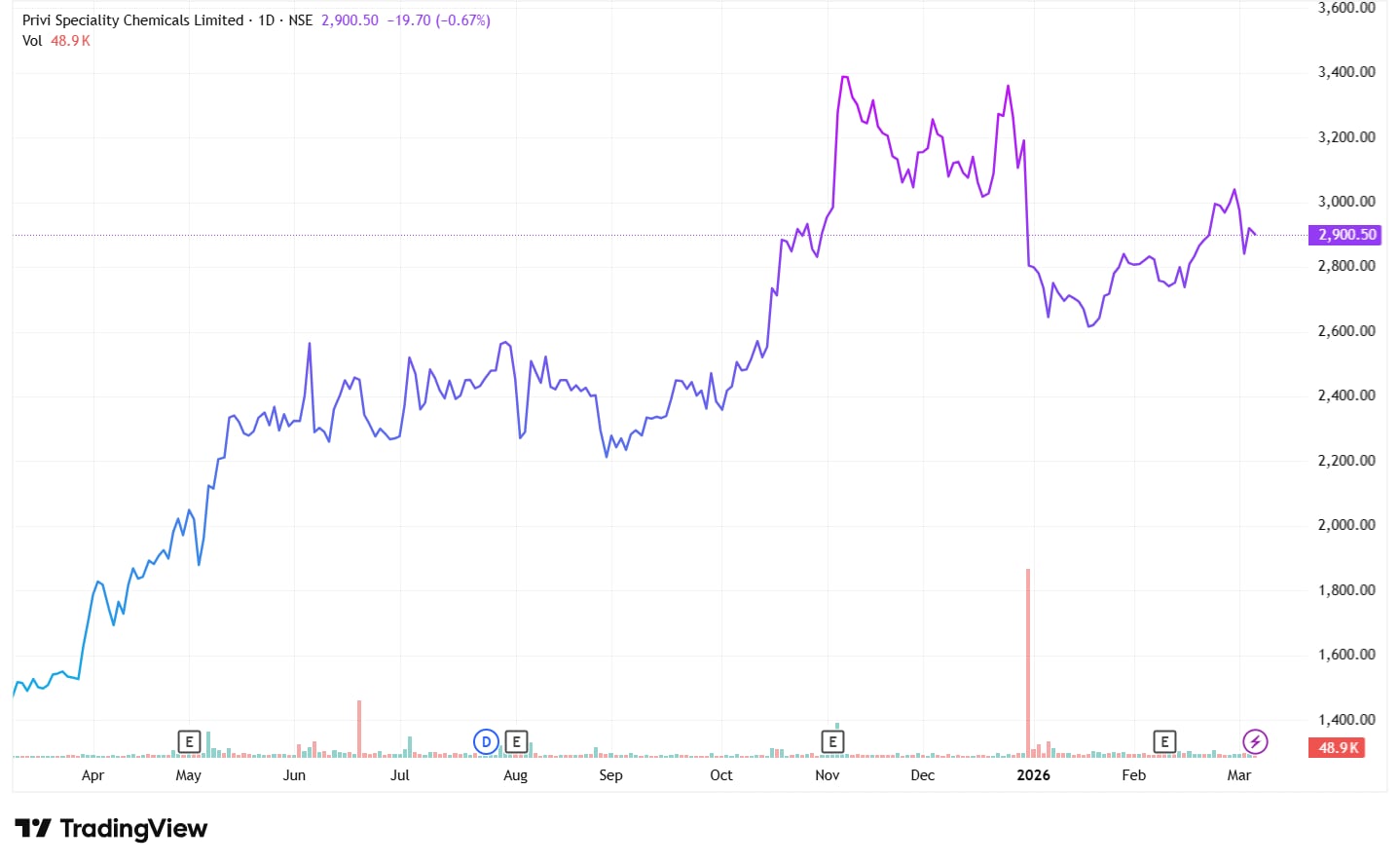
#5 Privi Specialty Chemicals Limited.: Commissioning of Prigiv
Privi Specialty Chemicals Ltd. is the largest manufacturer, supplier, and exporter of aroma chemicals to a strong clientele of FMCG companies across the globe. The company produces chemicals that are used for infusing fragrance and aroma in different products such as soaps, shampoos, detergents, and other fine fragrances.
DIIs during the October-December quarter raised 5.7% points stake in this aroma giant, taking the total holding to 10.3% at the end of the quarter.
Privi X Givaudan
One of the major events for the aroma chemical giant during Q3 was the commissioning of the Prigiv, which is a joint venture between Privi Specialty Chemicals and Givaudan. During the quarter, this joint venture offered a positive EBITDA (earnings before interest, tax, depreciation, and amortization), which is considered to be a turnaround for the company. The management expects this to turn into net profit in FY27.
Financials and Return
During the quarter, sales went up from ₹491 crore in Q3FY25 to ₹605 crore in Q3FY26, logging a 23.2% YoY growth. However, profits jumped by a massive 76% YoY from ₹44 crore to ₹75 crore during the period.
Coming to the returns, ROCE is at 16.4%, slightly higher than the industry median of 15.4%.
The specialty chemical giant also pays a regular dividend, and its payout ratio is 10.4% higher than the industry median of 8.7%; however, the dividend yield is 0.2%, lower than the industry median of 0.4%.
Valuation
The stock is currently trading at 37.7x, higher than the industry median of 26.1x, indicating a premium valuation. Even adjusted for growth, the stock seems overvalued as the PEG ratio of the stock is 1.5x, while that of the industry (median) is 0.2x.
1-Year Share Price Chart of Privi Specialty Chemical Ltd.
Final Thoughts
While the broader markets are highly volatile given the current scenario, DIIs’ selective picks in the microcap segment indicate sectoral tailwinds, strong fundamentals, strategic acquisitions paving the way to solid revenue visibility, and more.
Having said that, as the Middle East turmoil has turned the markets upside down, it is crucial for investors to move cautiously. Thus, if you are interested in these microcap stocks, it is better to add them to your watchlist for now.
Disclaimer:
We have relied on data from www.Screener.in throughout this article. Only in cases where the data was not available have we used an alternate, but widely used and accepted source of information.
The purpose of this article is only to share interesting charts, data points, and thought-provoking opinions. It is NOT a recommendation. If you wish to consider an investment, you are strongly advised to consult your advisor. This article is strictly for educational purposes only.
Maumita Mitra is a seasoned writer specializing in demystifying the world of investment for a broad audience. She has a keen eye for detail and a knack for explaining complex financial concepts in the simplest manner possible.
Disclosure: The writer and her dependents do not hold the stocks discussed in this article.
The website managers, their employees (s), and contributors/writers/authors of articles have or may have an outstanding buy or sell position or holding in the securities, options on securities, or other related investments of issuers and/or companies discussed therein. The content of the articles and the interpretation of data are solely the personal views of the contributors/ writers/authors. Investors must make their own investment decisions based on their specific objectives, resources, and only after consulting such independent advisors as may be necessary.