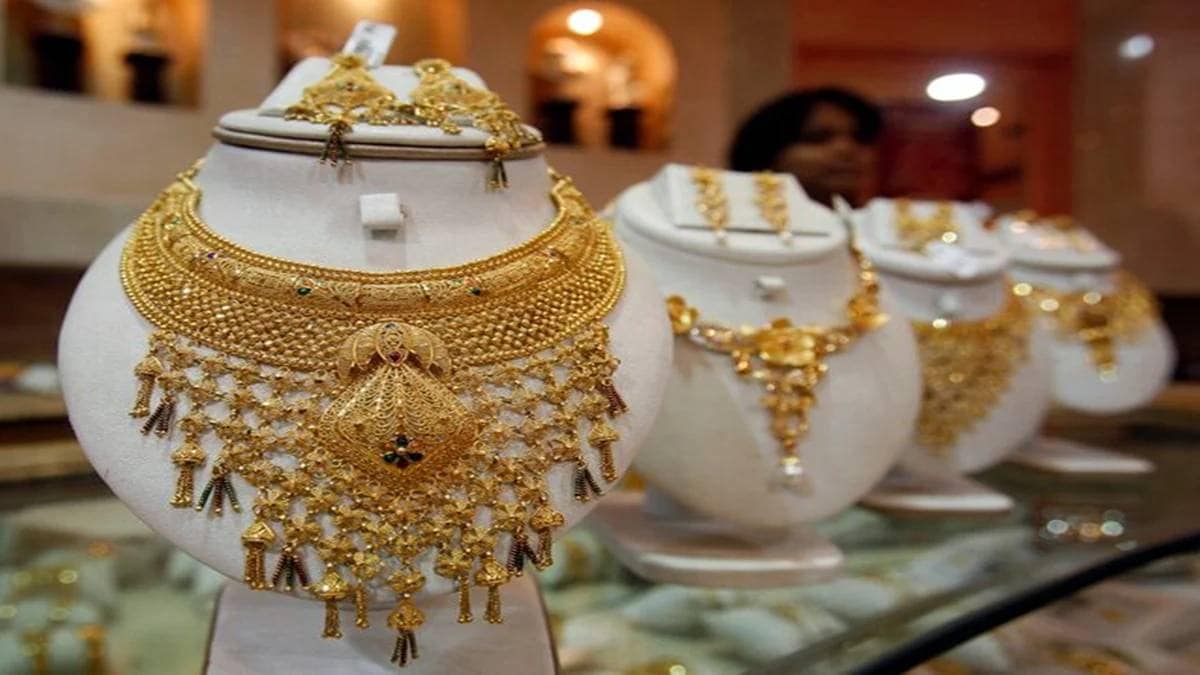
If you thought gold was expensive on Akshaya Tritiya 2025, this year’s price will come as a shock. On Akshaya Tritiya 2025, the 22-carat gold price per ten grams was Rs 95,500. Today, on Akshaya Tritiya 2026, the gold price is Rs 1,50,000 — a jump of over 50% in just one year.
Will gold prices go even higher? Nobody knows, and you should not fall for wild guesses or bold predictions. Instead, look at publicly available data, key indicators, and the reasons behind the gold bull run that started nearly three years ago. As long as those reasons hold ground, gold prices are likely to stay firm. If they weaken, a significant pullback may follow.
Gold’s Performance in 2026
Gold entered 2026 on the back of a 65% return in 2025. On January 29, it hit an all-time high of Rs 1,75,000 in the Indian market and $5,602 in the international market.
Things looked good for gold investors — until the Iran war changed everything. Contrary to what most people expected, gold actually started falling even as the US continued to strike Iran with missiles. Why? Investors began selling their gold holdings to meet margin requirements across other financial assets, while others sold to raise cash. At the same time, a big fundamental shift happened — the US dollar index, which had lost nearly 12% in 2025, started recovering and quickly crossed the 100 mark.
But why did the dollar rise as oil prices shot up? Because oil is still traded in dollars worldwide, as demand for oil rose, so did demand for dollars, pushing the dollar index higher. Oil was at $72 before the war and went up to $119. As of April 17, oil prices have plunged 10% after Iran’s Foreign Minister Abbas Araghchi announced that the Strait of Hormuz is now fully open to commercial traffic during the 10-day ceasefire period
Here is the oil-dollar-gold equation in simple terms. When the dollar strengthens, gold loses its shine — it is a zero-yielding asset and becomes less attractive. The result was predictable. Gold fell into bear market territory, dropping 20% from its January peak.
Where Does Gold Stand Today?
As of now, no final agreement has been reached in the ongoing US-Iran negotiations, except for the announcement of the ceasfire. The flow of oil through the Strait of Hormuz remains a major factor influencing financial markets. Gold is currently trading around $4,800 — up $400, or about 10%, from recent lows. So far in 2026, it is up 11%. Where it goes from here remains the multi-million dollar question.
What Could Push Gold Prices Higher?
Big institutional players are still bullish on gold. Goldman Sachs is maintaining its forecast for gold to reach $5,400 per troy ounce by the end of 2026, while UBS expects prices to end the year around $5,900 per ounce.
Two key factors support this bullish view — expectations of US Fed rate cuts later in 2026, and a potential weakening of the US dollar index. Both tend to push gold higher. However, much will depend on how US inflation data shapes up in the coming months and how long the war continues to keep oil prices elevated.
“For Akshaya Tritiya 2027, analysts lean toward a bullish outlook, targeting levels near Rs 1.8 lakh to Rs 1.9 lakh. The primary drivers remain central bank diversification away from the dollar and persistent geopolitical friction in the Middle East. However, the trajectory depends heavily on the US Federal Reserve; any delay in interest rate cuts could cause sideways movement. While 2027 prices are expected to be higher, the ascent will likely be more gradual than the explosive 50% plus rally seen this past year,” says Dr. Renisha Chainani, Head of Research at Augmont.
A Word of Caution
Gold is not without risk, as history has shown it’s prone to brutal crashes too. At least three times in the past, gold has hit new peaks and then fallen sharply to major lows. In one such crash in the 1980s, gold surged 541% from August 1976 to September 1980 — and then plummeted 52% between September 1980 and June 1982.
Today, gold prices are being pulled in multiple directions — interest rates, the dollar, central bank demand, institutional fund flows, global growth outlook, and US debt levels, among other factors. A new, unexpected trigger, a so-called Black Swan event, could emerge at any time and change the picture entirely.
What Should You Do?
If you have no gold exposure in your portfolio yet, this Akshaya Tritiya can be a good starting point. Do not go all-in. A 10-15% allocation to gold makes sense if it aligns with your risk appetite and long-term goals.
Physical gold or Gold ETF — which is better? The answer is fairly straightforward. If you want exposure to gold at prices close to physical rates but do not want to pay jewellery-making charges, Gold ETFs are the better option.
Overall, gold has had an extraordinary run, followed by a sharp correction, and now sits at an uncertain crossroads. Which way it turns in the short, medium, or long term is anybody’s guess. The smartest move right now is to have a plan in place to ride out the volatility, both before and after the Iran war ends.
Disclaimer: This article is intended for informational purposes only and should not be construed as investment advice, financial guidance, or a recommendation to buy or sell any asset. Gold prices are subject to market volatility and may rise or fall without notice. Past performance is not indicative of future returns. The views and recommendations expressed by experts in this article are their own and do not represent the views of Financial Express. Readers are advised to exercise due diligence and consult a qualified financial advisor before making any investment decisions.