India’s healthcare story is no longer limited to large hospitals and big pharma companies. A quieter shift is taking place in niche areas of healthcare. Fertility care is one such area. Complex active pharmaceutical ingredients (APIs) are another. Contract Development and Manufacturing Organisation (CDMO) services are also gaining ground. Oncology formulations are becoming important too. These areas may be smaller in size. But they serve specific and growing medical needs.
This is why niche healthcare businesses are getting more attention. Big pharma remains important. But investors are also looking beyond large drug makers. They are looking at companies that operate in specialised segments. These businesses can benefit from focused demand. They may also have higher entry barriers. In some cases, they need deeper technical expertise. This can make competition less broad than in mainstream medicines.
According to the data available on Trendlyne.com this trend is visible in the portfolios of super investors as well. Some of them are holding companies that are not typical large-cap pharma names. These companies are linked to specialised healthcare services. Some are linked to pharma manufacturing. Others are focused on treatment-led categories. This shows that investor interest is not only about scale. It is also about focused business models within healthcare.
In this article, we look at three such niche healthcare stocks held by well-known super investors. The list covers different parts of the healthcare value chain. It includes a service-led healthcare business. It also includes a pharma manufacturing play. It also has a company focused on a critical treatment segment.
The stocks have been selected because they are directly linked to healthcare and appear in the portfolio of reputed Indian investors. They are also part of identifiable niche categories. They are not broad hospital chains. They are not generic large pharma names either. Each company represents a different pocket of demand within the sector. This makes the list more focused. It also helps capture how super investor portfolios are reflecting the rise of specialised healthcare opportunities.
#1 Gaudium IVF and Women health: Scalability vs. Margin sustainability
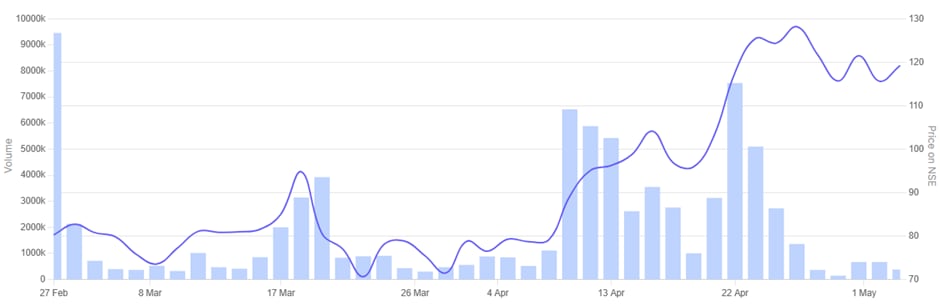
Incorporated in March 2015, Gaudium IVF and Women Health is engaged in In Vitro Fertilization (IVF) treatments throughout India. Gaudium IVF and Women Health is a recently listed niche healthcare services company. It made its stock market debut on February 27, 2026.
Hub-and-spoke model: Scaling beyond metro hubs
The company operates in fertility care, women’s health, and related medical services. It has grown through a hub-and-spoke model. It had more than 30 locations. This included 7 hubs and 28 spokes across India.
During the March 2026, Mukul Agrawal added fresh stake in the company. As of 31 March 2026 he holds 3.4% stake in the company.
For the quarter ended December 2025, Gaudium IVF reported consolidated sales of Rs 24.5 crore up 70% year-on-year (YoY). Net profit stood at Rs 3.6 crore. The growth in net profit was around 7% YoY. The numbers show strong top-line growth. But profit growth was more modest.
The margin challenge: High growth vs. Rising operating costs
The margin picture was softer. Operating profit rose to Rs 6.5 crore from Rs 5.7 crore a year earlier. But the operating profit margin fell to 26.76% from 39.25%. This suggests that the company is growing fast. But the cost base has also moved up. That is important for investors to watch. In a specialised healthcare services business, scale alone is not enough. The company also needs to protect margins as it expands.
Gaudium IVF’s expansion plan is built around access. Its hubs are located in larger centres. These include Delhi, Mumbai, Ludhiana, Srinagar, Patna, and Bengaluru. The spokes support consultations, preliminary treatments, and follow-up care. Advanced procedures are handled at the hubs. This model can help the company expand without building full-scale hospitals in every location. It also allows the company to reach smaller and underserved markets through a lighter network.
The company also plans to use IPO proceeds for growth. The DRHP says the net proceeds are proposed to be used for new IVF centres, working capital for these centres, investment in subsidiary EKK Global Private Limited, and general corporate purposes. The planned investment in EKK Global is linked to launching fast-moving consumer goods products. These include mother-and-child wellness products and nutraceutical products. This shows that the company wants to build revenue streams around its existing patient and clinic network.
The business also has a small international connection. The DRHP mentions a collaboration agreement with a company in London dated May 1, 2024. Under this agreement, the London partner provides IVF consultancy services and guidance to patients on behalf of Gaudium IVF. The role is limited to guidance. Still, it gives the company an overseas patient-connect point. This is relevant because India is also seen as a destination for fertility treatment and medical tourism.
The company’s story is therefore a mix of growth and execution risk. The December 2025 quarter showed strong revenue growth. The listing also gave the company public-market visibility. Its business sits in a focused area of healthcare. But the slower profit growth and fall in operating margin need attention. For investors, the key question is simple. Can Gaudium IVF expand its network while keeping costs and margins under control?
Since its listing, the share price of Gaudium IVF and Women Health rallied 48.3%.
Gaudium IVF and Women Health 1 Year Share Price Chart
#2 Neuland Laboratories: Transitioning from Generic API to CDMO
Neuland Laboratories is engaged in the manufacturing and selling of bulk drugs and caters to both domestic and international markets.
As of March 2026, Mukul Agarwal holds 3.1% stake of Neuland Laboratories.
Along with Mukul, Vijay Kedia also holds a stake in the company. As of March 2026, Kedia holds 1% stake in the company. This is his shareholding pattern in Neuland Laboratories for the past eight quarters.
Lumpy Revenue vs. Long-Term Growth: Decoding the Neuland PAT Drop
Neuland Laboratories reported steady growth in the December quarter, supported by its core Contract Development and Manufacturing Organisation (CDMO) business. Total income for Q3FY26 stood at Rs 440 crore, up 10.6% year-on-year (YoY). Profit after tax came in at Rs 41 crore, lower than Rs 102 crore in the same period last year, mainly due to product mix and absence of certain high-margin shipments.
The operating picture also showed pressure. EBITDA stood at Rs 85 crore. The EBITDA margin was 19%. Management said margins were affected by lower gross margin and higher overheads. It also said there was a Rs 10 crore impact from labour codes in Q3FY26. Without this impact, EBITDA would have been Rs 95 crore, with a 21% margin.
CDMO Pivot: Moving from Generic APIs to Innovator Partnerships
Neuland’s main story is not a simple quarterly growth story. The management repeatedly pointed to the uneven nature of the business. This is common in CDMO and specialty generic drug substance businesses. Large shipments can move numbers from one quarter to another. Management said some CMS shipments are now as large as Rs 50 crore to Rs 100 crore. That makes quarterly performance lumpy.
The company’s strategic shift remains the key point. Neuland said a majority of its revenue now comes from human health-focused CDMO business. It has also started working with big pharma. This marks a clear move away from being only a generic API supplier. The company is now positioning itself as a partner for innovators. This includes work on new chemical entities and complex molecules.
Peptide Opportunity: Investing in High-Complexity Manufacturing
The peptide opportunity is another important part of the story. Management said customers are showing interest in Neuland’s peptide CDMO capabilities. It also said five or six innovators have brought peptide projects to the company this year. These projects are still early-stage. So they do not give revenue certainty yet. But they show rising engagement in a specialised area of pharma manufacturing.
The company is also investing for this opportunity. Its large-scale peptide manufacturing facility is expected to be ready for commissioning in July. Neuland is also shifting its research and development facility to a new campus in Genome Valley. Management said the new campus will support process development and scale-up work for peptides. This is meant to strengthen its position among Indian CDMO players.
There was also progress on commercial projects. The company said the expansion of capacity for an additional CMS product was completed. Ramp-up has started. Volumes were shipped in Q3 itself. But management said the ramp-up is still at an early stage. It may take another one or two quarters to pick up. Another CMS molecule has also been commercialised. Some shipments went out at the end of the quarter. More shipments are expected in Q4 and into the next year.
Neuland is also seeing business across geographies. Management said the CMS business is getting traction from a range of customers across markets. It also said new business is coming in, with deliveries expected over 12 to 24 months. This supports the view that the company is building a medium-term order base. But it also means execution and timing will remain important.
The balance sheet continues to reflect investment mode. Neuland reported a cash outflow of Rs 254 crore towards capital expenditure for 9MFY26. Working capital stood at 145 days of sales. Management said higher inventory and uneven order flow had pushed up working capital. It is now working on inventory optimisation and faster customer collections.
The Q3 numbers show the two sides of the story. Revenue grew in double digits. But profit fell sharply. Management remains positive on the medium-term opportunity. Still, investors will need to watch the pace of ramp-up, margin recovery, peptide execution, and working capital. The company has a strong niche. But the quarter also shows why this business needs to be judged over a longer period, not only one quarter.
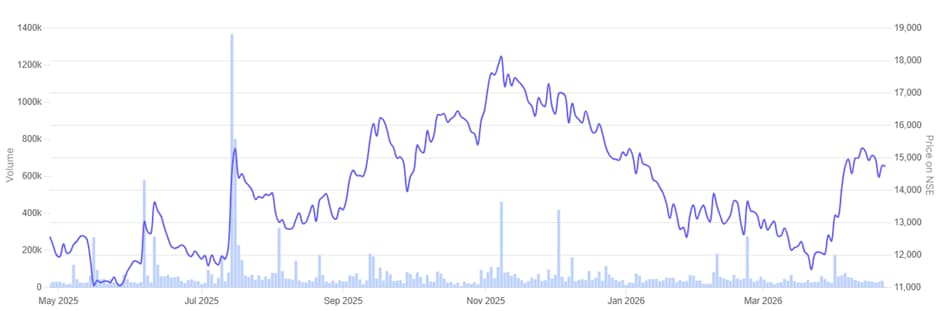
In the past year, the share price of Neuland Laboratories rallied 34.3%.
Neuland Laboratories 1 Year Share Price Chart
#3 Beta Drugs: Navigating the Regulated Market Pivot
Beta Drugs is engaged in manufacturing of a wide range of oncology (anti-cancer) drugs in India. It has operations in the domestic and export markets.
As of March 2026, Ashish Kacholia holds 12.5% stake of Beta Drugs.
For the December 2025 quarter, Beta Drugs reported consolidated sales of Rs 87.3 crore. This was lower than Rs 88.3 crore in the December 2024 quarter. Net profit stood at Rs 8.5 crore. This was down from Rs 8.9 crore a year earlier.
The operating performance was also softer. Operating profit stood at Rs 17 crore in Q3FY26. This was lower than Rs 18.5 crore in Q3FY25. The operating profit margin also slipped to 19.5% from 20.9%. The quarter showed pressure on both revenue and margins. This is important because the company is still investing in exports, registrations, and new products.
The company’s broader business remains focused on oncology. Management said its own branded oncology business had grown by nearly 20% compared with the previous year. It also said the top 10 brands contributed more than 50% of the branded business. Its Caxfila OS Suspension, launched last year, was close to becoming a Rs 10 crore brand. The company also said six brands could become Rs 5 crore brands during the year.
Export Expansion: Building a Global Oncology Regulatory Pipeline
Exports are an important part of the next phase. Management said the export business had been slower in the first half because global oncology exports are largely tender-driven. It said most tenders come in the later part of the year. Awards usually come around December. Sales then reflect from January to March. This makes the second half more important for the export run-rate.
The company has been building its regulatory pipeline. It said it filed more than 80 new dossiers across geographies in the first half. It also received 43 new approvals across markets such as Colombia, Central America, Jordan, and the Philippines. Management said it plans to file more than 150 dossiers over the next two years. This is a key growth lever for its export business.
Beta Drugs is also trying to enter more regulated markets. Management said Europe approval had been delayed. But it expected the process to move ahead between January and March. It also said product development for Europe and other regulated markets had already started. The company expects its cytotoxic suspension plant to be inspected by Europe. Management said this could give it an edge as a cytotoxic player globally.
Vertical Integration: Reducing Reliance on Chinese Intermediates
There is also progress on backward integration. The company acquired a new facility to produce intermediates. This is meant to strengthen its drug master files and reduce dependence on China. Management said the facility was close to its existing active pharmaceutical ingredient plant. It also said the target was to build it over the next six to eight months. The acquisition cost was around Rs 9.45 crore. Additional capital expenditure of around Rs 15 crore to Rs 20 crore was expected for plant and machinery.
The company is also widening its product base. It received approval for what it called the first new drug delivery system of Methotrexate oral solution in India. Management said two more such oncology products are expected next year. It has also filed three new drugs for which the active pharmaceutical ingredient has been developed in-house. These products are expected to support domestic growth over the next three to five years.
The dermatology and aesthetics business is another smaller growth area. Management said the division had become profitable in the first half. It had also completed its first in-licensing arrangement with an Italian company for fillers in the aesthetics market. The company is also registering Meso-Fills. Management estimated the addressable market at around Rs 1,000 crore. It said it aims to build Rs 50 crore to Rs 100 crore of sales from this opportunity over three to five years.
The Q3 numbers, however, need a balanced reading. Revenue and profit both declined year-on-year. Margins also softened. At the same time, the company is investing in exports, dossiers, regulated markets, backward integration, and new oncology products. The key question is execution. Investors will have to watch whether these filings, approvals, and new products translate into stronger sales and better margins in the coming quarters.
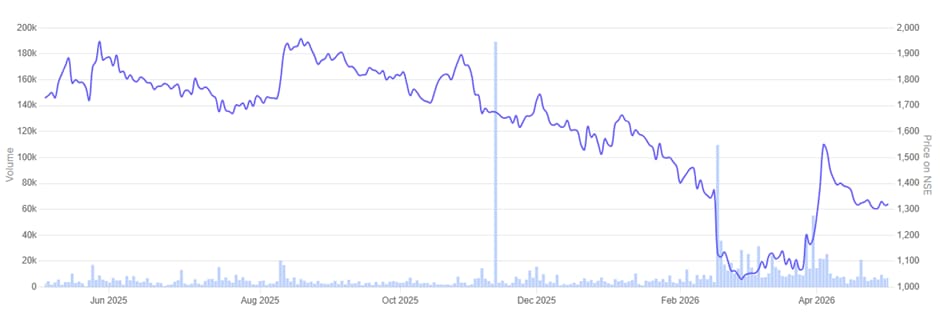
In the past year, the share price of Beta Drugs tumbled 23.1%.
Beta Drugs 1 Year Share Price Chart
Valuations
Let’s now turn to the valuations of the companies in focus, using the Enterprise Value to EBITDA multiple as a yardstick.
Valuations of Companies in focus
| Sr No | Company | EV/EBITDA Ratio | Industry Median | ROCE | ROE |
| 1 | Gaudium IVF and Women Health | 29.9 | 25.7 | 48.6% | 52.2% |
| 2 | Neuland Laboratories | 61.0 | 15.5 | 18.7% | 14.8% |
| 3 | Beta Drugs | 15.5 | 15.5 | 27.0% | 25.9% |
Among the three, Gaudium IVF and Women Health has the strongest return ratios. Its return on capital employed (ROCE) is 48.6% and return on equity (ROE) is 52.2%. Beta Drugs also has a good return profile, with ROCE of 27.0% and ROE of 25.9%. Neuland Laboratories is behind these two, with ROCE of 18.7% and ROE of 14.8%.
Valuations are less uniform. Gaudium IVF trades at 29.9 times EV/EBITDA, while its industry median is 25.7 times. This puts it slightly above the industry level. Neuland Laboratories is trading at a much higher valuation. Its EV/EBITDA is 61.0 times, against the industry median of 15.5 times. Beta Drugs is closer to the industry benchmark. It trades at 15.5 times EV/EBITDA, the same as the industry median.
Conclusion
Niche healthcare is slowly getting noticed by super investors. But retail investors should not treat this as a ready-made stock idea. A big investor may have entered early. The buying price may be very different. The holding period may also be longer.
Gaudium IVF, Neuland Laboratories, and Beta Drugs are not regular healthcare names. One is linked to fertility care. One is focused on complex pharma manufacturing. One works in oncology products. The theme is interesting. But each company has a different business model and a different risk.
Valuations also need attention. Neuland is already trading at a high premium. Gaudium IVF is also above its industry median. Beta Drugs is closer to its industry level. So, the same healthcare theme does not give the same comfort in every stock.
These names can be tracked. But retail investors should not copy super investors as it is. They should look at sales growth, profit margins, approvals, expansion plans, and execution. In niche healthcare, the opportunity is visible. But returns will depend on how well these companies perform from here.
You can track how these are progressing by adding stocks to your watchlist.
Note: We have relied on data from www.Screener.in throughout this article. Only in cases where the data was not available, have we used an alternate, but widely used and accepted source of information.
The purpose of this article is only to share interesting charts, data points and thought-provoking opinions. It is NOT a recommendation. If you wish to consider an investment, you are strongly advised to consult your advisor. This article is strictly for educative purposes only.
Ekta Sonecha Desai has a passion for writing and a deep interest in the equity markets. Combined with an analytical approach, she likes to deep dive into the world of companies, studying their performance, and uncovering insights that bring value to her readers.
Disclosure: The writer and her dependents do not hold the stocks discussed in this article. The website managers, its employee(s), and contributors/writers/authors of articles have or may have an outstanding buy or sell position or holding in the securities, options on securities or other related investments of issuers and/or companies discussed therein. The content of the articles and the interpretation of data are solely the personal views of the contributors/ writers/authors. Investors must make their own investment decisions based on their specific objectives, resources and only after consulting such independent advisors as may be necessary.