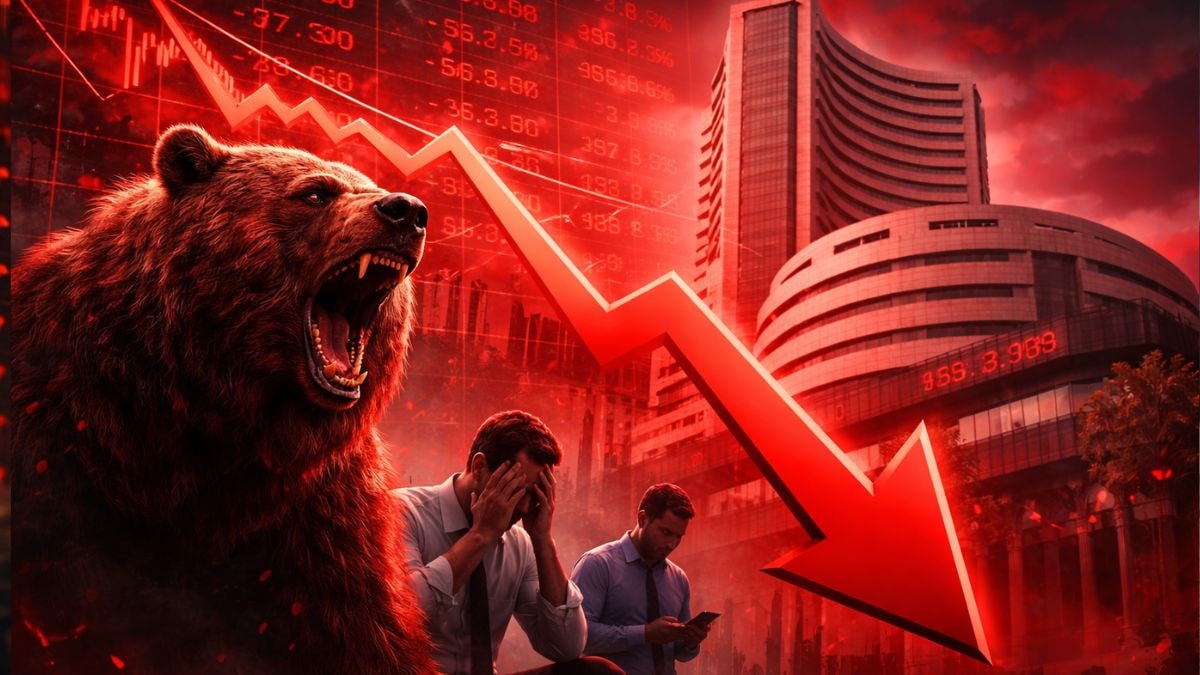
The cut across markets continued to deepen further in afternoon trade. The domestic equity markets have fallen another 1,000 points, slipping for the fourth straight day. The benchmark plunged 1.4% lower, each, as crude oil prices continued above $100 a barrel, up 2.88%. The Nifty 50 dropped 310 points or 1.3% to trade at the day’s low of 23,506, while the BSE Sensex declined 1,072 points or 1.4% to trade at a low of 74,943.42.
“Market sentiment remains moderately bearish amid fresh short build-up in major indices. Nifty fell 1% with 12% rise in Open Interest, indicating aggressive short formation,” said Axis Securities in a research note.
“The austerity call by the prime minister impacted the stock prices of sectors that are expected to be negatively affected by reduced consumption. Stocks of sectors like jewellery, travel and hotels bore the brunt of selling yesterday. It is important to understand that these sectors will bounce back smartly if crude falls sharply and the austerity package becomes irrelevant. Therefore, watch out for the West Asia geopolitical situation and crude prices,” said VK Vijayakumar, Chief Investment Strategist, Geojit Investments.
4 reasons why markets are falling?
IT stocks under pressure
The domestic indices slipped sharply in intraday trade, and the biggest damage was visible in the IT space. The Nifty IT Index plunged more than 1,000 points in the intraday trading session, falling over 3.6% and slipping below the 28,300 level. All 10 constituents of the Nifty IT index are trading in the red.
A factor that kept technology stocks under pressure was the growing discussion and concerns about disruption on account of growing artificial intelligence use and automation.
On Monday, OpenAI announced the launch of OpenAI Deployment Company with an initial investment of $4 billion. The company said the initiative is aimed at helping organisations deploy AI systems across critical business operations.
Crude oil crisis
Crude futures climbed above $100 per barrel, extending previous session gains, as escalating tensions between the US and Iran raised concerns over prolonged disruption in the Hormuz Strait. The United States President Donald Trump stated the US-Iran ceasefire was on “massive life support” after rejecting Tehran’s latest peace proposal, increasing fears that the critical shipping route could remain effectively closed.
Saudi Aramco CEO Amin Nasser also warned that the market is losing nearly 100 million barrels of supply weekly, potentially delaying market normalisation into next year.
Apart from that, India’s Oil Minister Hardeep Singh Puri has ruled out the possibility of imposing a lockdown anytime soon.
“LPG production has been ramped up from 35,000-36,000 tonnes/day to 54,000 tonnes amid the West Asia conflict. PM Narendra Modi’s austerity appeal a wake-up call to start thinking of measures to lessen fiscal strain from West Asia conflict,” said Puri while addressing the CII Annual Business Summit 2026.
Continued geopolitical tension
Geopolitical tensions surged after Trump questioned the sustainability of the US-Iran ceasefire and rejected Tehran’s latest peace proposal. News reports suggest Trump may meet with his national security team to discuss a possible resumption of military operations and renewed plans to escort commercial vessels through the Strait of Hormuz.
Elevated oil prices continued to fuel inflation concerns, strengthening expectations that interest rates could remain higher for longer.
PM Modi’s advisory
Prime Minister Narendra Modi urged citizens to take economic measures like working from home, less consumption of fuel, electricity, foreign travel, buying gold, etc., to save India’s economy from a massive global oil shock triggered by the United States-Iran war in West Asia. He outlined a manual for “economic self-defence” to save foreign exchange reserves as Brent crude prices surged past $105 per barrel.