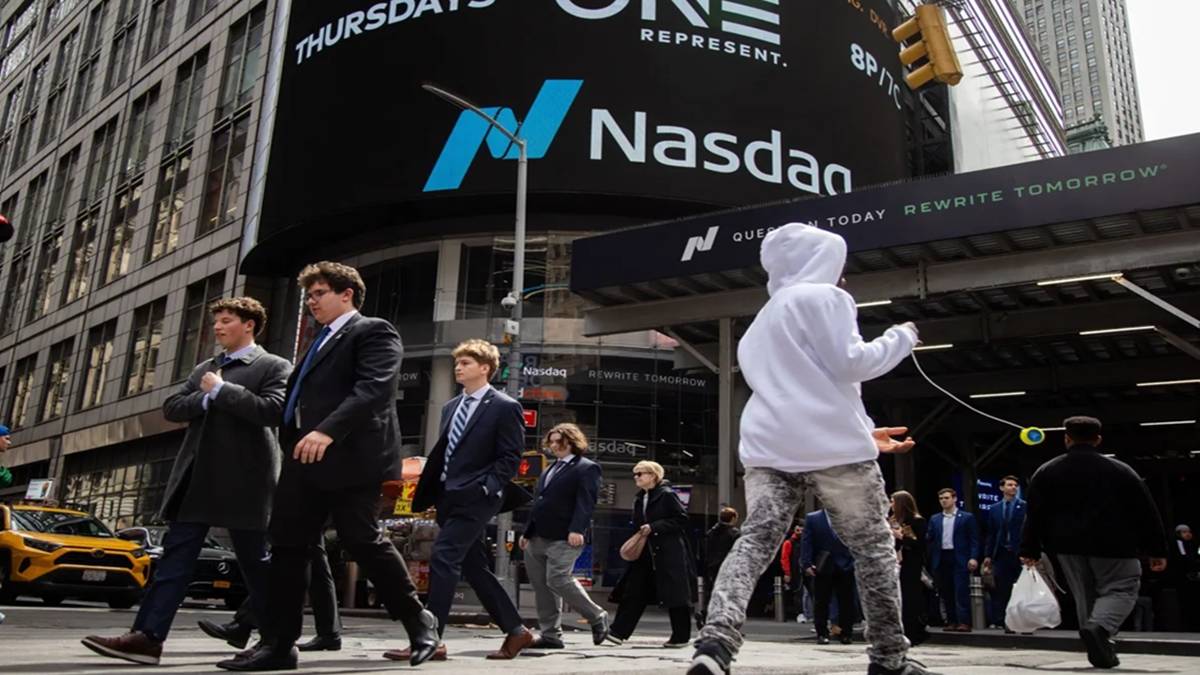
SpaceX’s share price surged over 33% on its Nasdaq debut, raising its valuation to over $2 trillion and positioning it as the seventh most-valuable company globally. SpaceX (SPCX) stock was listed at $150, marking an 11% increase from its IPO price of $135, after a price discovery process that lasted over 2 hours. On day 1 of trading, SPCX shares closed at $161, over 19% higher than the IPO price.
Now, the million-dollar question is: should investors buy SpaceX stock after listing, a week later, 12 months down the line — or give it a pass altogether?
Experts are divided, but most urge caution.
Subho Moulik, Founder & CEO of Appreciate, says investors should be cautious against chasing listing-day excitement, suggesting they may benefit from waiting for initial market volatility to settle before considering an investment.
Here is what other market experts think:
Nancy Tengler, CEO/CIO, Laffer Tengler Investments
Many people are drawing comparisons to Meta, which was a flop of an IPO. The stock price went from about $38 down to $18 and closed out the year well below the offering price.
Tengler understands the concern that this is a loftily priced IPO and that the fundamentals may not fully support the valuation. But she says this is not a name you’re buying based on fundamentals.
Her analogy is Amazon — a company that changed the way we live. If you go back and look at Amazon since its IPO, the stock is up more than 243,000%. The question becomes: what’s your time horizon, and do you believe in the technology? So if the IPO comes out at $135 and the stock drops to $100, that’s not ideal, but it wouldn’t change her long-term view. Of course, if it opens at $250, that would give her pause.
On the shareholder base, Elon has a rabid base of shareholders who generally don’t transact in the stock. Many of them have become millionaires. It’s amazing to see the economic ecosystem that has formed around Tesla shareholders. That’s how the pay package got approved — it was the retail shareholders, certainly not the institutions. This is a wise strategy Elon has identified and adopted — feeding the retail shareholder base. If anything, retail investors dampen volatility. It’s the institutions, hedge funds, and traders you have to worry about if you’re concerned about volatility.
Viram Shah, Vested Finance
At roughly $75 billion raised on a $1.75 trillion-plus valuation, this implies somewhere around 109 to 116 times trailing revenue — an extraordinary multiple, even by hyperscaler standards. Shah says: “We’re not saying don’t participate; we’re saying go in clear-eyed about what’s being priced.”
First-day pops on hyped tech IPOs frequently give back a chunk in the following weeks. For a deal this anticipated, the calmer entry is often a few sessions or even a quarter in, rather than chasing the open.
For Indian investors specifically, the LRS limits and TCS at remittance, LTCG at 12.5% after 24 months of holding, US estate-tax exposure on US-domiciled assets above $60,000, and ITR disclosure on foreign holdings are all important considerations. For most Indian portfolios, Shah’s view is that SPCX is a single, concentrated, high-volatility position — exciting, but to be sized accordingly, not treated as a core holding.
Eshaan Lazarus, Founder and CEO, 021 Trade
Lazarus points to academic research. A study by the University of Florida analysed 44 years of every IPO in the USA. It showed that IPOs underperform the market over three years from listing day onwards. The only market-beating route is to get an allocation in the IPO itself and then sell on day one. The first-day pop is real. After that, not so much.
Another study by one of the largest American banks, Truist, looked at the 30 largest tech IPOs. All 30 had a significant drawdown in year one, with a median maximum drawdown of 54%.
Most critically, Lazarus says people are missing the liquidity avalanche that is on the way. Lock-ups on SpaceX employee shares start expiring in August, so in that month alone the market could see share sales of between $200 to $300 billion by some estimates — more than 2–4x the size of the IPO. This is in comparison with the estimated $30 billion of buying due to index inclusion. As Lazarus puts it, history says you’ll most likely get a better entry point over the next 12 months than on day one.
Disclaimer: This article is for informational purposes only and does not constitute financial, investment, or legal advice. Data and estimates cited are sourced from publicly available reports and expert statements. The views and opinions expressed by the individuals quoted herein are their own and do not necessarily reflect the views of the publication. Investment in foreign securities involves significant risks, including currency fluctuations, different financial reporting standards, and varying regulatory environments. Readers are advised to consult a qualified financial advisor before making any investment decisions.