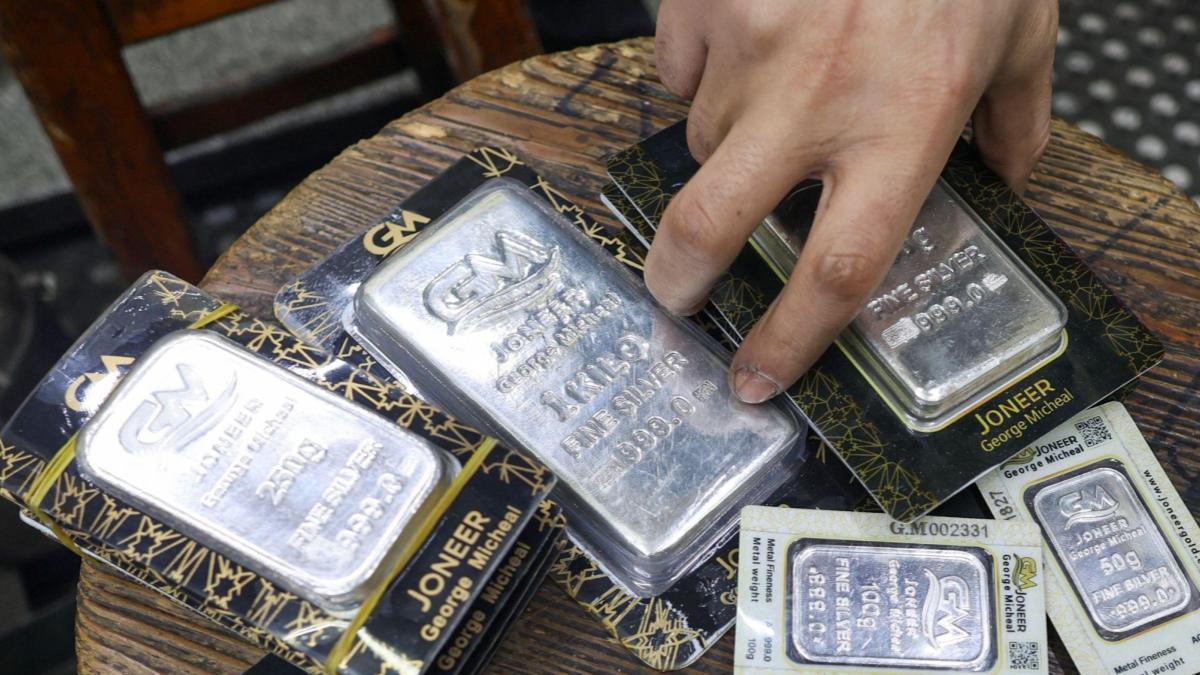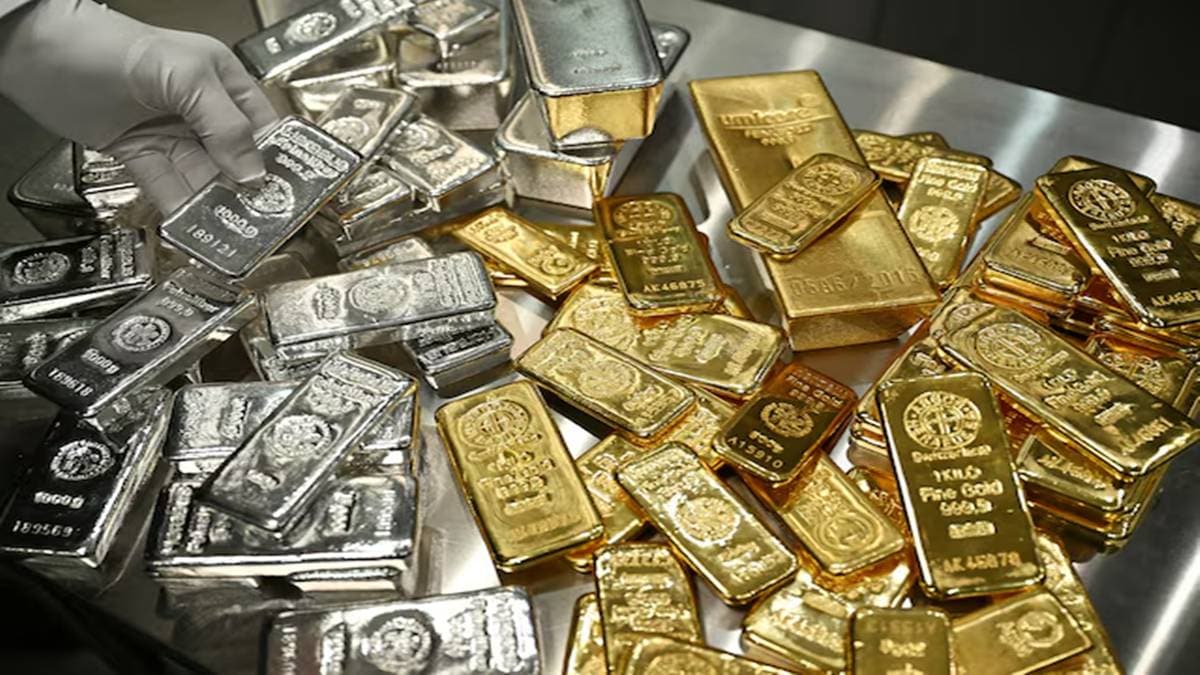
Silver has quietly stolen gold’s thunder. Over the last one-year, when the investors were largely glued to gold, their preferred precious metal, silver prices jumped from $30 to $78, posting a huge gain of 140%. Comparatively, gold managed to rise from $3,222 to $4,562 during the same 12-month period, registering a gain of 40%.
The outperformance is not just over 1 year but over longer timeframes too. In the last 5 years, silver has been up by 220% as against 157% by gold; over the ten years, silver has jumped 350% as against 260% jump in gold price.
However, recent months have seen both metals lose some gains due to intermittent sell-offs.
So far this year, both are up by around 5%, and while in the last 30 days, silver is flat and gold has lost 5% in value. A big sell-off was also seen on May 15 when silver dropped by 9%, while gold also remained under pressure, down over 2%.
The chart below shows how silver jumped over 140% Vs gold, gaining only 40% in 1 year.
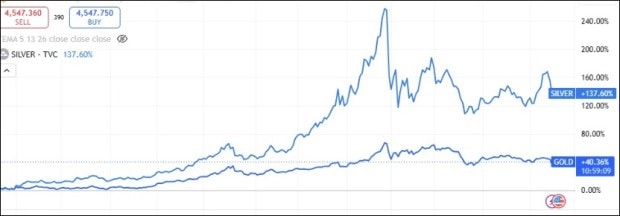
Source: TradingView; As of May 15, 2026
But the bigger question is — what has led silver to outperform gold so significantly?
“The outperformance reflects a combination of macro, industrial, and structural drivers uniquely supporting silver. Both metals are benefiting from the same broad macro backdrop, including dollar weakness, stagflation concerns, fiscal expansion, and geopolitical uncertainty,” says Kaynat Chainwala, AVP – Commodity Research, Kotak Securities.
So, when the same set of factors that are influencing gold prices is prevalent, there has to be something else about silver. There are at least five big reasons.
Silver’s Dual Role
First is the usage. Silver has outpaced gold over the last year due to its dual role as a precious and industrial metal. While gold demand is mostly driven by investment, silver benefits from high industrial consumption in industries such as solar energy, electric vehicles, electronics, semiconductors, and power infrastructure.
Silver is integral to various applications that we all see in our daily lives, including solar energy, electric vehicles, microchips, electronics, artificial intelligence, 5th-generation mobile networks, medicine, and even water purification.
“Over the past year, global expectations of lower interest rates, persistent geopolitical uncertainty, and strong investment flows into precious metals have supported both gold and silver, but silver gained more because industrial demand remained exceptionally robust,” says Narinder Wadhwa, MD & CEO, SKI Capital Services.
“Its dual role as both a monetary and industrial metal gives it direct exposure to the rally in base metals and the broader industrial cycle. The energy transition adds further support, as solar panels, EVs, battery systems, and grid infrastructure are all highly silver-intensive, with current energy-security concerns accelerating investment into these sectors,” adds Chainwala.
Gold-Silver Ratio Favoured Silver
Secondly, the gold-silver ratio, which indicates the price relationship between gold and silver, highlighting how one is more or less expensive than the other, worked in silver’s favour.
In May 2025, the gold-silver ratio was at 102, and today it has fallen to 58. “The gold-silver ratio had remained elevated for a long period, making silver appear relatively undervalued compared to gold, which attracted further investor interest,” adds Wadhwa.
Small Market, Big Price Moves
Thirdly, the silver market is small compared to the trading activity in gold. The silver market has an annual turnover of approximately $30 billion. Even minor changes in demand can have a major influence on prices due to the market’s tiny size.
“Unlike gold, silver is a relatively smaller and more volatile market, so price movements tend to be sharper once investor participation increases. Concerns around supply tightness and continued deficits in the physical silver market have also added to the recent strength in prices,” Wadhwa.
Demand-Supply Tightness
Fourthly, the demand-supply equation points towards a tighter market ahead. According to the Silver Institute forecast, global silver mine production will decline slightly in 2026, despite higher Mexican and Moroccan output. Demand should soften in some segments, but not enough to eliminate structural tightness. These trends indicate a projected silver-market deficit of over 1,400 tonnes, marking the sixth consecutive deficit.
Positive Macro Backdrop
Lastly, a positive macro backdrop over the last 12 months continued to support silver prices, with concerns about the Fed’s independence, a weaker dollar, tariff risks, and geopolitical tensions. The inclusion of silver on the US critical minerals list in November, along with reports of Chinese export restrictions on silver, further fueled the rally in the last 12 months.
Headwinds
Despite the strong long-term story, headwinds still exist. One of the biggest liquidations was seen in January this year when silver (and gold) fell 40% from the all-time high price of $121.
The same set of factors that the market saw at the end of January hasn’t gone away. Further, the Iran war is keeping oil prices high, pushing US CPI and PPI inflation higher, thereby discounting any rate cut in 2026.
“Both silver and gold face near-term pressure from elevated oil prices and fading optimism around a US-Iran deal, which have pushed rate-cut expectations further out and increased the opportunity cost of holding non-yielding assets,” says Chainwala.
There’s another risk in the current geopolitical environment. The ongoing wars may have an impact on global growth, in turn, jeopardizing silver’s industrial demand. Furthermore, if central banks and sovereign wealth funds begin selling gold due to fiscal pressures, it could negatively affect gold and silver.
What Should Investors Do?
Gold price in India is around Rs 1,57,000 per ten grams, while the silver rate in India is around Rs 2.67 lakh per kg.
Long-term investors in precious metals may find that timing is less critical. But, given a high risk-reward ratio at present, one needs to be careful. Investors interested in silver or gold should be cautious of potential sharp corrections in them and, therefore, consider a staggered accumulation approach rather than jumping in during sharp rallies. The long-term case looks stable, but short-term performance rests on the Iran conflict, Fed policy expectations, and clean-energy demand, addressing the ongoing supply shortfall.
Disclaimer: This article is for general informational purposes only and does not constitute investment, financial, or trading advice. The views and opinions expressed by market experts and analysts quoted in this article are their own and do not represent the views of this publication. Investments in precious metals, including silver and gold, are subject to market risks and price volatility. Past performance of silver or gold prices is not a guarantee of future returns. Readers are strongly advised to consult a registered investment advisor or qualified financial professional before making any investment decisions based on precious metals or commodity market outlook.