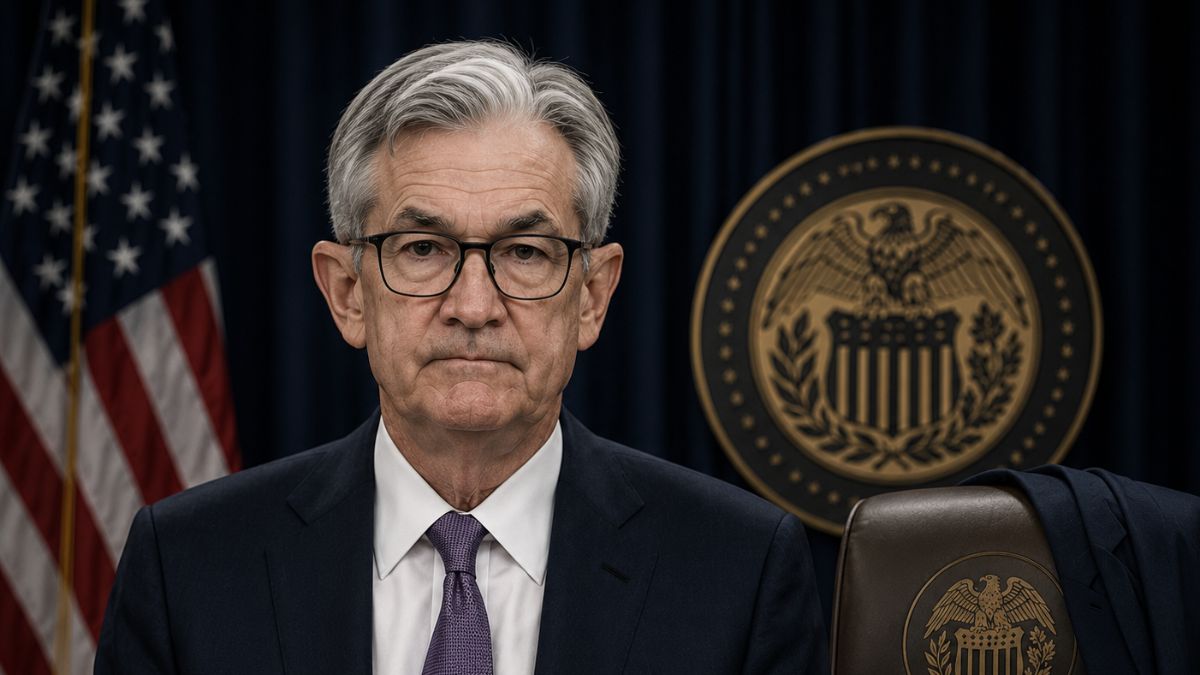
When Jerome Powell stepped away from the podium after the Fed’s rate announcement on April 29, he turned to the room one last time and said something that stopped many people cold: “I won’t see you the next time.” For anyone who had tuned in to those press conferences over the years, that sentence did not just land, it lingered, like a door closing softly at the end of a very long and difficult journey. Now, he steps down as Fed Chair. And somehow, the world feels just a little less steady for it.
He was never loud. Never dramatic. He never walked into a room trying to dazzle anyone. People called him “annoyingly normal,” and they meant it as a critique. But in eight years that brought a global pandemic, the worst inflation surge in four decades, and an extraordinary legal assault on the very independence of the institution he led, that steadiness was not just admirable. It was heroic.
When the world shut down
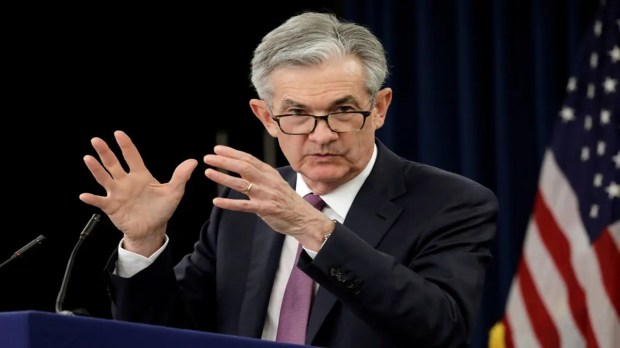
Nothing tested Powell like March 2020. The world was shutting itself behind closed doors. Markets were in freefall. Panic was not a word but it was a feeling sitting in every household and trading floor simultaneously. The Fed convened an emergency meeting and slashed rates by half a percentage point. Then it went further, cutting to near zero, expanding the balance sheet to $8.9 trillion in the fastest expansion in the Fed’s history, launching $2.3 trillion in lending programs, and buying corporate bonds for the very first time.
“We have lowered interest rates to near zero… committed to keeping rates at this low level until we are confident that the economy has weathered the storm,” Powell said at a 2020 press conference.
The labour market rebounded faster than almost anyone dared to hope. The programmes that followed, combined with the Fed’s firepower, helped pull the economy back from an edge that few wanted to contemplate. Not everything worked perfectly; critics noted that Main Street Lending favoured larger firms, and some facilities saw limited uptake. But the outcome held. The collapse that many had feared didn’t happen.
Nachiketa Sawrikar, Fund Manager at Artha Bharat Global Multiplier Fund exclusively told Financial express, “The COVID crisis from early 2020 through 2021 was an unprecedented economic shock. Chairman Powell and the Federal Reserve acted aggressively to stabilise financial markets and support the economy… helped avoid a far deeper economic collapse and allowed the economy to recover faster than many anticipated.”
Sawrikar also added, “Chairman Powell deserves credit for bringing inflation down from roughly 9% in 2022 to around 3% without triggering a recession. The broad consensus was that inflation could not be reduced without a significant economic downturn. Achieving substantial disinflation while preserving employment and economic growth was a meaningful accomplishment.”
The inflation reckoning
But that aggression came with a cost no one could ignore. Supply chains buckled. Demand erupted. Inflation, the very thing the Fed had spent years struggling to even nudge up to its 2% target suddenly ran wild. By June 2022, the Consumer Price Index had climbed to 9.1%, the highest reading since 1981. For millions of families watching grocery prices climb and savings shrink, it was a gut punch.
History deserves honesty, and Powell himself never seemed to shy away from it. According to Sawrikar, the Federal Reserve’s August 2020 Flexible Average Inflation Targeting framework — allowing inflation to run “moderately above 2% for some time” after years of below-target readings proved misguided in hindsight. Since early 2021, inflation has remained persistently above the 2% target, and consumers have felt every bit of it.
And Powell had made a mistake. In 2021, as price pressures deepened and broadened, he had called inflation “transitory.” The Fed waited until March 2022 to raise rates and even then moved only 25 basis points. That delay made what followed far more painful than it needed to be.
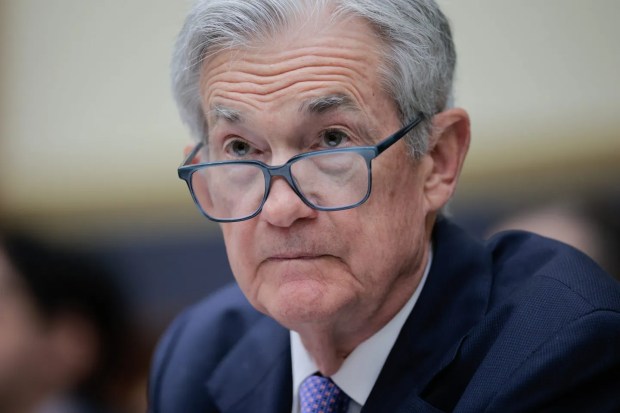
“While higher interest rates, slower growth, and softer labor market conditions will bring down inflation, they will also bring some pain to households and businesses. These are the unfortunate costs of reducing inflation. But a failure to restore price stability would mean far greater pain,” Powell said at the Jackson Hole Symposium in August 2022, an acknowledgment that was as honest as it was sobering.
What followed was one of the most aggressive tightening cycles in modern history that is 11 rate hikes totalling 525 basis points by mid-2023, the federal funds rate climbing to 5.25–5.5%, a level not seen since 2001. Most economists considered a recession nearly inevitable. The headlines were grim. The predictions were grimmer. And then it didn’t come.
Ghassan Albohtori, Financial Market Analyst at STARTRADER, described it as, “Inflation fell steadily from its 2022 peak, the labor market remained robust, and the much-debated ‘soft landing’ materialised to a degree that surprised even cautious optimists.
The DOJ probe
The US Justice Department launched an investigation into whether Powell had misled Congress about the rising cost of renovating the Fed’s Washington headquarters. Critics claimed he had downplayed budget increases. The controversy became political quickly, weaponised by those who had long wanted to bring the Fed to heel.
Powell knew what it was really about. In January 2026, the confrontation escalated beyond anything in the Fed’s history. The Department of Justice subpoenaed him over 2025 congressional testimony, alleging false statements. His response was clear-eyed and unflinching: “The threat of criminal charges is a consequence of the Federal Reserve setting interest rates based on our best assessment… rather than following the preferences of the President.” And then, with a quiet fury: “This new threat… is a pretext.”
A federal judge quashed the subpoenas in March 2026, calling them “pretextual harassment.” The DOJ dropped the probe entirely in April. Former Fed Chairs Alan Greenspan, Ben Bernanke, and Janet Yellen publicly rallied behind him. So did 11 global central banks. The institution held.
On April 24, 2026, the Justice Department officially closed the case. No charges were filed. The Fed’s independence, by the thinnest of margins, had survived.
The political storm
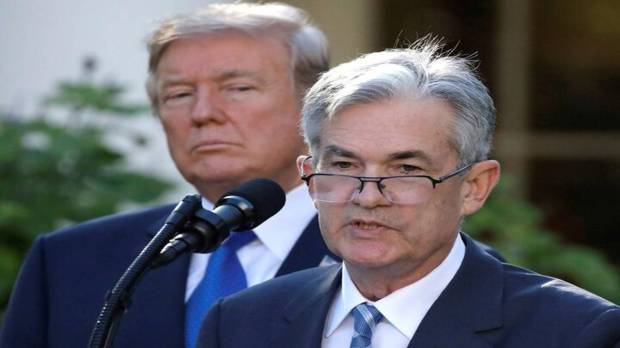
From almost the beginning, Powell’s relationship with the presidents who appointed him was something far more complicated than gratitude. Trump nominated him in 2017, then turned on him sharply when the Fed raised rates in 2018. He called Powell “loco” and an “enemy,” and at times suggested he was more dangerous to America than China’s Xi Jinping. He explored firing him though the law made that nearly impossible.
Powell did not bend. “I would not resign if asked,” he said plainly in 2019, five words that carried enormous weight in a political climate where institutions were bending in every direction.
COVID briefly thawed things. Trump praised him, saying “he’s really stepped up.” But tensions returned in Trump’s second term, with renewed and relentless demands for rate cuts.
The final chapter
At his last address at the Jackson Hole Symposium, Powell faced a different kind of bind. Inflation remained above target, partly from tariff-driven pressures. The labour market had begun to wobble. He acknowledged it directly and without flinching: “Risks to inflation are tilted to the upside, and risks to employment are to the downside, a challenging situation.” And yet he also indicated a shift: “the balance of risks appears to be shifting,” and the evolving outlook “may warrant adjusting our policy stance.”
Markets rallied. It was read as a green light for rate cuts which the Fed subsequently delivered. And it felt like something else too: a man who had spent years holding a line, beginning to step back from it, carefully, deliberately, on his own terms.
“In the long run… you wouldn’t want to bet against the American economy. This economy will recover,” he had said in 2020 in the middle of the storm, when almost no one was certain of anything. He was right then. And perhaps that was always his greatest gift: the ability to believe, sincerely, when belief was the hardest thing to hold.
A different kind of Fed Chair
Jerome Hayden Powell was born on February 4, 1953, in Washington, D.C., the second of six children. His father was a lawyer, his mother a statistician. He attended Georgetown Preparatory School, earned a politics degree from Princeton in 1975 his senior thesis examined apartheid in South Africa and a law degree from Georgetown in 1979.
He never got a PhD in economics. That made him the first Fed Chair in over 30 years without advanced economic training. Critics raised eyebrows. But it gave him something else entirely: a lawyer’s discipline, a pragmatist’s instincts, and no ideological axe to grind.
After clerking in federal court, he moved through investment banking, the Treasury Department under President George H.W. Bush, where he managed the fallout from the Salomon Brothers scandal and later to The Carlyle Group. President Obama nominated him to the Fed Board in 2011. He built a reputation as a consensus-builder. In November 2017, President Trump nominated him to be the 16th Chair of the Federal Reserve. The Senate confirmed him 84-13. He was not what anyone expected. And he was exactly what was needed.
Kevin Warsh – The new chair
Kevin Warsh, Donald Trump’s choice to head the US Federal Reserve, has officially been approved by the US Senate after a tight vote that showed how divided American politics remains. The Senate voted 54-45 in his favour on Wednesday.
Warsh is already well known in both the Federal Reserve and Wall Street circles. He joined the Federal Reserve Board in 2006 at the age of 35, becoming the youngest person ever appointed to the role. Before that, he worked for former President George W. Bush’s economic team.
He stayed at the Fed until 2011 and played an important role during the 2008 global financial crisis, when the US economy was close to collapse. Working alongside then Fed chair Ben Bernanke, Warsh helped oversee emergency rescue plans for troubled financial institutions and supported steps to calm markets. Because of his strong ties with Wall Street, many people called him the Fed’s “financial market whisperer.”
During the crisis, Warsh often warned that large government rescue programmes could lead to high inflation in the future. But that did not happen at the time. Later, many economists said bigger government spending might actually have helped the US economy recover faster.
While announcing his nomination, Trump praised Warsh’s public image and described him as looking like someone “made” for the role of Fed chair.
What he leaves behind
When asked at his final press conference how he would like his leadership remembered, Powell told reporters that was for “someone else to say.” It was the most Powell answer imaginable, no grandstanding, no self-mythology. Just a man walking out of a room he had held together for eight years.
Albohtori put the magnitude of it simply, “A global pandemic, the worst inflation surge in four decades, an unprecedented political assault on the central bank’s independence, and a criminal investigation into its own chair. Powell navigated all of it, kept the institution intact.”
Sawrikar’s final words on the matter felt like the truest, “Jerome Powell presided over one of the most consequential economic periods in modern US history. While there were clear policy errors, particularly around inflation management, he also successfully navigated extraordinary crises and oversaw an economy that avoided recession throughout his tenure. On balance, history is likely to view his tenure as consequential, pragmatic, and ultimately successful — though imperfect.”
For someone sitting thousands of miles from Washington, who had never seen the Federal Reserve building and probably never would, watching those press conferences became a habit. Not because Powell was trying to impress anyone. Not because he was theatrical or charismatic. But because in times of genuine fear, he was steady. He was calm. He was ordinary in a way that felt, strangely, like grace.
He may not see us the next time. But many of us will remember how he showed up again and again, in rooms full of hard questions, in moments full of uncertainty with a calm and a clarity that the times rarely deserved, and almost always needed.