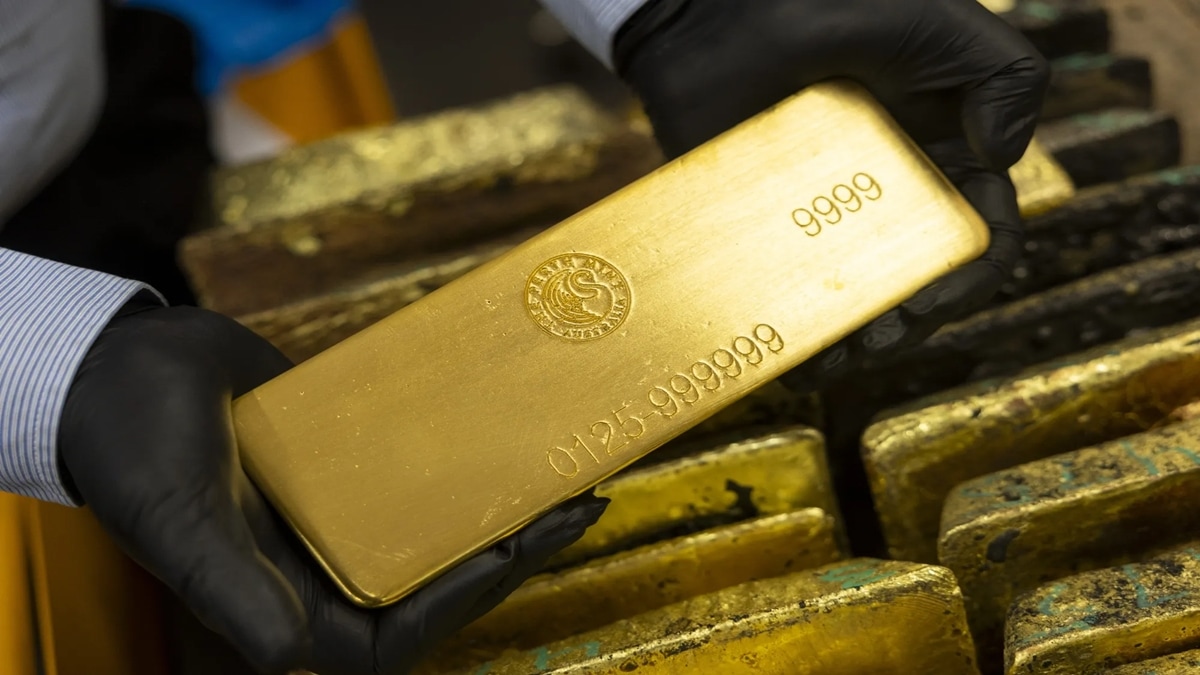
Gold started 2026 on a strong bullish undertone following a 65% return last year, but has since struggled to maintain its momentum.
In January, gold reached a record all-time high of $5,602, but subsequently dropped to $4,495 over three months, reflecting a 20% decline from the peak, and still facing headwinds as of March-end.
The recent bull run in gold started in October 2022. Despite dips and corrections along the road, gold soared 275% from October 2022 lows of $1,500 to $5,602 by January 2026 before falling 20% from the peak.
If you are wondering how much more the gold price can fall, let us first look at history.
As the famous saying goes – ‘History doesn’t repeat itself, but it often rhymes’, by Mark Twain, gold’s journey since Q4 2022, is not unique but mirrors historical patterns, characterized by bull runs followed by crashes.
At least three times in history, gold has created new peaks and subsequently declined to major lows. The precious metal is no stranger to deep corrections after big spikes. Is the current crash in gold prices similar to such historical movements? Only time will tell. An understanding of those events may help make a better financial decision.
1st Crash: 1974-1976
The first time gold witnessed a big crash was between 1974 and 1976. Gold prices increased by 353% from August 1971 to November 1974, before dropping 43% between November 1974 and August 1976. This fall was largely on account of cooling inflation, rising rates, robust economic growth, and strengthening of the dollar, amidst reducing geopolitical risks following stabilization of the Middle East oil crisis and the end of the Vietnam War.
2nd Crash: 1980s
In the 1980s, gold experienced its second significant crash. Following a staggering return of 541% between August 1976 and September 1980, gold plunged 52% between September 1980 and June 1982. A bear run in gold prices followed closely after the second crash, with gold rising 57% post-June 1982, only to subsequently fall by 42% from January 1983 to February 1985.
Why did gold crash in the 1980s? The rise in inflation led the then-Fed Chair Paul Volcker to increase interest rates significantly, reaching 20% in March 1980 and again in May 1981. A strong dollar and high interest rates were enough to beat down gold to the ground. Also, the second oil crisis eased, and the geopolitical concerns following the Soviet invasion of Afghanistan settled.
3rd Crash Starting 2011
Gold had experienced its longest bull run since 1971, rallying 612% between August 1999 and August 2011, according to World Gold Council data. But it was followed by a 42% fall from the end of August 2011 to December 2015.
So, what was behind the gold price’s crash starting in 2011? After the global financial crisis, central banks started monetary easing, leading to hard assets like gold losing value. Starting in 2011, due to the tapering of the quantitative easing program of central banks, the need to hold gold as a safe haven or defensive asset lessened. Also, the US dollar started gaining strength, and improvements in economic indicators overshadowed the appeal of gold.
How Much Can Gold Fall in 2026
Assuming the gold price in 2026 falls by a similar average margin of 50% from its peak, the level arrives at around $2,800-$3,000. That was the gold price levels between March and June, 2025, before it spiked again. Many market experts are pointing towards the level of $3,600 before the long-term trend reverses. Also, note the period of crash after the peak in the 1980s and in 2011. The downtrend spanned well over a year and was not sudden. How soon the prices recover after the current crash remains to be seen.
Factors Influencing Gold Price Now
There are enough headwinds that gold continues to face since the Iran war began. Higher oil prices are keeping not only the US dollar stronger but also fueling inflation. That will be enough to keep the US Fed from cutting rates aggressively this year.
Higher interest rates and a stronger dollar increase the opportunity cost of holding gold, a non-yielding asset, generally placing downward pressure on its price.
No wonder, gold is down 13% and the US Dollar index is up 2.4%, since the day US-Israel attacked Iran. From the peak, gold has fallen 20%, making it a bear market for the yellow metal.
Still, market experts are pinning for a long-term, structural bull market in gold. The ongoing geopolitical conflicts, central bank demand for gold, and the potential weakening of the US dollar continue to support a structural bull case for the metal.
What History Shows
You will notice that all historical crashes in gold share common factors: inflation, the dollar, oil crises, geopolitics, and economic conditions related to the dollar.
Gold prices historically remain dormant for extended periods before experiencing spikes, dips, and crashes. Then, the cycle repeats itself. Therefore, make sure you are not investing in gold for your short-term goals. Finally, never go overboard but limit gold investments to 10-15% of your portfolio based on your risk appetite.
When the global economies stabilize and there is no longer any military conflict, you will know that the time has come for gold to become dormant. Until then, when the sun (or gold) shines, make hay!
Disclaimer: This article provides factual analysis only and is not, and should not be construed as, an offer, solicitation, or recommendation to buy or sell securities. Investors must conduct their own independent due diligence and seek advice from a SEBI-registered financial advisor.