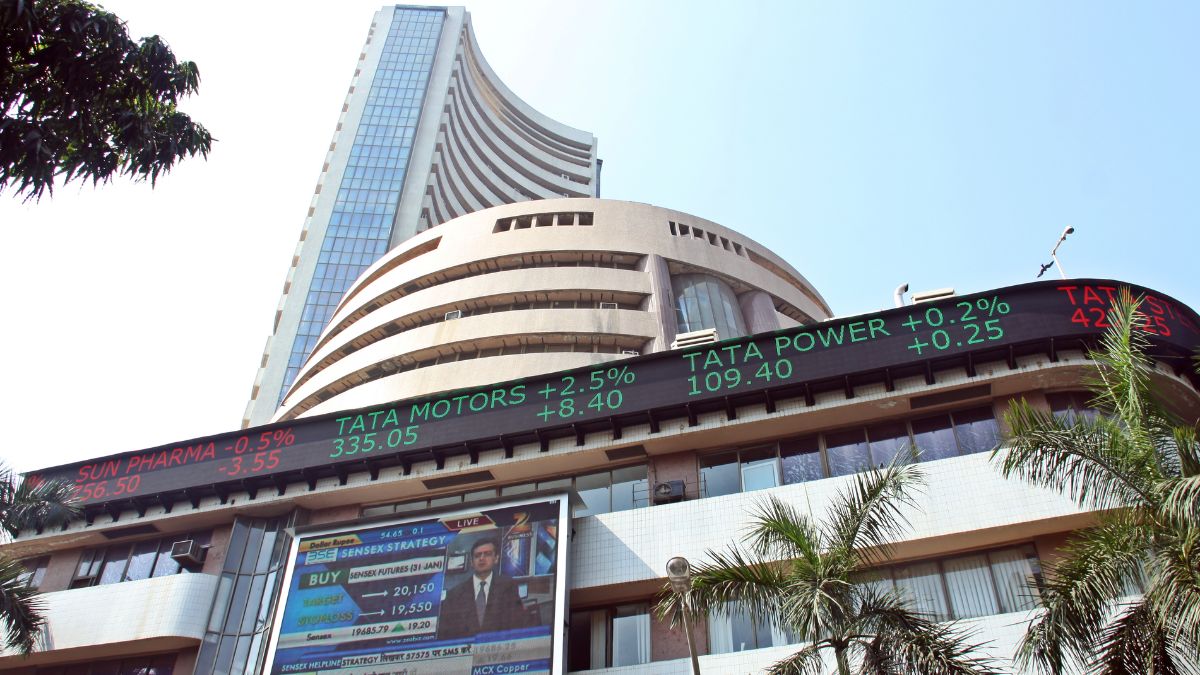
The market traded sharply lower by midday on May 11, 2026, as broad-based selling pressure hit benchmark indices and consumer-facing sectors after Prime Minister Narendra Modi’s appeal to reduce non-essential gold purchases and fuel consumption amid the continuing West Asia tensions. The Nifty is struggling well below 24,000 while the Sensex plummeted 1.29%.
Jewellery stocks remained among the worst performers during the session, while electric mobility and public transport-linked counters attracted buying interest. Lenskart also stayed in focus after large institutional block deals executed during the previous trading session.
Titan Company
Titan Company share price came under heavy pressure by midday on May 11, falling nearly 8% after concerns emerged over near-term demand for gold jewellery following Prime Minister Narendra Modi’s appeal to avoid non-essential gold purchases for one year. The pressure extended across the jewellery sector during the session.
The Prime Minister’s comments came amid rising crude oil and gold prices globally due to continuing tensions in West Asia. Since India imports a substantial share of both crude oil and gold using US dollars, the government’s focus has turned toward limiting foreign exchange outflows and easing pressure on the trade deficit.
Titan’s management, however, recently stated that short-term gold supply disruptions linked to geopolitical tensions are not a major concern for the company because its gold exchange programme and sourcing flexibility remain operational. Titan CFO Ashok Sonthalia said the company strengthened its gold exchange programme significantly from the third quarter onward during FY26.
Senco Gold
Senco Gold share price declined more than 10% by midday on May 11 as the broader jewellery segment witnessed sharp selling after the government’s comments on limiting non-essential gold buying.
The market reaction reflected concerns that short-term jewellery demand could weaken if consumers postpone wedding or investment-related purchases amid uncertainty around gold prices and policy messaging. Rising global gold prices and higher import costs have already increased pressure on jewellers over the last few quarters.
Kalyan Jewellers India
Kalyan Jewellers India Ltd. share price slipped over 9% by midday on May 11 amid broad-based weakness in jewellery stocks. This happened amid the concerns around discretionary gold demand intensified after the Prime Minister’s comments on reducing non-essential gold imports.
Thangamayil Jewellery
Thangamayil Jewellery Ltd. share price fell around 5.6% by midday on May 11 and traded close to Rs 4,007 as the jewellery segment remained under pressure. The stock moved lower alongside peers after concerns emerged over temporary postponement of consumer purchases due to rising gold prices and the government’s call to limit non-essential buying.
The stock had previously benefited from sustained retail demand during wedding and festive seasons through FY26, but the current market reaction reflected fear of short-term demand moderation rather than operational deterioration.
P N Gadgil Jewellers share price declined about 6.5% by midday on May 11. The stock mirrored weakness seen across Titan, Kalyan Jewellers and Senco Gold during the session.
IndiGo and travel agencies stocks
Shares of travel-sector companies, including IndiGo, Spicejet, LE Travenues Technology, Yatra Online, and others, fell by as much as 7% on Monday after Prime Minister Narendra Modi urged citizens to avoid non-essential foreign travel for at least a year.
Following the development, Interglobe Aviation, the operator of IndiGo, declined over 4% to its day’s low of Rs 4,335. Fellow low-cost carrier SpiceJet dipped over 4% to its day’s low of Rs 13.41 on the BSE.
Niva Bupa Health Insurance
Niva Bupa Health Insurance Company Ltd. share price surged as much as 10.3% by midday on May 11 after the company reported strong Q4FY26 earnings after market hours on May 9. The stock later pared part of the gains and traded around Rs 84.99, still up 4.58%, even as the broader market remained under pressure with Sensex hovering near 76,260, lower by around 1.38%.
The company reported a sharp 67.4% year-on-year jump in net profit for the January-March 2026 quarter at Rs 345.13 crore compared to Rs 206.08 crore reported in Q4FY25. Premium income during Q4FY26 increased to Rs 1,971.95 crore from Rs 1,527.42 crore in the same quarter last year, reflecting continued growth in retail health insurance demand and policy expansion.
Total income for the March quarter stood at Rs 2,077.66 crore against Rs 1,564.73 crore reported in Q4FY25.
Lenskart
Lenskart share price traded lower by around 0.66% by midday on May 11 after several large institutional block deal transactions were executed in the stock during the previous session on May 8. The stock had closed at Rs 489.25 on May 8 before slipping in early Monday trade. Multiple global institutions and domestic mutual funds purchased stakes through block deals at an average transaction price of Rs 473.4 per share.
Among the major buyers during the May 8 session were HDFC Mutual Fund, which purchased 1,03,52,620 shares, BlackRock with 41,25,731 shares, HSBC Mutual Fund with 51,76,310 shares, Axis Max Life Insurance with 23,89,060 shares, Bank of America with 15,88,710 shares, Morgan Stanley with 10,59,140 shares, Fidelity with 10,82,716 shares and Goldman Sachs with 5,30,000 shares. Sellers included TR Capital, Birdseye View Holdings, Alpha Wave Ventures, ABG Capital and Kariba Holdings Mauritius.
JBM Auto
JBM Auto Ltd. share price surged more than 7% by midday on May 11 ahead of the company’s Q4FY26 earnings announcement and after renewed focus on public transportation and electric mobility themes following Prime Minister Narendra Modi’s remarks on fuel conservation. The stock touched an intraday high of Rs 697.90 during the session.
JBM Auto, through its electric bus manufacturing business, remains among the key listed beneficiaries of India’s expanding electric mobility market.
In April 2026, the company said 1,282 electric buses were registered across five states during FY26, giving it nearly 24% market share in the segment. Registrations came from Telangana, Delhi, Maharashtra, Gujarat and Assam. JBM Auto also said its order book exceeded 10,000 electric buses as of FY26 end. The company currently operates an integrated electric bus manufacturing facility with annual production capacity of 20,000 buses.