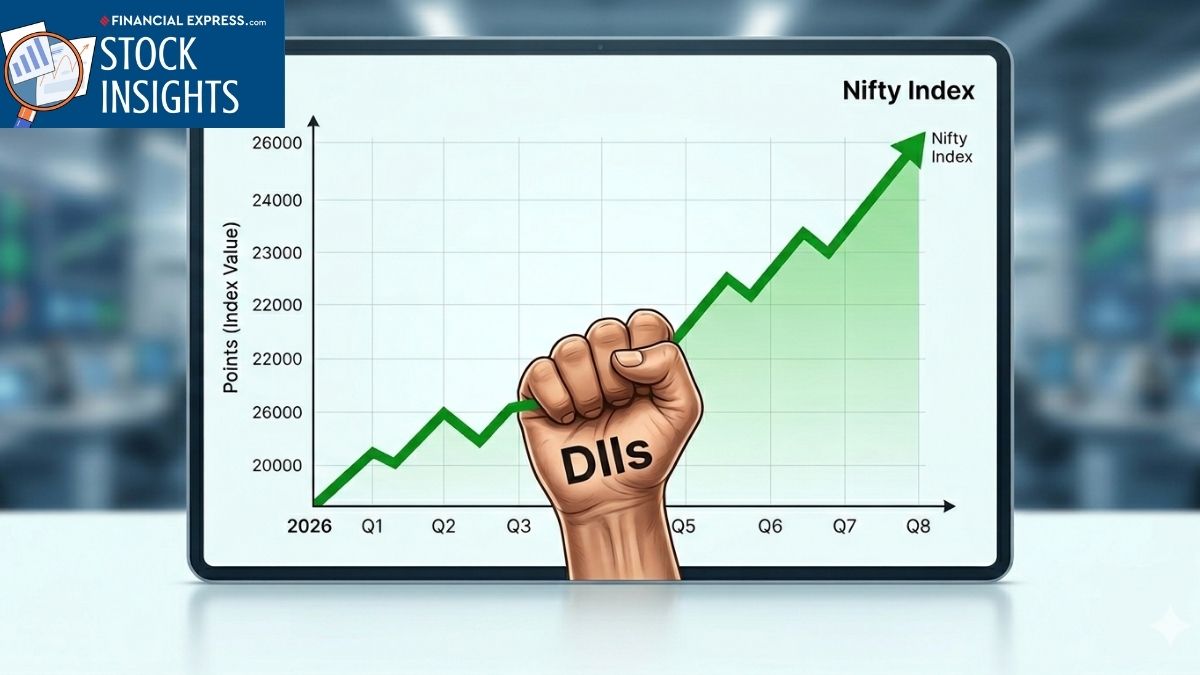
During the January-March 2026 quarter, when global markets, including Indian equity markets, were going through a topsy-turvy phase, domestic institutional investors (DIIs) showcased immense faith in domestic equities.
Across the quarter, they purchased (net) equities worth ₹2,50,603 crore. Mutual funds contributed to around ₹1,50,609 crore of this total DII investments during the quarter.
In March 2026 alone, mutual funds bought equities worth ₹1,42,960 crore. And this was the month when the market was witnessing immense selling pressure from FIIs and retail investors due to the escalating Iran-Israel war.
In this article, we will explore five stocks in which DIIs raised their stake the most, at least above 5% points, and try to evaluate the rationale behind their picks.
So, let’s begin.
#1 AAVAS Financiers Limited
AAVAS Financiers Ltd. is a housing finance company offering retail affordable housing loans. The company mainly caters to the lower and middle-income self-employed people in the semi-urban and rural regions of the country.
During Q4FY26, DIIs raised their stake in this company by 7.84% points, taking the total holding to 22.14% at the end of the quarter.
During the quarter, the company disbursed loans worth ₹2,348 crore, witnessing a 16% YoY growth from ₹2,023 crore disbursed in the corresponding quarter of the last fiscal.
Net interest income (NII) grew by 17%, and the Net interest margins (NIM) improved by 44 basis points to 8.45% at the end of the quarter.
Asset under management at the end of FY26 was ₹23,452 crore, up by 15% YoY from ₹20,420 crore recorded at the end of FY25.
Total disbursement for FY26 stood at ₹6,775 crore, up by 11% YoY from ₹6,123 crore in FY25.
NIM for the entire fiscal grew by 29 basis points from 7.64% to 7.93% during FY26.
Perhaps, DIIs are increasing their stake in this company due to this significant growth.
Coming to the asset quality, AAVAS successfully improved its gross non-performing asset (GNPA) as it declined from 1.19% in Q3FY26 to 1.05% in Q4FY26, reducing by 14 basis points QoQ.
Net total income grew from ₹1,346 crore in FY25 to ₹1,580 crore in FY26, logging a 17.7% YoY growth.
Profit after tax (PAT) for the period grew from ₹574 crore to ₹655 crore, logging a 14.1% YoY growth.
The housing finance company has a return on equity (ROE) of 13.9%, slightly lower than the industry median of 14.2%.
Coming to the valuation, the stock is currently trading at a price/earnings (PE) of 17.4x, a little above the industry median of 15.6x. Even the price-to-book value ratio (P/BV) is at 2.3x, higher than the industry median of 1.6x. indicating that the stock might be trading at a premium.
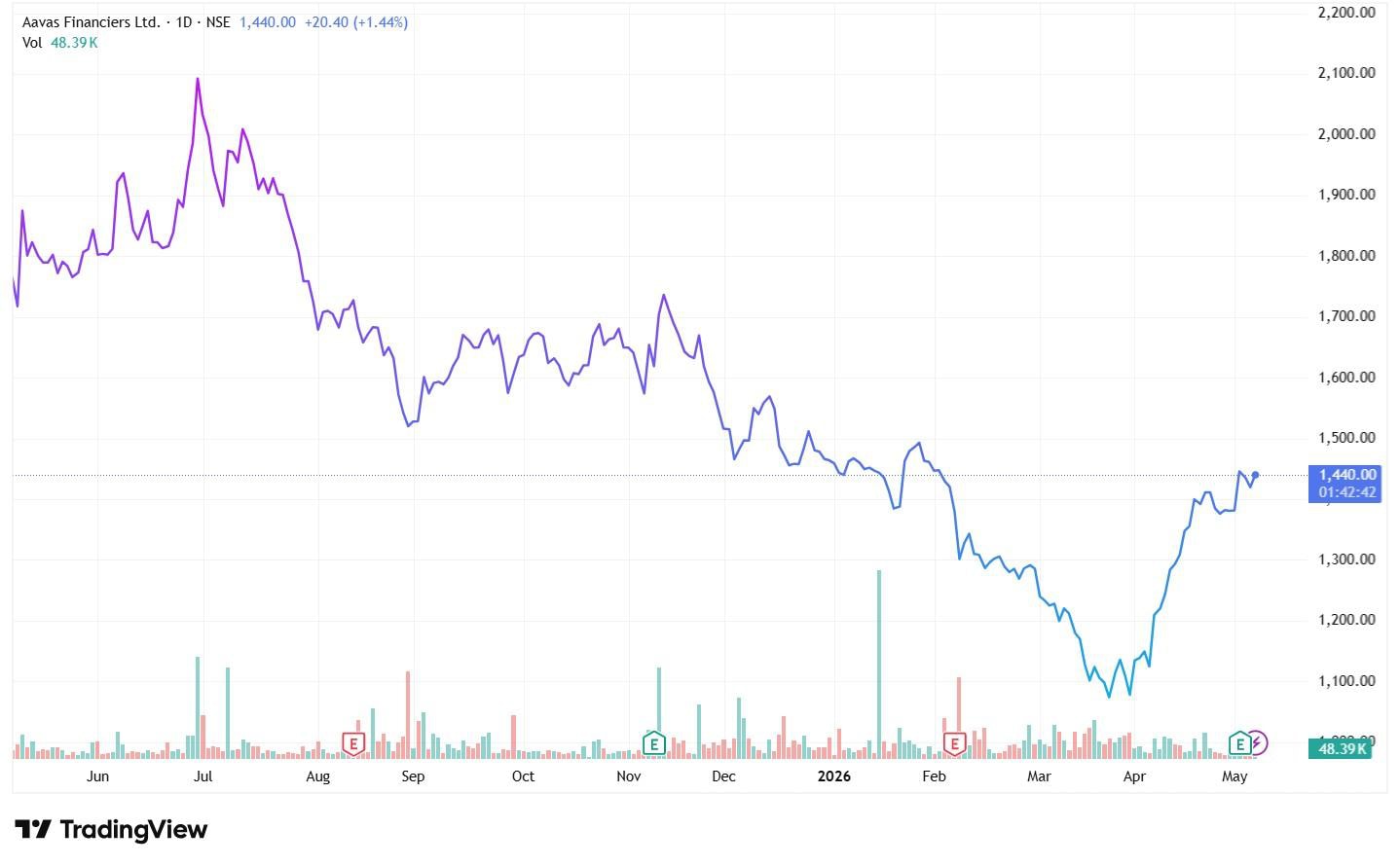
1-Year Share Price Chart of AAVAS Financiers Ltd.
#2 Vishal Mega Mart Limited
Vishal Mega Mart Ltd. is the next stock on this list, and coincidentally, this is also one of the top stocks that foreign institutional investors bought aggressively during the quarter.
DIIs raised their stake by 7.27% points in this stock, taking the total holding to 32.74% at the end of Q4FY26.
This hypermarket chain is perhaps getting all the attention due to rapid expansion, especially across the southern part of the country.
Another factor that might have seized DIIs attention is the small-format stores that Vishal Mega Mart is developing. As per the management, the company is planning to build 30 to 40 more such small-format stores across India within the next few years.
During Q3FY26, the company also witnessed a significant rise of around 16% YoY in its customer base, which took the total customers registered with the Loyalty program to a whopping 16.3 crore.
During the 9MFY26, sales of the company stood at ₹9,792 crore, up by 20% YoY from ₹8,169 crore in the corresponding quarter of the last fiscal.
PAT also increased from ₹548 crore to ₹701 crore, rising at 28% YoY during the period.
Note: Q4 & FY26 Financial Results are yet to be announced.
Coming to the returns, return on capital employed (ROCE) of the company stood at 13.1%, at par with the industry median.
The stock is currently trading at a PE of 73.7x, which is way higher than the industry median of 46.3x. Even the Price Earnings to growth ratio (PEG) is at 1.6x, higher than the industry median of 0.6x, suggesting the stock might be overvalued even if adjusted for growth.
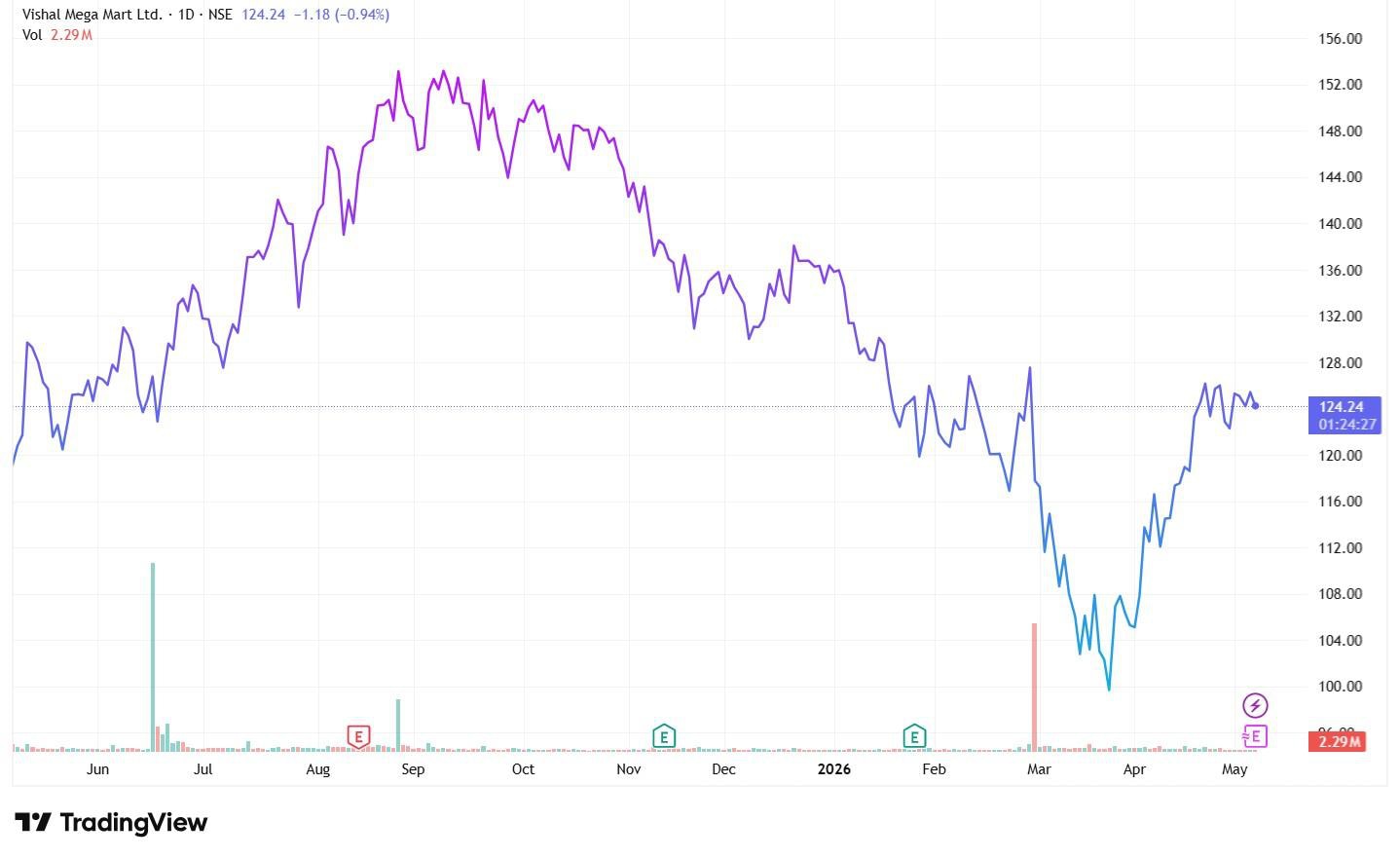
1-Year Stock Price Chart of Vishal Mega Mart Ltd.
#3 PB Fintech Limited
PB Fintech Ltd., which is commonly known as Policy Bazar, is the largest online platform for insurance and lending products across India. The company has two flagship brands – Policybazaar and Paisabazaar, via which different financial products are offered.
DIIs increased 7.18% points stake in this stock, which took the overall holding to 36.72% at the end of the January-March quarter.
Policybazaar is the largest marketplace for insurance in the country, with a whopping 93% share amongst the online insurance aggregators. As of 31 December 2025, the total number of insurance policies sold was 63 crores.
Coming to the Paisabazaar brand, it is the largest comparison platform for loans and other credit products in the country. As of the quarter ended on 31 December 2025, the annual recurring revenue (ARR) from loan disbursal stood at ₹40,000 crore.
Paisabazaar also witnessed a massive growth in its credit card issuance during the quarter, as the number increased to a whopping 3 lakhs during Q3FY26.
Apart from the massive market presence of PB Fintech, one of the other reasons for increasing DII interest in this company can be its growing physical presence of both brands of PB Fintech.
The company has been building offline stores and also offering in-person appointments to the customers, and prospective customers to make the insurance purchase, and loan application, and to avail other products and services easily and readily available.
As of December 2025, the company had on-ground sales support in more than 200 cities in India.
Surprisingly, this approach has been increasing the market share of the company further, along with increasing the ticket size of loans and insurance policies.
Coming to the financials, revenue for FY26 stood at ₹6,794 crore, up by 36.5% YoY from ₹4,977 crore generated in FY25. Profit grew by a whopping 112% from ₹353 crore to ₹670 crore during the period.
PB Fintech has an ROE of 9.8%, slightly higher than the industry median of 8.1%.
The stock is currently trading at a PE of 113.8x, way higher than the industry median of 22.5x. Even the PBV is 10.4x, higher than the industry median of 3.6x, indicating a premium valuation.
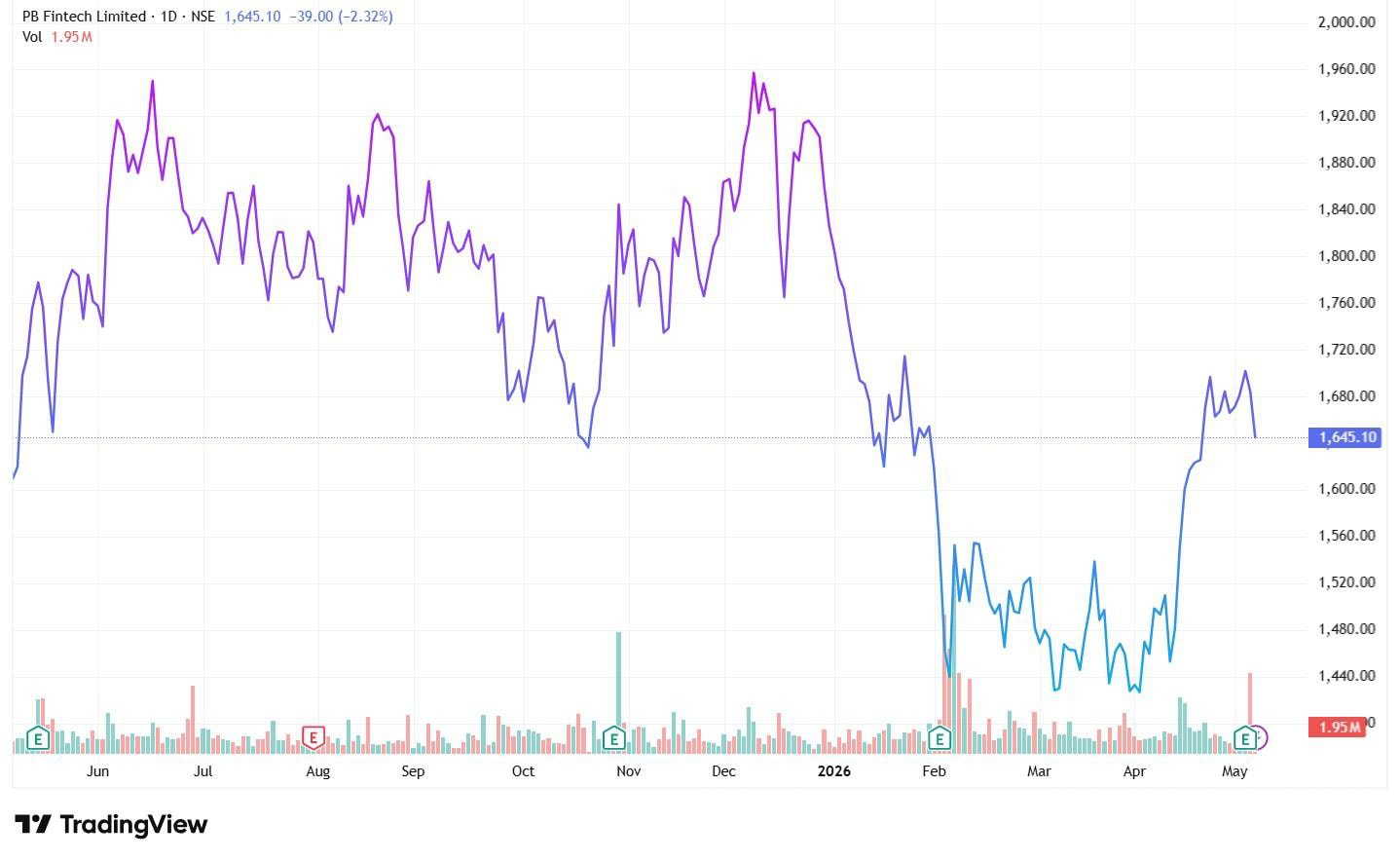
1-Year Share Price Chart of PB Fintech Ltd.
#4 Mastek Limited
Mastek Ltd. is a leading Information Technology (IT) services and solutions provider offering application development, maintenance, business intelligence, data warehousing, testing and assurance, and legacy modernization services.
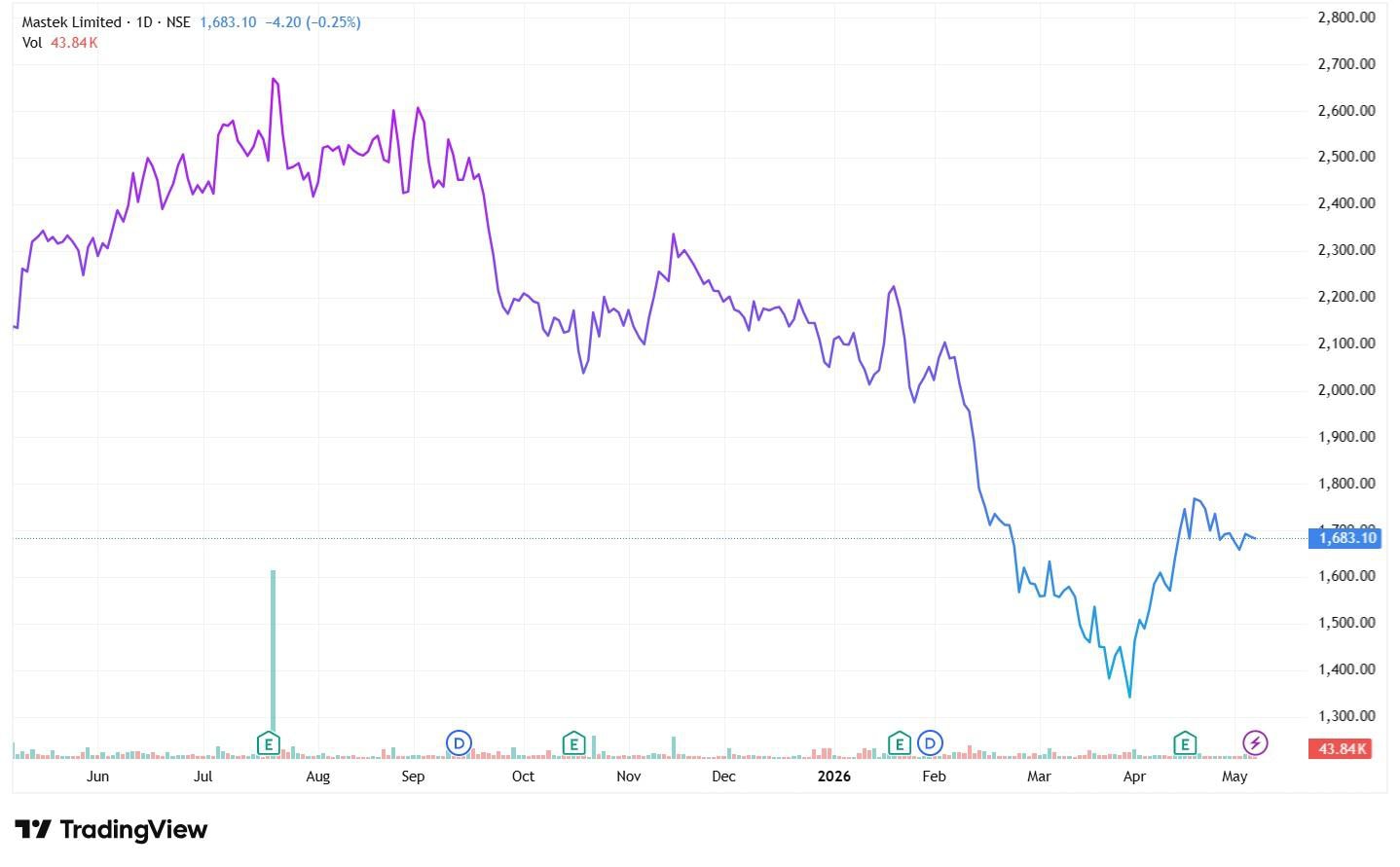
During Q4FY26, DIIs increased their stake by 6.37% points in this stock, taking the total holding to 19.02%.
One of the possible reasons behind this significant surge in the DIIs holding could be the company winning 25 AI-assisted deals alone during the quarter. Throughout FY26, the company won more than 85 deals in the AI space.
Amongst the key deals, Mastek is building the first Artificial Intelligence (AI) Centre of Excellence in the United Kingdom for a global financial services provider.
The company also secured a strategic engagement with the US Federal Health Authority for implementing a unified, federal-level patient data system.
Mastek has also entered into a strategic partnership with a Southeast Asian Government-backed Insurer to build a unified financial management platform, which will be powered by AI.
Sales of the company increased by 7.05% YoY to ₹3,699 crore during FY26 from ₹3,455 crore in FY25.
PAT rose 16% YoY from ₹376 crore to ₹404 crore during the period.
Coming to the return, ROE of the company stood at 15.6%, slightly lower than the industry median of 17.6%.
But the stock is trading at a PE of 12.3x, which is lower than the industry median of 21.6x, and even the PE ratio is 0.8x, lower than the industry median of 0.9x, indicating that the stock could be underpriced at the current price level and given the growth potential.
1-Year Share Price Chart of Mastek Ltd.
#5 IndusInd Bank Limited
IndusInd Bank Ltd. is one of the leading private sector banks in the country, with over 42 million customers and 9,535 touch points.
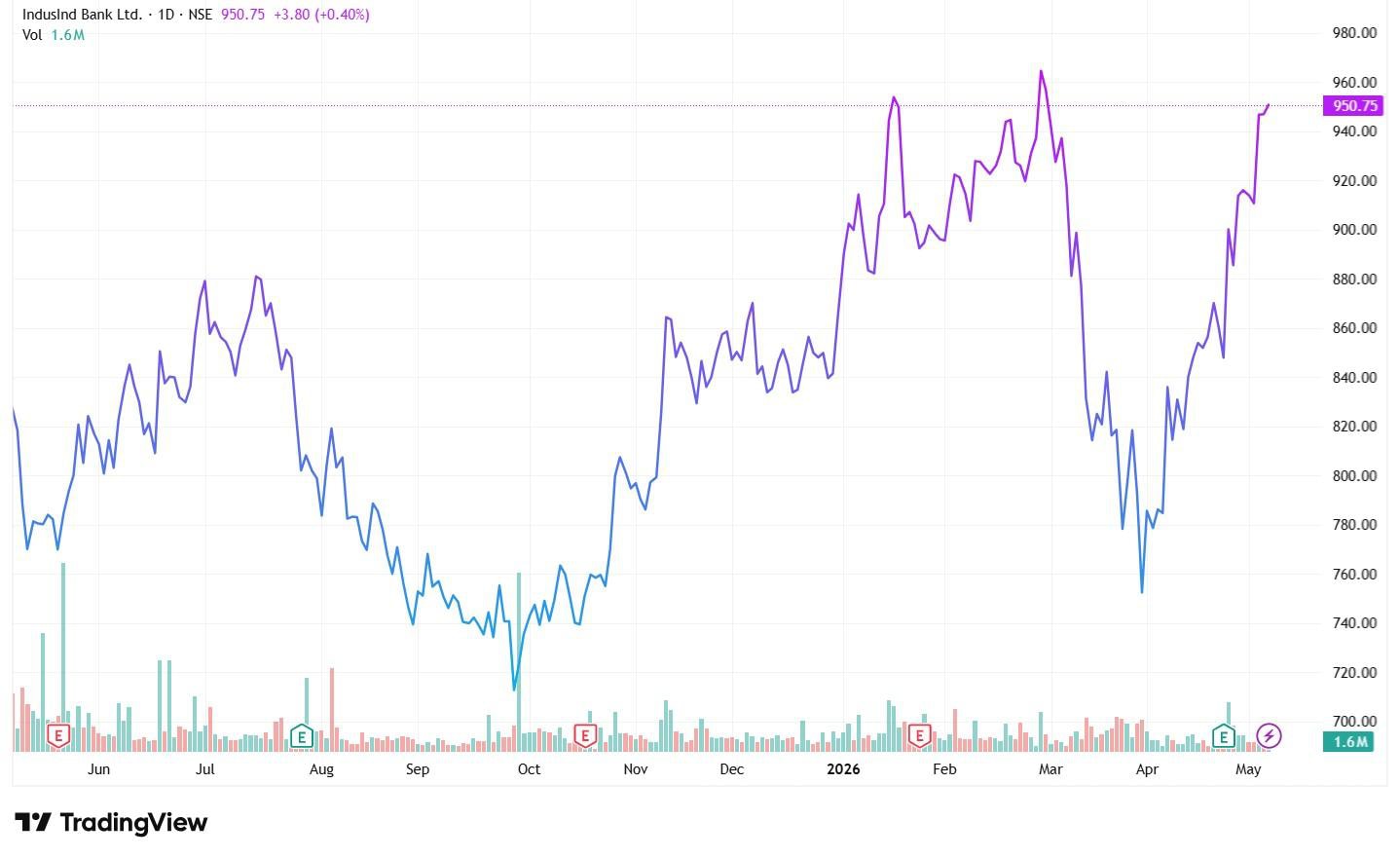
DIIs raised stake by 5.13% points in this stock, taking the total holding to a whopping 40.13% at the end of the fourth quarter FY26.
One of the possible reasons behind this increase in stake by DIIs could be the sharp 43% YoY rise in NII of the bank. From ₹3,048 crore earned in FY25, net interest jumped to ₹4,371 crore in FY26.
On the other hand, the total income rose by a massive 62% YoY from ₹3,757 crore to ₹6,085 crore during the period.
Having said that, the deposit grew marginally by 2% QoQ to ₹3,99,931 crore in Q4FY26, while the loan book marginally declined by 1% QoQ to ₹3,51,871 crores during the quarter.
The GNPA reduced by 14 basis points QoQ to 3.43% in Q4FY26, from 3.56% in Q3FY26.
Having said that, revenue for FY26 stood at ₹25,211 crore, down by 6% YoY from ₹26,722 crore generated during FY25.
However, PAT fell drastically by 65% YoY from ₹2,575 crore to ₹889 crore during the period.
One of the reasons behind the decline in PAT could be increased provisions and contingencies in FY26. The bank increased provision and contingencies from ₹7,136 crore in FY25 to ₹7,969 crore in FY26.
The latest ROE offered by the bank is just 1.36%, which is way lower than the industry median of 12.6%.
The stock is trading at a PE of 83.3x, way higher than the industry median of 14.8x, and even the PBV ratio is at 1.13x, higher than the industry median of 1.29x, suggesting the stock is perhaps currently overpriced.
1-Year Share Price Chart of IndusInd Bank Ltd.
Other Stocks Which DIIs Bought
As we are covering the stocks where DIIs raised stake more than 5% points during Q4FY26, there are two other stocks in this list as well.
Final Thoughts
DIIs have slowly become the primary force behind the Indian equity market. They have been investing steadily irrespective of the market turmoil. Having said that, their stock picks suggest they are investing in fundamentally strong companies, have a clear vision, are technologically advanced, and are expanding robustly.
If you would like to keep an eye on these stocks and see whether DIIs keep on increasing their holding, or they hold these stocks and for how long, or they reverse their position, you can add these stocks to your watchlist.
Disclaimer:
We have relied on data from www.Screener.in throughout this article. Only in cases where the data was not available have we used an alternate, but widely used and accepted source of information.
The purpose of this article is only to share interesting charts, data points, and thought-provoking opinions. It is NOT a recommendation. If you wish to consider an investment, you are strongly advised to consult your advisor. This article is strictly for educational purposes only.
Maumita Mitra is a seasoned writer specializing in demystifying the world of investment for a broad audience. She has a keen eye for detail and a knack for explaining complex financial concepts in the simplest manner possible.
Disclosure: The writer and her dependents do not hold the stocks discussed in this article.
The website managers, their employees (s), and contributors/writers/authors of articles have or may have an outstanding buy or sell position or holding in the securities, options on securities, or other related investments of issuers and/or companies discussed therein. The content of the articles and the interpretation of data are solely the personal views of the contributors/ writers/authors. Investors must make their own investment decisions based on their specific objectives, resources, and only after consulting such independent advisors as may be necessary.