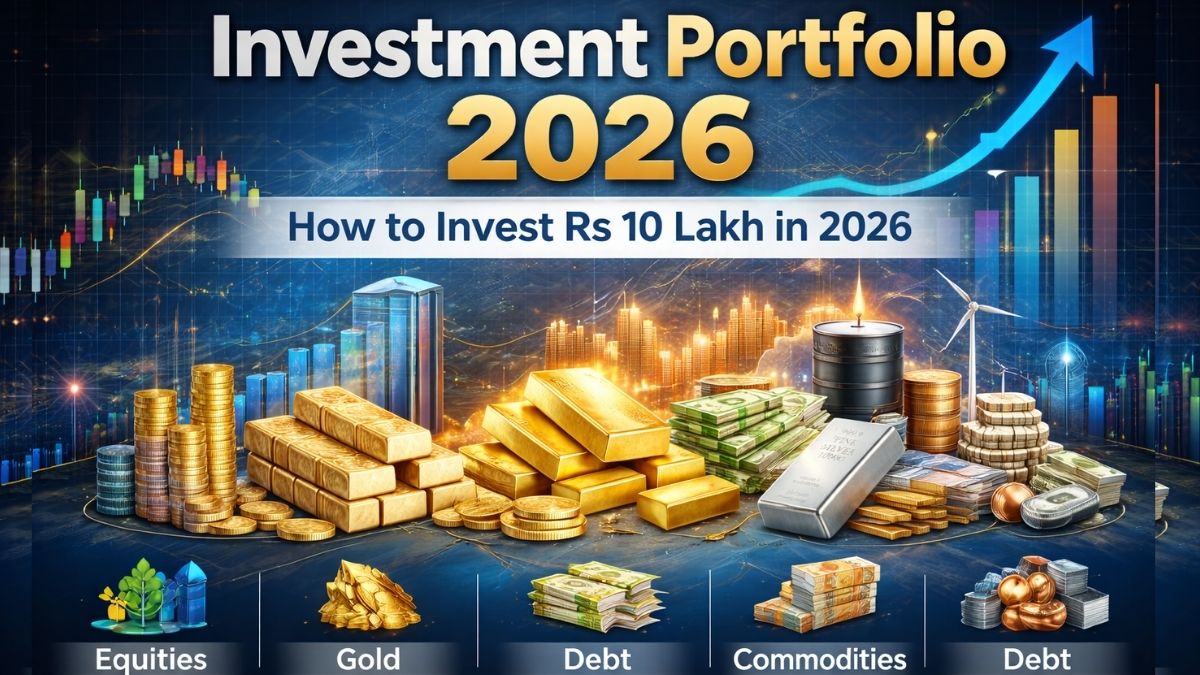
If you have Rs 10 lakh now, how would you invest it?
In our quarterly feature, we lean on some of India’s top fund managers to answer this very question. They explain the changing dynamics from last January to April – what’s changed in 3 months and what falls under status quo.
Anand Shah, CIO PMS & AIF – ICICI Prudential AMC
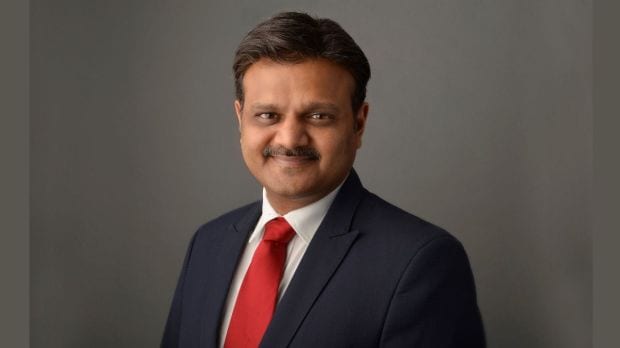
Anand Shah listed out his asset allocation table and highlighted the top bets and one contrarian call for this quarter
# The Allocation Table
(A Rupee-based breakdown of Rs 1,000,000 across asset classes)
| Asset Class | % of total | Increase/decrease from Jan qtr |
| Large cap | 50% | Unchanged |
| Midcap | 10% | Increased |
| Small-cap | 15% | Increased |
| Gold | 15% | Unchanged |
| Debt | 10% | Decreased |
# The Core Thesis
Anand Shah highlighted the core thesis driving this specific allocation, especially the changes from the last quarter-
According to him, “the current allocation is basis a long-term conviction on equities, but with a more calibrated stance in response to rising global uncertainties and evolving macro risks. While we remain constructive on Indian equities over the long term, the near-term environment has become more complex due to evolving global dynamics. We believe one should maintain a long-term investment horizon of at least five years.”
He pointed out that the “ongoing West Asia crisis has introduced fresh uncertainty through disruptions in energy markets and global supply chains. This, in turn, raises the risk of higher inflation and could lead to a higher interest rate regime. As a result, financial conditions may remain tighter for longer than previously anticipated.”
In this backdrop, he believes that “the next phase of market returns is likely to be more moderate and driven by earnings delivery rather than valuation expansion. Domestic macros in India remain relatively resilient, supported by steady credit growth, improving capacity utilisation, and continued government focus on infrastructure and manufacturing.”
“Within equities, large caps form the core of the allocation, given their relatively healthier balance sheets, better earnings visibility, and ability to navigate periods of heightened volatility. Exposure to mid and small caps is more selective, with a clear preference for businesses with strong fundamentals and sustainable competitive advantages,” he added.
He considers “the allocation to gold serves as an effective hedge against geopolitical risks, currency volatility, and potential inflation surprises. Debt allocation remains important from a portfolio stability perspective.”
#The ‘Watchlist Five’: 5 specific sectors on the radar
1. Select Private Banks – Focusing on institutions with strong liability franchises, stable asset quality, and prudent underwriting, which can navigate tighter liquidity conditions.
2. Financial Services – Asset Managers & Insurance – Structural beneficiaries of increasing financialisation of savings and rising insurance penetration in India.
3. Capital Goods & Infrastructure – Companies benefiting from domestic capex momentum, government spending, and supply chain realignment towards India.
4. Energy & Power Ecosystem – Including conventional and renewable energy, given the heightened focus on energy security, grid investments, and transition themes.
5. Export-Oriented Manufacturing – Select sectors benefiting from global supply chain diversification.
# The Contrarian View
Anand Shah believes there are certain names in the “chemicals, fertilisers, and textiles space—particularly in the mid- and small-cap universe—remain relatively under-owned and out of favour.”
He pointed out that “these sectors have faced headwinds over the past couple of years due to global demand slowdown, inventory corrections, and margin pressures from volatile input costs. However, as supply chains gradually stabilise and input cost pressures normalise, we could see an improvement in utilisation levels and operating leverage.”
Additionally, the “ongoing global supply chain diversification and potential recovery in export demand could act as tailwinds. While risks remain in the near term, we believe the risk-reward for well-managed companies in these segments is becoming favourable from a medium- to long-term perspective,” he added.
Brijesh Ved, Head-PMS, Kotak Mahindra AMC
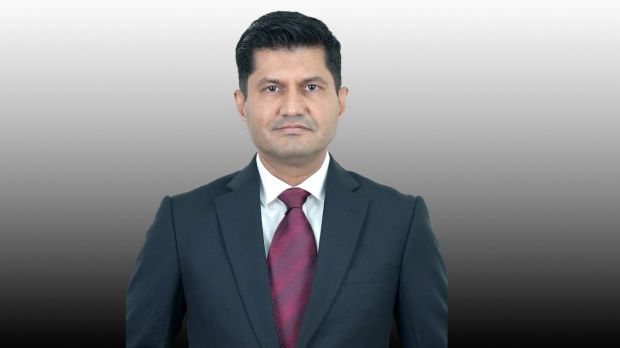
Brijesh Ved listed out his asset allocation table and highlighted the top bets and one contrarian call
# The Allocation Table
(A Rupee-based breakdown of Rs 1,000,000 across asset classes)
| Asset Class | Amount | % of total | Increase/decrease from Jan qtr | |
| Large cap | Rs 5,00,000 | 50% | Increased | |
| Midcap | Rs 1,00,000 | 10% | Decreased | |
| Small-cap | Rs 1,00,000 | 10% | Unchanged | |
| Total Equity | Rs 7,00,000 | 70% | Unchanged | |
| Debt | Rs 2,00,000 | 20% | Unchanged | |
| Kotak Gold Silver Passive (FoF) | Rs 1,00,000 | |||
| Alternate/ Precious Metal | Rs 1,00,000 | 10% | Unchanged |
# The Core Thesis
According to Brijesh Ved, the Core thesis is “global growth, which has remained resilient so far, is now facing mounting headwinds as the West Asia conflict disrupts energy markets. While major institutions have yet to formally revise forecasts—given the fluid situation and uncertainty around the conflict’s duration—the sharp rise in crude oil, natural gas, and other commodity prices is likely to strain economies and weigh on activity, prompting downward revisions to growth expectations.”
He pointed out that, “with the Strait of Hormuz nearly shut, the implications for the global economy are significant. Around 20% of global crude oil and LNG flows transit through the Strait, along with nearly 30% of helium—critical for semiconductor manufacturing. A substantial share of fertilizer trade, including sulphur, urea, ammonia, and phosphates, also relies on this route. The extent of the impact will depend on how long disruptions persist and the time required to restore key infrastructure. Prolonged outages would tighten supply, push up input costs, and materially dampen global growth.”
According to him, “global financial conditions have tightened amid renewed inflation risks stemming from the West Asia conflict. Central banks across developed economies have become more cautious on the rate outlook, while bond yields have risen globally. The likelihood of rate cuts has reduced, with the risk now skewed toward rates staying higher for longer, especially if the conflict persists.”
For India, “recent high-frequency indicators, particularly consumption-related indicators, have recorded robust growth. As per the new CPI series (base year 2024), headline CPI edged up to 3.2% YoY from 2.7% in January 2026, while food CPI accelerated to 3.4% YoY and core CPI remained steady at 3.4% for the second consecutive month. Although the starting point of macro-stability indicators remains favourable, we will need to closely track the duration of recent geopolitical tensions and normalisation of supply chains to assess risks to growth and macro-stability,” he added.
Considering the above macro, Brijesh Ved said that allocations have been done to respective asset classes:
- Global geopolitical uncertainty = Allocation to precious metals continues to remain unchanged. Increase in allocation towards large caps given better margin of safety.
- Slower than expected growth in CY2025, uncertainty over India’s export growth & interest rates cycle = Allocation to debt remains unchanged; tilt towards the short end of debt curve
# The ‘Watchlist Five’: 5 specific sectors on the radar
-Banking & Financial Services
–Healthcare
-Auto & Auto Components
-Capital Goods
–Information Technology Services
# The Contrarian View
Brijesh’s key contrarian bets include the following –
Auto & Auto Ancillary: India is the world’s largest manufacturer of three-wheelers, second largest in two-wheelers, and fourth largest in passenger vehicles.
He listed out the growth drivers – Rising middle-class income, increasing urbanisation, and rapid highway construction.
Sandipan Roy, CIO – Motilal Oswal Private Wealth
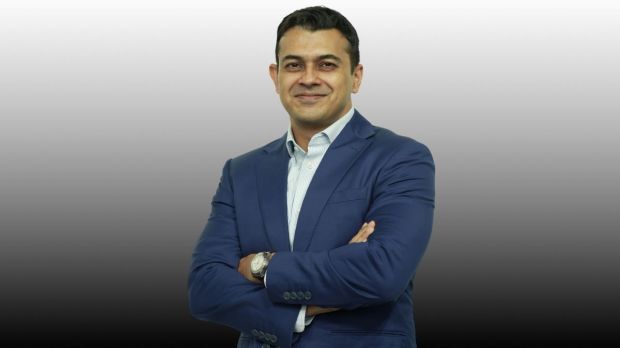
Sandipan Roy listed out his asset allocation framework and shared his market view, key focus areas, and one contrarian call.
# The Allocation Table
(A Rupee-based breakdown of Rs 1,000,000 across asset classes)
| Asset Class | % of total | Increase/decrease from Jan qtr |
| Large cap | 10% | Unchanged |
| Mid- and small-cap | 10% | Unchanged |
| Hybrid Funds | 20% | Unchanged |
| Emerging Market | 20% | Unchanged |
| Long Duration | 0% | Decreased |
| High Yield Credit | 20% | Unchanged |
| Commodities | 20% | Increased |
# The Core Thesis
Sandipan Roy outlined the key factors shaping this allocation strategy.
He pointed out that the “markets are currently highly unpredictable, with conditions evolving rapidly and short-term events increasingly driving direction. The pace and frequency of these developments have led to sharp shifts in sentiment.”
To illustrate his point, he explained that “in January 2026 we noted that markets were at an interesting juncture, with investors on edge despite volatility indicators like the India VIX hovering at multi-year lows—even dipping into single digits briefly. In contrast, the VIX has now surged to levels comparable to major stress episodes over the past five years, such as the Russia–Ukraine conflict, the 2024 Union Elections, and the tariff-related volatility in 2025.”
“From a market perspective, our preference for maintaining a balanced approach this year remains unchanged, and the evolving environment continues to reinforce the need for such positioning,” he added.
Global markets are navigating a phase of heightened geopolitical uncertainty driven by escalating tensions involving the United States, Israel, and Iran, particularly around the Strait of Hormuz—a critical global energy chokepoint.
He explained that “this has led to a sharp surge in crude oil and LNG prices, with Brent crude rising from $70–75 per barrel to above $100, briefly touching $118. Elevated energy prices are inherently inflationary, increasing costs across transportation, manufacturing, and utilities, which may push bond yields higher, constrain central bank policy flexibility, and weigh on global growth.”
“For India, sustained high crude prices pose risks through higher inflation, a widening current account deficit, and pressure on the rupee, although strong forex reserves, lower oil intensity, and improved macro stability provide a cushion compared to previous cycles,” he added.
Equity markets have experienced a broad-based correction amid risk-off sentiment, with the impact being more pronounced beneath the surface than at the index level. Approximately 74% of Nifty 500 stocks are trading below their 200-day moving averages, while the average correction in the midcap and small-cap stocks has been 24% and 30% respectively, indicating meaningful price and time correction.
He highlighted that “valuations have consequently moderated, with the Nifty 50 now trading below its 10-year average on a one-year forward P/E basis, and excess premiums in broader markets easing. At the same time, earnings momentum remains encouraging, with Nifty 500 companies delivering their strongest profit growth in eight quarters and nearly half of the companies reporting profit growth above 15%, suggesting that the recovery is becoming increasingly broad-based despite near-term volatility.”
“Hence equity allocation can be done through funds managing their allocation dynamically to take advantage of volatility, large cap funds as valuation are becoming attractive – 1-year forward below the 10-year average, mid & small-cap extent of corrections are presenting good entry points,” Roy elaborated.
Elevated crude prices could keep inflation and currency pressures intact, limiting the scope for a meaningful decline in bond yields and can even lead to yield hardening by 15-20 bps as well before coming down once uncertainty subsides. Moreover, an inflationary environment and sharp oil spike may lead to a reversal of monetary stance going by the past records.
He added that “in this backdrop, accrual-based strategies across the credit spectrum remain preferred. Hence, we would like to remove duration exposure from the earlier recommendation. Also, treasury losses and increasingly restrictive regulatory measures would curb the profitability of banks in the near term. Accordingly, we will be taking out the bank allocation and move it to power/energy sectors.”
“While gold may see near-term volatility due to a stronger dollar and profit booking, its structural appeal remains intact amid persistent geopolitical and macro uncertainty. It continues to serve as an effective hedge against inflation, currency weakness, and systemic risks, making corrections a buying opportunity,” he pointed out.
Roy believes that “commodities as a pack would remain inflationary in an uncertain deglobalised world, increasing freight costs and hoarding by asset owners. Hence, we would like to increase our exposure to commodities further.”
# The ‘Watchlist Five’: 5 specific sectors on the radar
-Energy/Power
–Metals & mining – precious & industrials (non-ferrous & ferrous both)
-India 10-year & 15-year G-SEC
-China fund
–Defence
# The Contrarian View
Sandipan Roy has identified the Indian IT sector as his key contrarian bet.
Ajay Bagga, Market Veteran
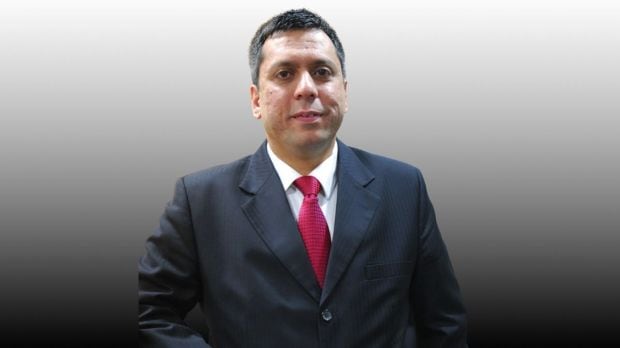
Ajay Bagga shared his model portfolio, outlining his asset allocation, macro outlook, sector preferences, and one contrarian call.
# The Allocation Table
(A Rupee-based breakdown of Rs 1,000,000 across asset classes)
| Asset Class | Amount | % of total | Increase/decrease from Jan Qtr |
| Large cap | Rs 3,00,000 | 30% | Unchanged |
| Midcap | Rs 1,50,000 | 15% | Unchanged |
| Small-cap | Rs 1,50,000 | 15% | Unchanged |
| US ETF (Broad Market) | Rs 1,00,000 | 10% | Unchanged |
| China ETF | Rs 1,00,000 | 10% | Unchanged |
| Silver | Rs 1,00,000 | 10% | Unchanged |
| Gold | Rs 50,000 | 5% | Unchanged |
| US Magnificent 7 (AI Focus) | Rs 50,000 | 5% | Unchanged |
# The Core Thesis
The core thesis driving Ajay Bagga’s views is a mix of global and local factors.
He pointed out that “the Iran war starting on February 28 has been the overarching geopolitical theme of Q1, CY26. All markets were impacted by this, with the outperformers being oil , gas and the US dollar.
Traditional safe havens like Gold did not perform as central banks and funds sold Gold to generate liquidity for meeting currency protection demands and margin calls in other asset classes, respectively.”
He maintain, “our allocation as we see the energy shock due to the Iran war ending over the next two quarters. Reconstruction in Iran , Venezuela and the Gulf as well as the defence expenditure by the world will be drivers of growth. Trump will double down on an America First agenda with an eye on the November mid-term elections. Central banks will hold their policy rates, choosing to weather the supply-shock-based inflation surge as a temporary blip and focussing instead on economic resilience and recovery.”
Trump deregulation and tax cuts will help US corporate earnings, while Japan and China will see large stimulus packages, and Europe will see heavy lifting being done by the German stimulus for infrastructure, power and defence scale-up.
“The Artificial Intelligence revolution has moved from speculative hype to a fundamental Capex cycle. This portfolio is anchored by India’s domestic resilience, with 60% of the capital staying home to capture the steady double-digit earnings growth and a cooling valuation environment in large caps as Indian markets witness a ‘mean-reversion catch-up’ trade in Q2 to Q4 of 2026,” he added.
According to Bagga, “The 15% allocation to Gold and Silver serves as a necessary ‘volatility insurance.’ With silver entering a structural supply deficit and Gold acting as a hedge against potential currency instability, these commodities provide a non-correlated safety net.”
He outlined that “the international component (25%) balances the portfolio: the China ETF captures a ‘deep value’ recovery play as Beijing ramps up fiscal stimulus and presents cheaper AI opportunities, while the US allocation ensures participation in the largest economy, the largest capex buildout, the largest defence spender and the most liquid market on earth.”
Overall, this strategy seeks to “capitalise on the ‘AI productivity harvest’ of 2026 while maintaining enough diversification to withstand geopolitical noise,” he added.
#The ‘Watchlist Five’: 5 specific sectors on the radar
Ajay Bagga believes that these sectors and themes are expected to drive the highest alpha over the next four quarters –
1. US Technology (Hyperscalers): Companies providing the ‘shovels’ for the AI gold rush (Cloud and Compute). Software companies transforming into hardware giants.
2. Indian banking & financials: Large-cap banks with superior credit growth and improving NIMs as well as NBFCs benefitting from lower cost of funds and better credit growth impulses.
3. Industrial commodities (Silver): Driven by the massive silver requirements in solar, AI and EV infrastructure.
4. Chinese AI plays: These are at a relative discount to the US and E-commerce. Emerging Chinese AI tech giants benefiting from a focus on building domestic AI alternatives to a sanctioned US AI pool and the pivot toward domestic consumption.
5. India Power & Infrastructure: The backbone supporting India’s long-term manufacturing ambitions and services growth. Energy security will be the new mantra in India and we look forward to participate in this.
#The Contrarian View
Ajay Bagga outlined that the most contrarian move in this portfolio “is the 5% overweight in the US ‘Magnificent 7’ stocks. By early 2026, many investors have grown fearful of an ‘AI Bubble’ similar to the 1999 Dot-com crash.”
However, “our view is that unlike 1999, today’s tech giants are backed by fortress balance sheets and tangible cash flows. We expect the outperformance of the ‘Magnificent 7’ to continue as they successfully monetise AI integrations into software and services. While others rotate out of tech in fear, we believe “growing into the multiple” will be the theme of 2026.”
Deven R Choksey, Founder and MD of DRChoksey Finserv
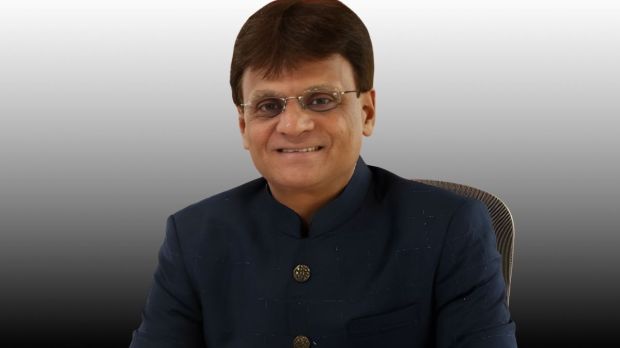
Deven R Choksey outlined his model portfolio and pointed out that “as we move into the second quarter of 2026, the Indian equity landscape is undergoing a transition.”
“While the euphoria of the early year has tempered, the underlying structural drivers, domestic consumption, financialisation of savings, and energy transition remain potent,” he added.
He advised that “the war situation is not coming under complete control; thus, a disciplined approach with capital protection is recommended.”
He has tweaked his allocation with a boas primarily towards equity bets.
#The Allocation Table
(A Rupee-based breakdown of Rs 1,000,000 across asset classes)
| Asset Class | Amount | % of total |
| Industrial & Energy | Rs 3,00,000 | 30% |
| Financial Services | Rs 5,00,000 | 50% |
| Automotive & EV | Rs 2,00,000 | 20% |
#The Core Thesis
According to Deven R Choksey for investors looking to deploy Rs 10 lakh today, the objective must be two-fold, “Capital Protection to guard against global macro-volatility, and Compounding Growth to capture India’s long-term trajectory. The Model Portfolio is designed with analytical lens, focusing on high-conviction large-caps that act as anchors in a turbulent sea.”
According to him, “In the current environment, buying the dip is not enough; one must buy the business. This portfolio prioritises companies with fortress-like balance sheets and clear earnings visibility for FY27.”
Choksey added that “by sticking to a disciplined allocation approach and focusing on companies that generate consistent cash flows, investors can build a portfolio that doesn’t just survive market cycles but thrives through them.”
He believes that “capital protection is not about avoiding risk; it is about managing it through quality.”
#The ‘Watchlist Five’: 5 specific sectors on the radar
Outlining his sector preferences he pointed out some key factors to watch –
1. The New Energy Sentinel
“Large diversified energy and digital platform companies continue to form the bedrock of any defensive-growth portfolio. The focus has shifted from traditional Oil-to-Chemicals (O2C) businesses to the value-unlocking potential of New Energy,” he added.
He said “with global Battery Passport standards becoming a reality, integrated giga-factory ecosystems are positioned to play a key role in the renewable supply chain. Additionally, monetisation potential from retail and digital platforms provides long-term valuation support.”
2.Retail & Digital Lending Platforms
This is another theme that Choksey is betting on and calls it “the engine of the portfolio.”
“By leveraging omnichannel digital ecosystems, leading NBFCs have evolved beyond traditional lending into full-stack financial services providers. Their ability to scale while maintaining asset quality remains critical,” he explained.
3.Insurance & Asset Management Businesses
Choksey believes that this represents the capital protection layer. He elaborated that, “With rising insurance penetration and rapid growth in asset management, these businesses benefit from the structural shift in Indian household savings from physical to financial assets.”
4.Automotive & Mobility Manufacturers
Choksey calls this sector “a play on cash generation.”According to him, “With recovery in export markets and increasing focus on electric mobility, automotive players offer a mix of cash flow stability and participation in the EV transition.”
5.Banking Sector (Public Sector Leadership)
Another focus are that he also refers to as the “Credit Cycle Proxy” is the banking sector.
“Large public sector banks have evolved significantly from traditional value plays into growth-oriented institutions. With credit costs at relatively lower levels and balance sheets strengthened, these institutions are key beneficiaries of India’s infrastructure and credit growth cycle,” he added.
He highlighted that “they remain an efficient way to participate in domestic credit expansion.”
# The Contrarian View
Choksey doesn’t have any specific contrarian bet at the moment.
Conclusion
Most of the fund managers believe that the current global headwinds could potentially be one of the key challenges in 2026. If you want to invest Rs 10 lakh, they suggest allocating a significant amount to equities with a bias towards large caps. Gold and silver provide the essential hedge against global volatility. The high conviction watchlist that they have identified include sectors that are likely to lead earnings growth and are core to the consumption theme.
Disclaimer: This article provides factual analysis only and is not, and should not be construed as, an offer, solicitation, or recommendation to buy or sell securities. Investors must conduct their own independent due diligence and seek advice from a SEBI-registered financial advisor.