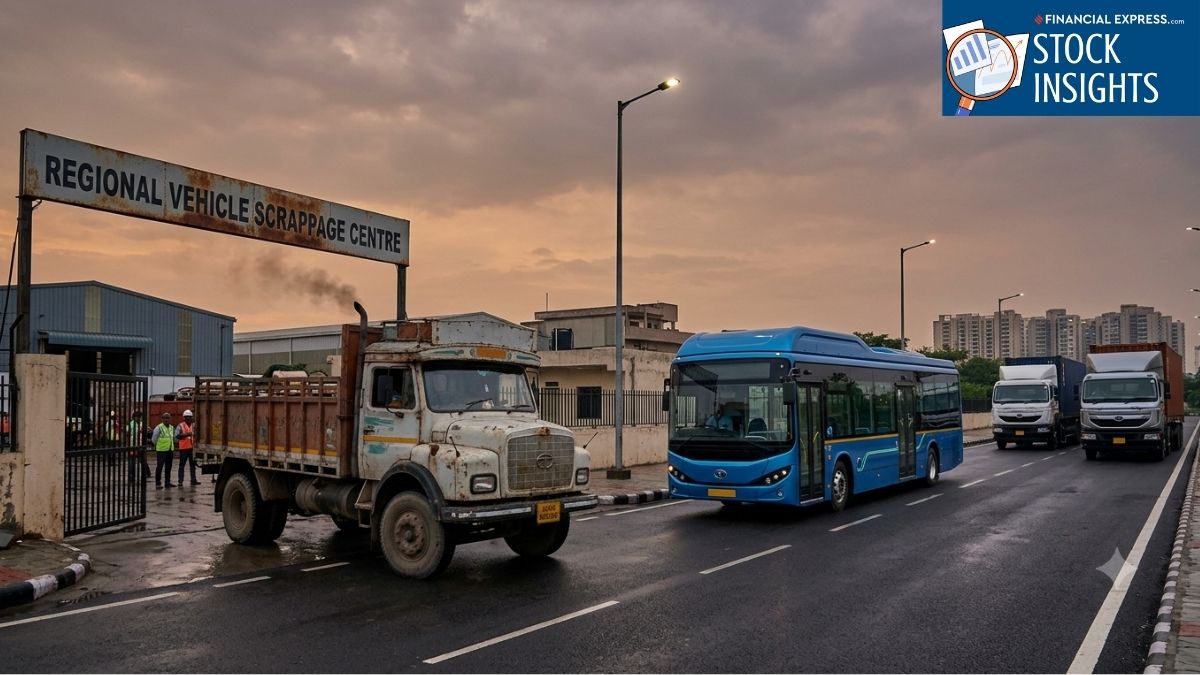
After the Goods and Services Tax Cut, the commercial vehicle (CV) industry may have found another catalyst. For years, thousands of ageing trucks and buses have remained on Delhi-NCR’s roads, despite stricter emission norms and rising operating costs.
Policy Shift: The ₹9,585-Cr Scrap Framework Transforming Delhi-NCR Logistics
Now, a ₹9,585 crore government-backed incentive programme could finally force a replacement cycle that the CV industry has been waiting for. Most importantly, this comes at a time when, according to CRISIL Ratings, the CV industry is expected to reach a record volume of around 12.4 lakh units in FY27, the last time seen in FY19.
That said, the project is a two-year scheme to replace around 2.0 lakh old commercial vehicles across Delhi-NCR, including 1.91 lakh trucks and more than 16,000 buses. Fleet owners will receive a combination of interest subsidies, tax waivers, and manufacturer discounts to shift to BS-VI or electric vehicles.
Beyond higher demand for CVs, it could also trigger fresh demand across the value chain, including financiers, auto component suppliers, tyre manufacturers, and scrappage operators. Also, replacement demand is one of the key drivers of the ongoing CV cycle.
Fleet Cycles: Why Warranty Expirations Trigger Predictable Replacement Volumes
Typically, large fleet owners replace their primary trucks after 4-6 years of use. This timeframe also coincides with the expiration of the vehicle’s warranty period. This fuels replacement demand, a reliable driver of new CV sales.
Against this backdrop, we examine three CV players that are well-positioned to benefit.
#1 Tata Motors CV: The Post-Demerger Pure Play
Following a demerger effective 1 October 2025, Tata Motors (part of the Tata Group) is a pure-play commercial vehicle (CV) company. The company’s presence spans Trucks, small CVs & Pickups, Buses, and EVs. Tata Motors’ stronghold is heavy commercial vehicles (HCV), where it held a 55% domestic market share in FY26.
Decadal Highs: Tracking the 55% Domestic Stronghold in Heavy CV
Tata Motors recently posted its highest HCV offtake market share in a decade, consolidating its dominant position. Across all commercial vehicles, it holds a strong 35.7% share of the domestic VAHAN market. As India’s largest CV company, Tata Motors is positioned as a key beneficiary of both the policy tailwind and the ongoing CV upcycle.
Sourcing Next-Generation Payloads to Meet European Safety Standards
To capitalise on the industry tailwind, it launched 17 next-generation trucks with higher payloads, better fuel efficiency, and cabins that meet European safety standards. A notable new release is the Azura range in the Intermediate and Light Commercial Vehicle category.
Deploying 3,815 Electric Buses and Testing H2-ICE Hydrogen Trucks
The company also supplies buses for both retail customers and public transit.
It is also actively transitioning toward green mobility. They have deployed over 3,815 electric buses. They have also introduced electric variants in other segments. Recently, it signed a Memorandum of Understanding to supply 40 Hydrogen Internal Combustion Engine trucks.
Navigating Pan-India State Transit Orders and Delhi-NCR Replacements
Another pan-India order for over 5,000 buses from various State Transport Undertakings. Thus, the proposed replacement of ageing buses in Delhi-NCR could emerge as an incremental driver of growth.
Replacement Velocity: Why 40% of Industry Volume is Anchored to Fleet Upgrades
Broader industry growth remained strong in FY26, supported by healthy fleet utilization and strong freight activity. The Total Industry Volume for offtake grew by 12.5% YoY, marking the highest-ever annual volume for the industry. Management estimates that at least 40% of its volume is driven by replacement demand.
Operational Outperformance: Inside the 11% Revenue Jump to ₹83,900 Crore
As a result, Tata Motors reported strong financial performance in FY26. Consolidated revenue grew 11% year-on-year to ₹83,900 crore in FY26, driven by 14% growth in wholesale volumes. EBITDA (Earnings Before Interest, Tax, Depreciation and Amortisation) margin grew 100 bps to 12.3%.
Profit after Tax (PAT), however, fell by ₹900 crore to ₹3,000 crore. Profit was dragged down by ₹3,700 crore in exceptional expenses, including new labour code costs, demerger-related costs, and a Mark-to-Market loss on Tata Capital. The company’s free cash flow reached ₹12,400 crore.
The company had net cash of ₹13,700 crore at the end of FY26. With this cash, Tata Motors also recommended a final dividend of ₹4 per share in FY26, totaling ₹1,500 crore.
TCO Structural Friction: Navigating Fluctuating Fuel Costs and Q1FY27 Guidance
However, Tata Motors is currently cautious due to industry headwinds, particularly fluctuating diesel prices, which account for 30% to 50% of a transporter’s Total Cost of Ownership. Despite this, the demand fundamentals and freight availability remain robust. The company expects to achieve at least single-digit volume growth in Q1FY27.
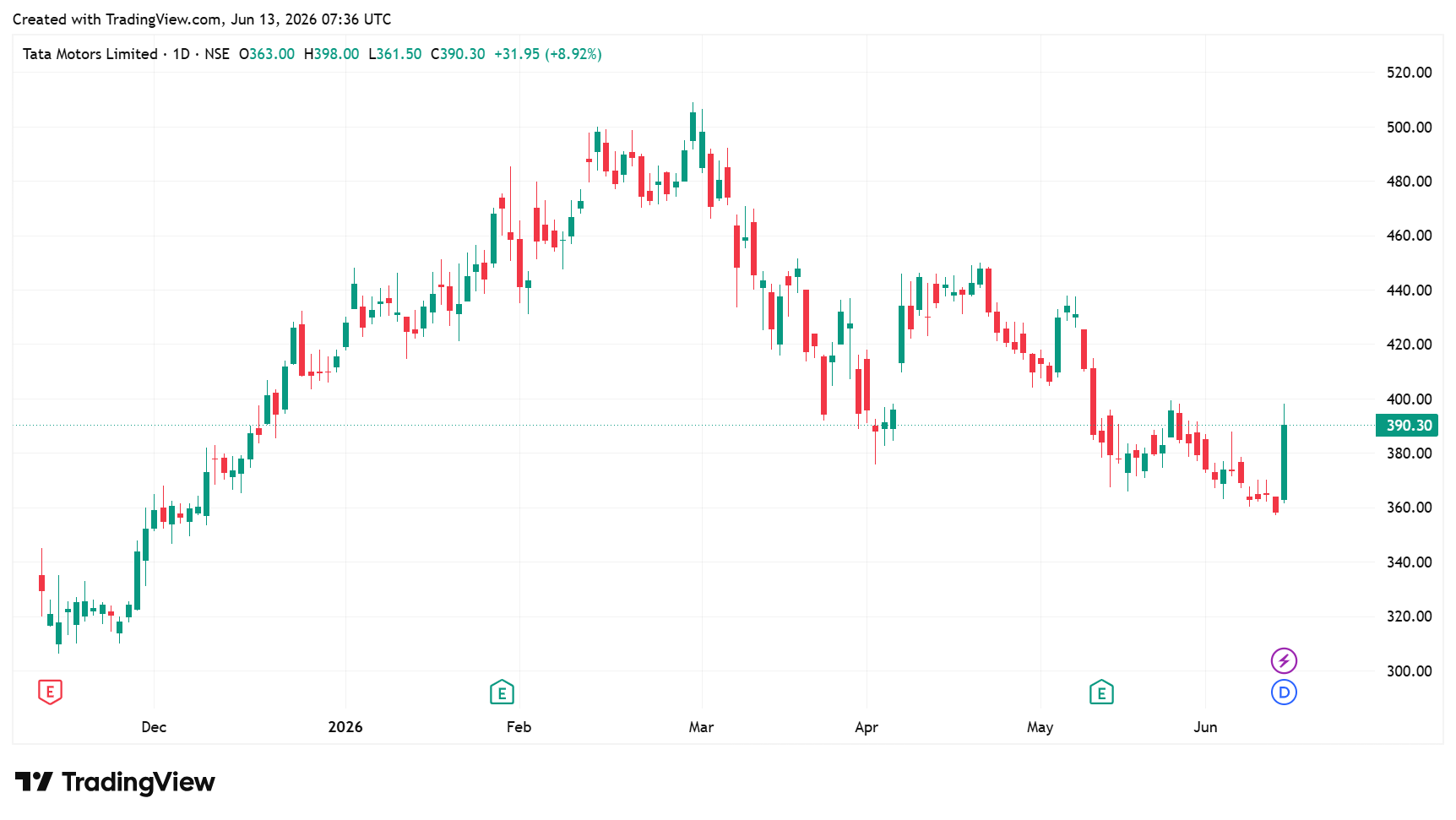
Tata Motors Share Price
#2 Hinduja Group Portfolio: The 34.1% MHCV Bus Hegemony Broke an All-Time Sales Ceiling
Ashok Leyland, part of the Hinduja Group, is a major CV manufacturer. The company operates a diversified business portfolio that spans vehicle manufacturing, electric mobility, allied vehicle components, defence, and financial services.
Niche Hegemony: Dissecting the 34.1% Market Share in MHCV Segment Buses
The company is one of the leading manufacturers of heavy-duty trucks, multi-axle vehicles, and tippers. It holds a leadership position in the MHCV bus segment with 30.2% market share. Its market share in MHCV buses stood at 34.1%. In the light CV segment, the company holds a 12.7% market share.
Small Transporter Logistics: Servicing Retail Buyers in Alternative Propulsion Channels
Ashok Leyland also produces smaller commercial transport vehicles for retail buyers and smaller transporters. In addition, it is expanding its footprint in the zero-emission and alternative propulsion space. Through its subsidiary Switch Mobility India, it manufactures electric buses and electric Light CVs.
Switch Mobility: Captive Battery Pack Plants Fueling 2-to-4-Ton Electric LCV Leadership
Switch Mobility is a market leader in both electric buses and 2-4-ton electric LCVs. The company is also investing in a battery pack manufacturing plant for captive consumption. Thus, Ashok Leyland could also benefit from replacement demand across both conventional and electric CV.
Beyond Commercial Vehicles: Monetizing Profitable Non-Vehicle Divisions
Beyond CV, Ashok Leyland operates profitable non-vehicle business divisions. The company is a key supplier of defence vehicles to the armed forces. It has a dedicated defence subsidiary with a robust pending order book of over ₹1,500 crore, with execution timelines of 1 to 3 years.
Breaking the FY19 Ceiling: Tracking the New Historic High of 2,20,437 CV Unit Sales
The CV segment achieved record growth. Revenue grew 14.1% year-on-year to ₹48,313.7 crore. The segment hit a new all-time high, with 2,20,437 CV sales in FY26, a peak last seen in FY19 (1,97,366 units). The segment profit before tax grew by 18.7% to ₹4,379.3 crore.
To drive growth, it has focused heavily on premiumization, launching high-performance models such as the HIPPO tractor and the TAURUS tipper. These are designed for sectors such as mining and infrastructure, as well as for new MAV trucks featuring improved 280 HV powertrains.
Commercial Network Scale: Analyzing the North and Northeast Geographic Expansion
To support this expanding automotive portfolio, the company added over 100 new touchpoints each in its MHCV and LCV businesses, bringing its total network to 2,104 touchpoints. Notably, over 45% of these new touchpoints were added in North and Northeast India.
Looking ahead, the management notes that demand in the CV industry remains highly resilient, driven by the replacement of aging fleets and the favorable impact of GST rate rationalizations. It is expected that sectors like mining and infrastructure will drive the highest demand in FY27, particularly benefiting the tipper and multi-axle vehicle categories.
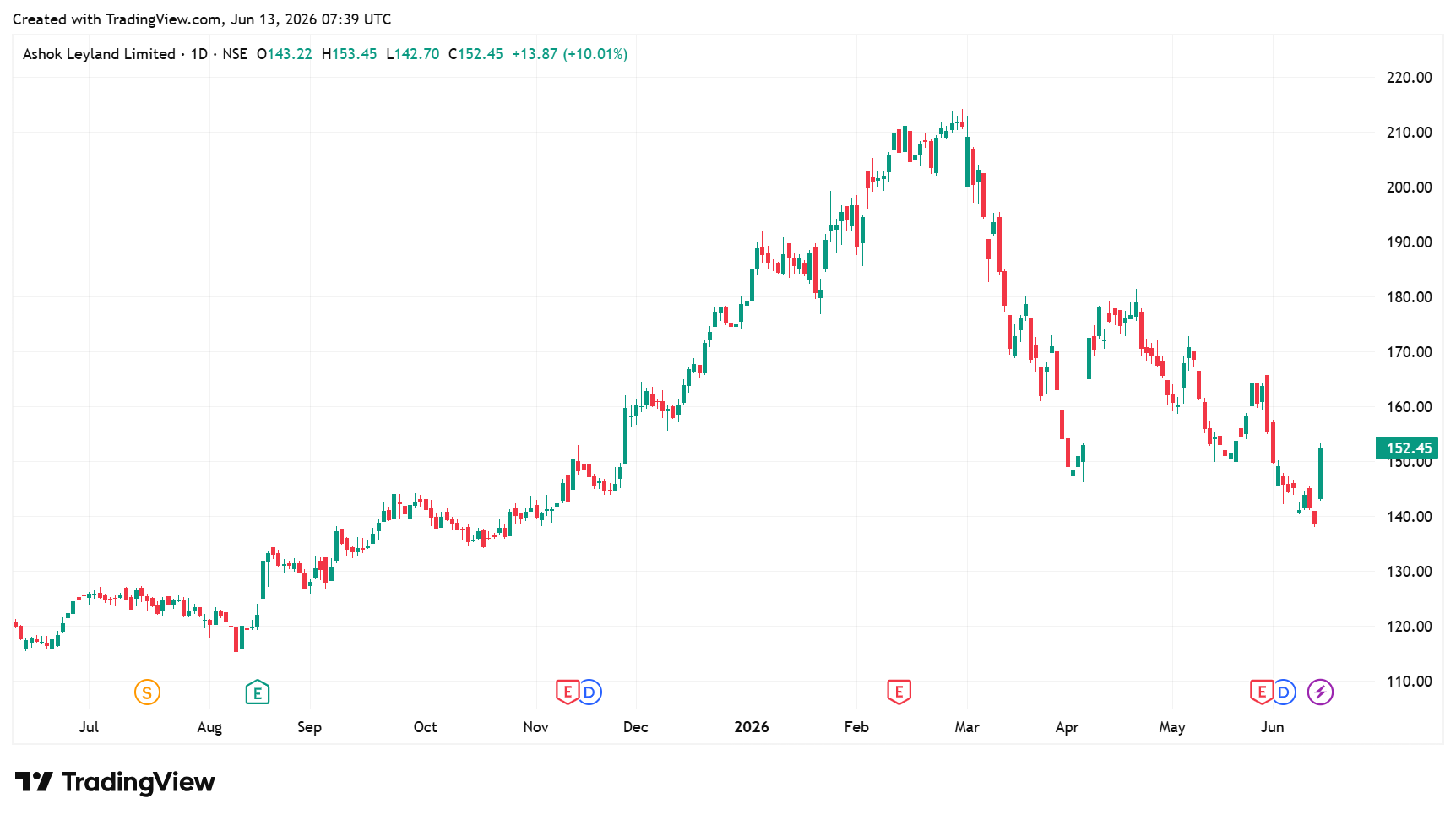
Ashok Leyland Share Price
#3 JBM Auto: The E-Bus Market Leader
JBM Auto is a globally integrated manufacturer at the forefront of the automotive and clean mobility sectors. The company’s operations are strategically structured into three core business divisions: Auto Components & Systems, EV, and Tooling business.
The Auto Components and Systems division is the company’s largest revenue contributor, generating ₹3,447.4 crore in FY26. The company manufactures chassis and suspension systems, cross-car and cross-truck beams, fuel and air tanks, exhaust systems, and skin panels.
JBM E-Verse: Capitalizing on End-to-End Electric Vehicle Ecosystems
The bigger story lies in its EV business. JBM is a market leader in the e-bus segment with a 24% market share. Its operations encompass an end-to-end electric vehicle ecosystem known as “JBM E-Verse.” Its strong presence in Delhi NCR makes it another prime beneficiary.
It uses artificial intelligence-powered predictive diagnostics and telematics to optimize the cost of ownership. JBM manufactures electric buses for diverse applications, including city transit, intercity travel, school, and staff transport.
Vertical Integration: Doubling Battery Production to 6 GWh
It operates India’s largest integrated e-bus manufacturing facility (outside of China) in Banchari, Haryana. The plant’s annual capacity is 20,000 electric buses. It has a long-term vision for a 1,00,000-e-bus rollout under the Bharat Urban Megabus Mission. It holds an order book of over 11,000 EVs, providing revenue visibility for the next 18-24 months
Unlike traditional OEMs, JBM controls the entire EV value chain. It makes lithium-ion battery packs, vehicle control units, and drivetrains in-house. Its annual battery manufacturing capacity has doubled to 6 gigawatt hours to support EVs and energy storage systems. Through this, JBM is reducing its dependence on external (primarily Chinese) battery cell suppliers.
The EV segment generated ₹2,307.4 crore in revenue in FY26, up 16.2% year-on-year from ₹1,984.9 crore in FY25. The segment profit also expanded by 16.5% to ₹251.2 crore. This growth is supported by the deployment of vehicles from its 10,000+ electric-bus order.
JBM Auto is actively diversifying its geographical footprint to tap into the $100+ billion global e-bus opportunity. In FY25, the company established its European headquarters in Frankfurt to coordinate rapid deployment across Germany, France, Italy, and the Nordics.
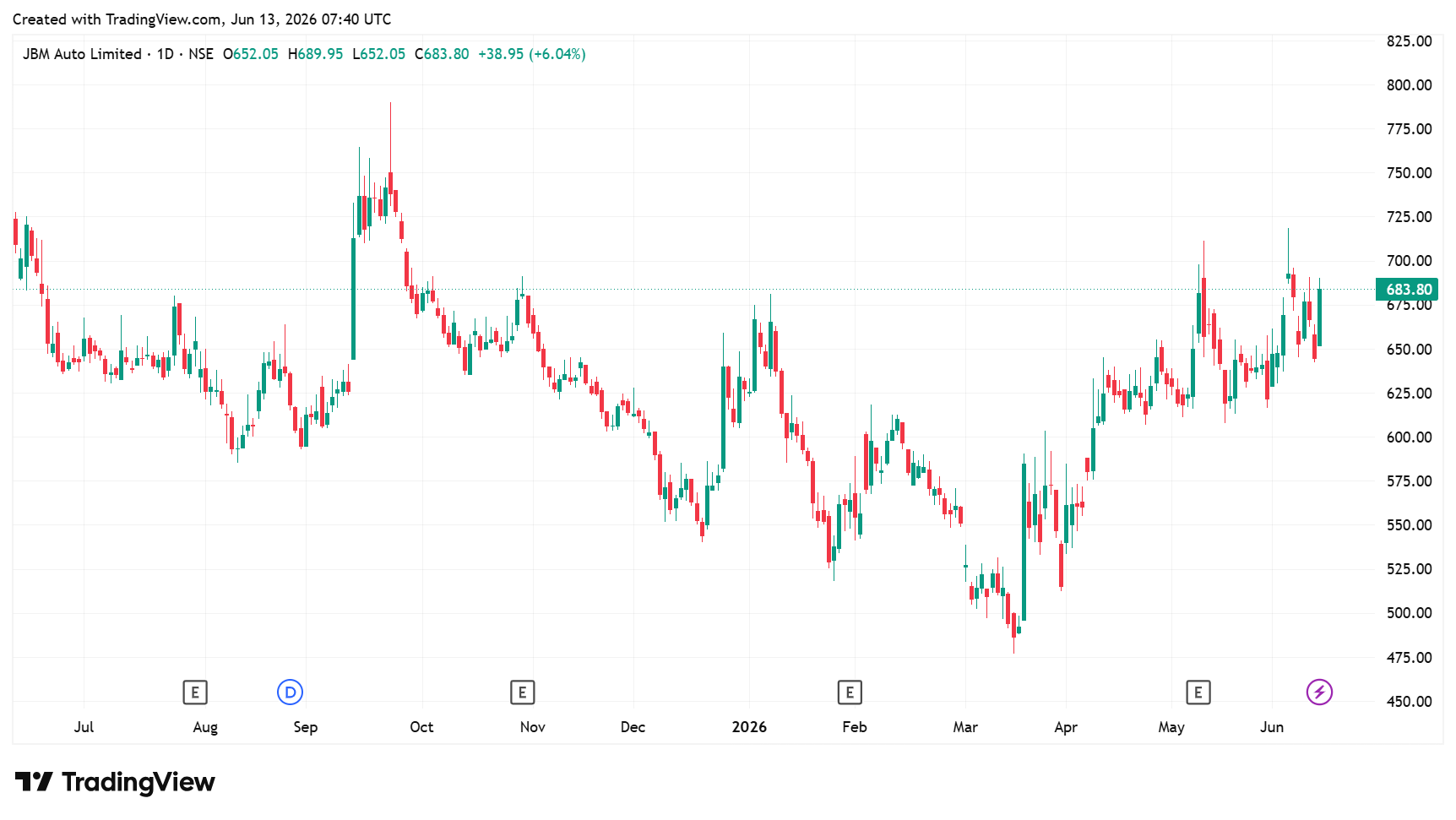
JBM Auto Share Price
Automotive Peer Comparison: Analyzing Valuations and Capital Returns
Tata Motors’ Return on Equity (ROE) is industry-leading, followed by Ashok Leyland and JBM Auto. Return on Capital Employed of Ashok Leyland is better than JBM, reflecting its better return on capital it invests. For valuation, we have used the EV/EBITDA multiple.
Accordingly, JBM Auto continues to trade at a premium to both its 10-year historical and industry median. Tata Motors’ historical multiple is unavailable due to limited trading history. However, it trades at a slight discount to the industry. Ashok Leyland also trades at a discount to both its historical and industry median levels.
The valuation gap between the two leading CV players, Tata Motors and Ashok Leyland, is also very narrow.
| Peer Comparison (X) | |||||
| Particulars | EV/EBITDA Multiple | Return Ratios | |||
| Company | 10Y Median | Industry | ROE (%) | ROCE (%) | |
| Tata Motors | 13.1 | NA | 14.3 | 43.4 | NA |
| Ashok Leyland | 12.5 | 12.8 | 14.3 | 28.1 | 13.8 |
| JBM Auto | 23.5 | 13.9 | 12.7 | 15.6 | 14.8 |
| Source: Screener.in (As of 12th June 2026) | |||||
A ₹9,585 crore government-backed replacement programme comes at a favourable time for the CV industry, which is already benefiting from replacement demand, infrastructure spending, and improving freight activity.
While Tata Motors and Ashok Leyland offer broad exposure to the ongoing CV upcycle, JBM provides a more focused play on electric mobility and fleet electrification. However, execution and adoption levels will determine the scheme’s ultimate impact.
On the risk side, the CV industry remains highly cyclical and closely tied to GDP growth. Any slowdown in economic activity could weigh on demand. Further, elevated diesel prices (if sustained) could delay fleet additions and replacement decisions in the near term.
As strong contenders, these stocks are worth keeping on your watchlist.
Disclaimer:
Note: Throughout this article, we have relied on data from http://www.Screener.in and the company’s investor presentation. Only in cases where the data was unavailable have we used an alternative, widely used, and accepted source of information.
The purpose of this article is only to share interesting charts, data points, and thought-provoking opinions. It is NOT a recommendation. If you wish to consider an investment, you are strongly advised to consult your advisor. This article is strictly for educational purposes only.
About the Author: Madhvendra has been deeply immersed in the equity markets for over seven years, combining his passion for investing with his expertise in financial writing. With a knack for simplifying complex concepts, he enjoys sharing his honest perspectives on startups, listed Indian companies, and macroeconomic trends.
A dedicated reader and storyteller, Madhvendra thrives on uncovering insights that inspire his audience to deepen their understanding of the financial world.
Disclosure: The writer and his dependents do not hold the stocks discussed in this article.
The website managers, its employee(s), and contributors/writers/authors of articles have or may have an outstanding buy or sell position or holding in the securities, options on securities or other related investments of issuers and/or companies discussed therein. The articles’ content and data interpretation are solely the personal views of the contributors/ writers/authors. Investors must make their own investment decisions based on their specific objectives, resources, and only after consulting such independent advisors as may be necessary.