What will the US Federal Reserve do with interest rates amidst the Iran war? Will the US Federal Reserve cut or raise interest rates, or will they remain steady at 3.5% to 3.75%? These remain the most pressing questions for all global market investors right now.
What does Iran’s war have to do with the US Fed’s monetary policy decision? The Iran war and the blockage of the Strait of Hormuz have led to oil prices being higher by over 50%, not counting the supply shocks that have affected the rest of the world. From under $70, before the war, oil trades around $109 today.
The scenario for the US Fed before Iran was rather comfortable. Through a series of three rate cuts in 2025, the US Fed successfully reduced inflation from its peak of around 9.1% in 2022 toward its 2% target.
Although the current inflation remains sticky around 2.4%, it was trending lower. First, tariffs, and now the Iran conflict, are causing inflation to soar, leaving little room for the US Fed to quickly slash interest rates.
On the contrary, rising oil prices are fueling speculation that the Federal Reserve may delay rate cuts and potentially raise interest rate costs this year if inflation persists.
What makes a case for status quo in the next FOMC meeting is the job market data that came in last week. If the job market is holding up and showing no signs of weakness, the US Fed may just get a reason not to hurry into rate cuts.
Last week, the U.S. Bureau of Labor Statistics announced that nonfarm payroll employment expanded by 178,000 in March, while the unemployment rate remained stable at 4.3 percent. Job growth happened in healthcare, construction, transportation, and warehousing. Employment in the federal government has continued to shrink.
The US economy created 178K jobs in March 2026, the largest since December 2024. The US unemployment rate decreased to 4.3% in March 2026, down from 4.4% in February, and below market estimates of 4.4%. However, the average hourly earnings for all employees on US private nonfarm payrolls increased by 9 cents, or 0.2%, to $37.38 in March 2026, the smallest increase in three months.
The change in payrolls for January was revised up by 34K to 160K, and the change for February was revised down by 41K to -133K. Employment combined for the two months is 7K lower than the early report.
“This year will most likely be a year of shifting labor dynamics as artificial intelligence upends the job market, especially for low-skilled roles. We continue to see healthy job opportunities for workers with experience. Average hourly earnings rose 3.5% from a year ago, giving consumers enough buying power to overcome nagging inflation. This update on the job market gives the Federal Reserve more time to wait for inflation to decelerate before taking action,” says Jeffrey Roach, Chief Economist for LPL Financial.
Why March Numbers Won’t Move The Fed
The March jobs report and the US CPI data for March may not provide much insight into the economic impact of the Iran War.
The US CPI data for March is to be released on Friday, April 10, which will reveal how much impact has been there from the rising oil prices have had on inflation. Still, more than the March data, it will be the April data on US CPI that will determine how much of the price rise has permeated into the economy because of the Iran war. Price increases take 6-8 weeks to have a noticeable impact.
The fact is, there’s not much clarity yet from the March job and inflation reports. “The Fed won’t see a call to action in the March jobs report. It would take a big surprise to pressure them to cut now or hike, for that matter. The Fed wants to get a better handle on the war’s effects on inflation and the job market before reacting. They are very likely on hold for at least the next decision or two,” says Bill Adams, Chief U.S. Economist, Fifth Third Commercial Bank.
The markets, meanwhile, continue to weigh the outcome of interest rates remaining higher for longer. “At the margin, this would make the Fed less likely to rush to cut interest rates; however, it also reinforces the idea that the job market is holding up, which should allow consumer spending to continue – a key lynchpin in this economy.
It is an environment in which corporate profits can remain elevated and can help to explain why the stock market hasn’t fallen as much as would otherwise be expected, given all of the shocks it has had to absorb,” Chris Zaccarelli, Chief Investment Officer for Northlight Asset Management.
Markets This Week
The news about potential ceasefire negotiations in the Middle East has sparked hope for the S&P 500 and Nasdaq 100 futures, which have opened flat on Monday.
The US, Iran, and regional mediators are discussing a possible 45-day truce, which could lead to a more enduring resolution. This development follows President Trump’s new deadline for Iran and threats against its infrastructure if the Strait of Hormuz remains closed. How the markets behave this week rests a lot on the outcome of the ongoing negotiations.
Final Word
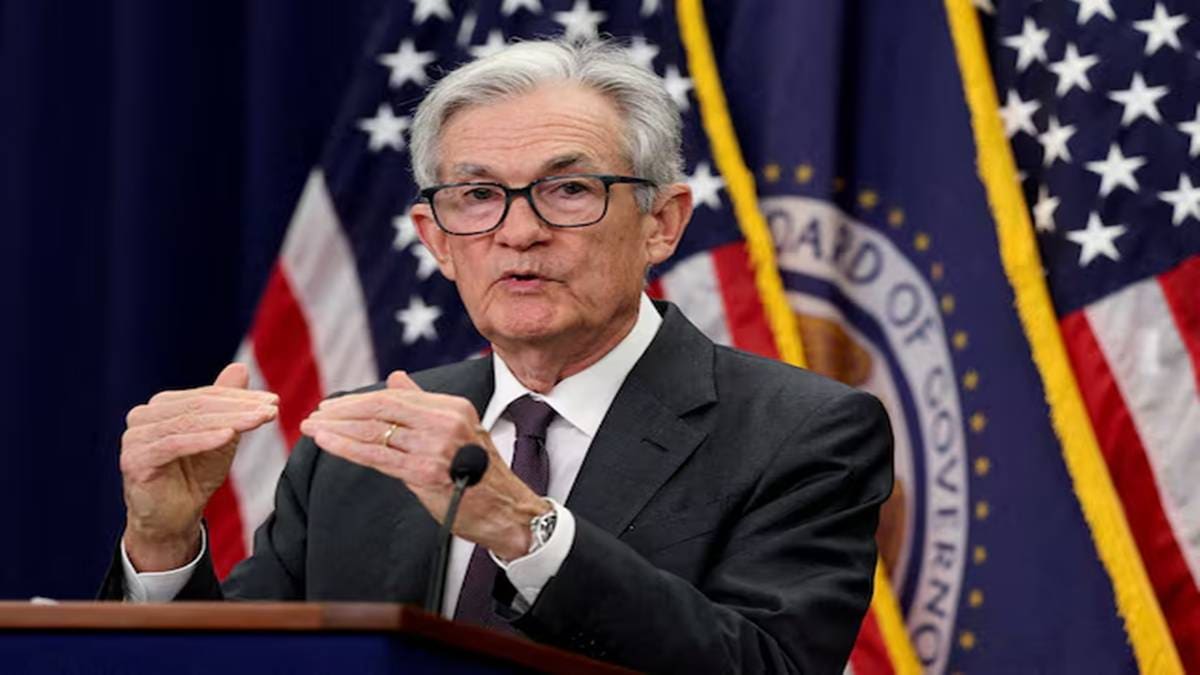
The final word on rates has to come from the Federal Reserve Chairman Jerome Powell. In his talk last week at Harvard, Powell expressed confidence in the “resilience” of the U.S. financial system and said that the Fed will take a “wait-and-see” approach to the economic impact of the Iran war.
Historically, the Fed tends not to react when oil and gas prices rise because energy supply shocks are often short-lived, so the central bank will “wait and see” how Iran-related oil prices affect the broader economy and will monitor inflation expectations “very, very carefully” before making any policy adjustments, Powell said.
However, Powell highlighted serious concerns regarding the nation’s financial health, stating that the $39 trillion debt is not the main issue. He emphasized the unsustainable spending practices of Congress, which exceed the nation’s income. Powell also stressed the need for the economy to grow sufficiently to match spending levels and warned that inaction could lead to negative consequences if not addressed soon.
According to CME Fed Watch, the probability for the US Fed, as of April 6, to keep the rate unchanged in the next FOMC meeting on April 28-29, is 99.5%.
Disclaimer: This article provides factual analysis only and is not, and should not be construed as, an offer, solicitation, or recommendation to buy or sell securities. Investors must conduct their own independent due diligence and seek advice from a SEBI-registered financial advisor.