Crude prices continue to trade above the key $100/bbl mark, and several airline stocks like IndiGo are in focus. Airfares in India could stay under pressure as airlines attempt to pass on soaring fuel costs to passengers, though the additional charges may only partly cushion the impact, according to a report by Jefferies.
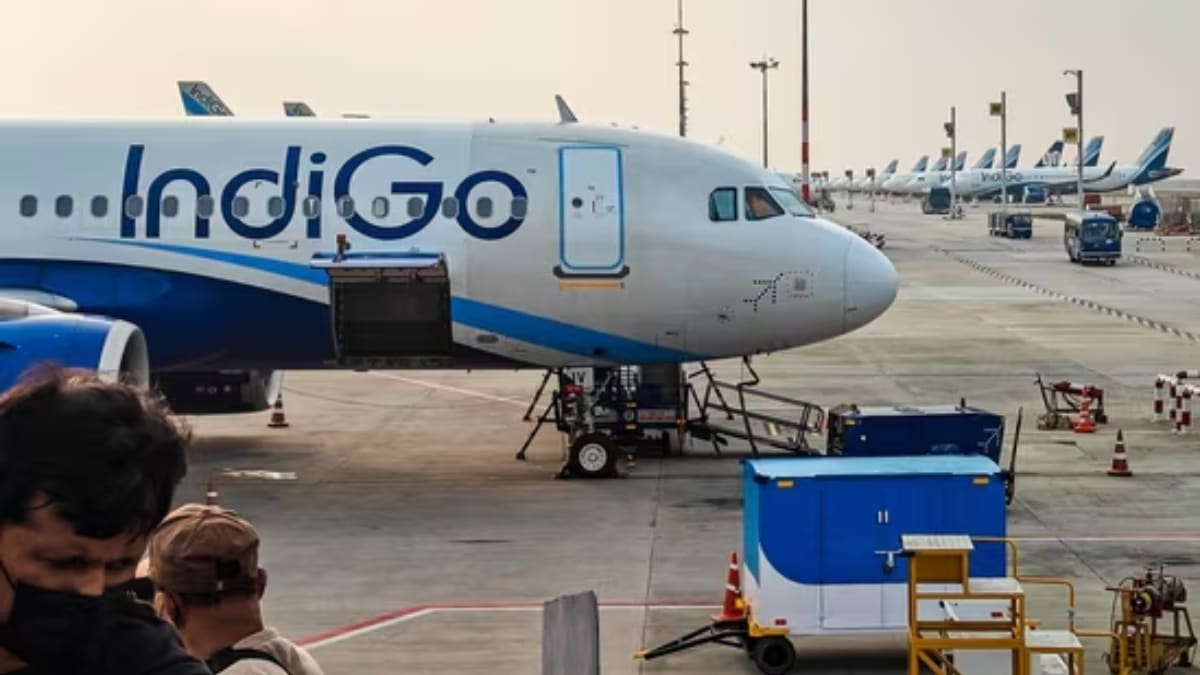
The brokerage said IndiGo has introduced a fuel surcharge of about 6–7% on airfares, a move similar to steps taken by other carriers such as Air India and Akasa, as global jet fuel prices surge.
The surcharge, effective from March 14, ranges from Rs 425 – 2,300, depending on the route. The lowest charge applies to domestic flights and services within the Indian subcontinent, while the highest applies to long-haul routes such as Europe. However, the brokerage noted that the surcharge is unlikely to fully offset the sharp increase in fuel costs currently faced by airlines.
Surcharge offers only partial relief
According to Jefferies, the additional charge could lift airline yields by roughly Rs 0.30–0.35 per seat, against an annual yield base of about Rs 5.1, offering only limited near-term relief.
Fuel inflation, the report said, is currently significantly higher than the incremental revenue generated by the surcharge, meaning airlines will still face pressure on margins. At current global jet fuel prices, IndiGo’s fuel cost per available seat kilometre (CASK) could more than double compared with the last reported level of Rs 1.5–1.55, Jefferies said.
The brokerage added that airlines are also dealing with lower aircraft utilisation and operational disruptions, which are further weighing on profitability.
Middle East tension affecting operations
IndiGo is also adjusting its operations in response to geopolitical developments in the Middle East, according to the report. The airline plans to operate 252 weekly flights to and from the region between March 16 and March 28, while gradually restoring services to some destinations.
As per the report, flights to Saudi Arabia are close to returning to normal levels with 126 weekly services, while weekly flights to Oman are also being restored. Operations to the UAE will continue with 98 weekly flights during this period, the report added.
However, services to Doha, Kuwait, Bahrain, Dammam, Fujairah, Ras Al Khaimah and Sharjah will remain suspended for now as the airline evaluates geopolitical risks and operational constraints, the report added.
Airlines seek relief on aviation taxes
With operating costs rising due to longer flight routings and higher fuel consumption, airlines have also stepped up engagement with the government, seeking relief on aviation taxes. According to the Jefferies report, aviation turbine fuel (ATF) accounts for roughly 30–40% of airline operating costs, yet continues to attract high duties in India.
Globally, airlines are responding to elevated jet fuel prices in similar ways by raising fares and introducing surcharges. With spot jet fuel prices hovering around $150 per barrel, carriers without significant fuel hedging face the risk of margin erosion unless part of the cost is passed on to passengers, the brokerage said.
Still, Jefferies cautioned that the current surcharge mechanism offsets only a fraction of the overall fuel cost increase, which basically means that the profitability of these airlines will be deeply interlinked to how quickly the fuel prices stabilise.