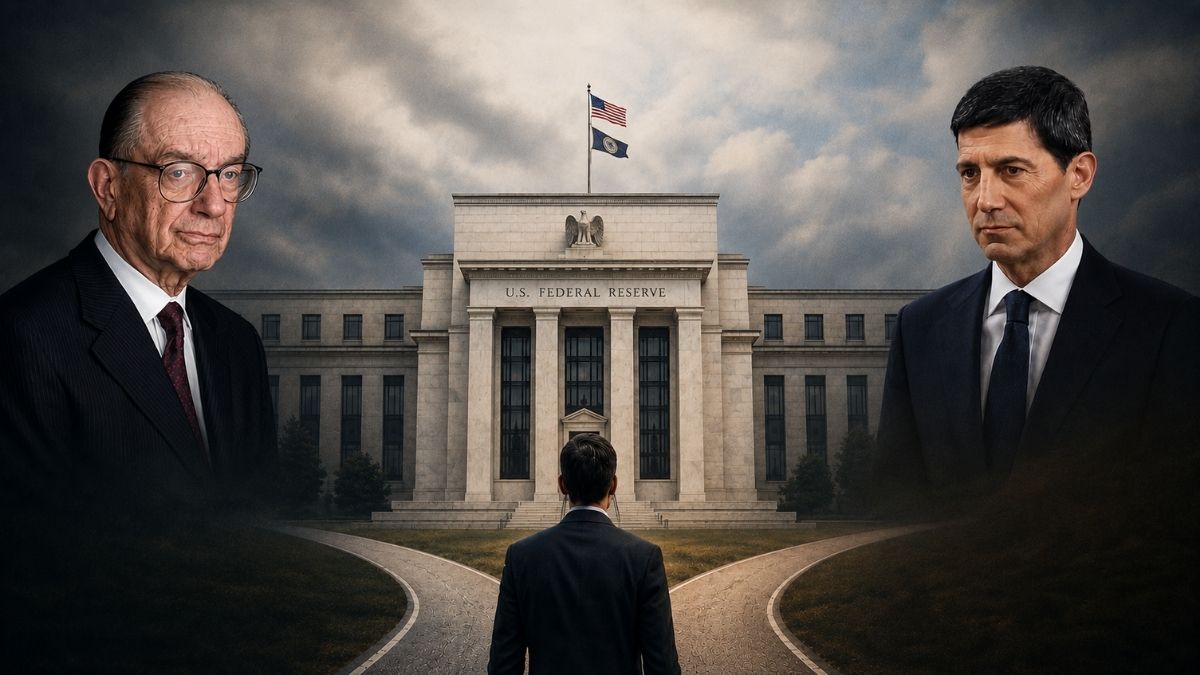
Former US Federal Reserve Chair Alan Greenspan once said: “If I seem unduly clear to you, you must have misunderstood what I said.” His approach to central banking was to speak as little as possible. And to be as vague as possible.
Over time, Federal Reserve policy has moved in the opposite direction. The next chair, Ben Bernanke, emphasized increased communication. He started the tradition of holding press conferences after each meeting. The trend towards increased communication has become a feature of central banks around the world.
This culminated in the popular policy called ‘forward guidance’. Forward guidance means that the central bank tells the public how interest rate policy is expected to evolve in the future.
The Evolution of Central Bank Signaling
Today, forward guidance is a common tool used by central banks. The RBI has been using forward guidance since 2016.
For example, the central bank may signal it will keep rates low for an extended period. This affects the behavior of investors and firms today, by increasing their incentive to borrow. Forward guidance also reduces uncertainty. If the public knows that rates will stay low, they can plan accordingly.
Warsh’s 132-Word Paradigm Shift
The new US Fed Chair Kevin Warsh held his first meeting earlier this week. The first notable break from the past was the length of the official statement. Warsh’s first statement came in at 132 words. This is down from 341 words in Powell’s last statement. Importantly, Warsh omitted forward guidance from the statement.
The current chair has been critical of forward guidance. Forward guidance traps the committee into a particular course of action. It reduces the flexibility to act as facts change. He plans to eliminate forward guidance from monetary policy. Going forward, we should expect less communication from the US central bank.
Is this a welcome policy change? Yes, it is. And here’s why.
One of the goals of forward guidance is to reduce market volatility. By communicating ahead of time what the central bank will do, the market is not surprised when it acts. Lower volatility seems like a good thing. But there’s a catch. If the central bank is influencing the market, the market ends up reflecting whatever the central bank is thinking. It becomes less reliable as a signal. Instead of responding primarily to economic fundamentals, the market is responding primarily to the central bank.
Here’s the basic idea: Until now, the central bank has been putting out of a lot of information. The market responds to both this information, as well as underlying economic fundamentals. This means that when the market moves, we don’t always know what it is responding to. It might be responding to fundamentals, or to what the Fed will do, or to some combination of the two. And there is no easy way to separate out these effects. Thus, the market is not a clean signal of underlying fundamentals.
Now, if the central bank puts out less information, the market is going to respond primarily to economic fundamentals. It becomes a cleaner signal. And this is exactly what the Fed Chair wants. Warsh wants the financial markets to be a valuable source of information. One that the central bank can use in making its decisions. He does not want the market to just reflect what the central bank is saying. And this position makes sense.
This could ultimately improve the quality of central bank decisions. Scrapping forward guidance means the market is a more reliable signal of information. It also means that the central bank is less constrained in its actions. It can respond more quickly to signs of higher inflation or slowing growth.
The Trade-off: Cleaner Signals vs. Higher Volatility
This cost of scrapping forward guidance is higher market volatility. It means that central bank decisions will be a surprise. Higher volatility is an acknowledgement of the world we live in.
We have seen this firsthand with the West Asia conflict. One day a peace deal is almost ready. The next day, bombs are dropping. Now, a longer-term peace deal is in place. But still, this could unravel. Volatility is part of life.
Investors have become accustomed to decoding the Fed’s every word. And using this to form portfolio decisions. Investors expect the Fed to step in when things go wrong. And to smooth the ride when turbulence hits. In the long run, this is a poor way to allocate capital.
Capital should flow to companies with the best potential. For this to happen, the market needs to be a clean signal of economic fundamentals. The less the central bank tries to influence markets, the better.
Disclaimer:
Note: The purpose of this article is to share interesting charts, data points and thought-provoking opinions. It is NOT a recommendation. If you wish to consider an investment, you are strongly encouraged to consult your advisor. This article is for strictly educative purposes only.
Asad Dossani is an assistant professor of finance at Colorado State University. His research covers derivatives, forecasting, monetary policy, currencies, and commodities. He has a PhD in Economics. He has previously worked as a research analyst at Equitymaster, and as a financial analyst at Deutsche Bank.