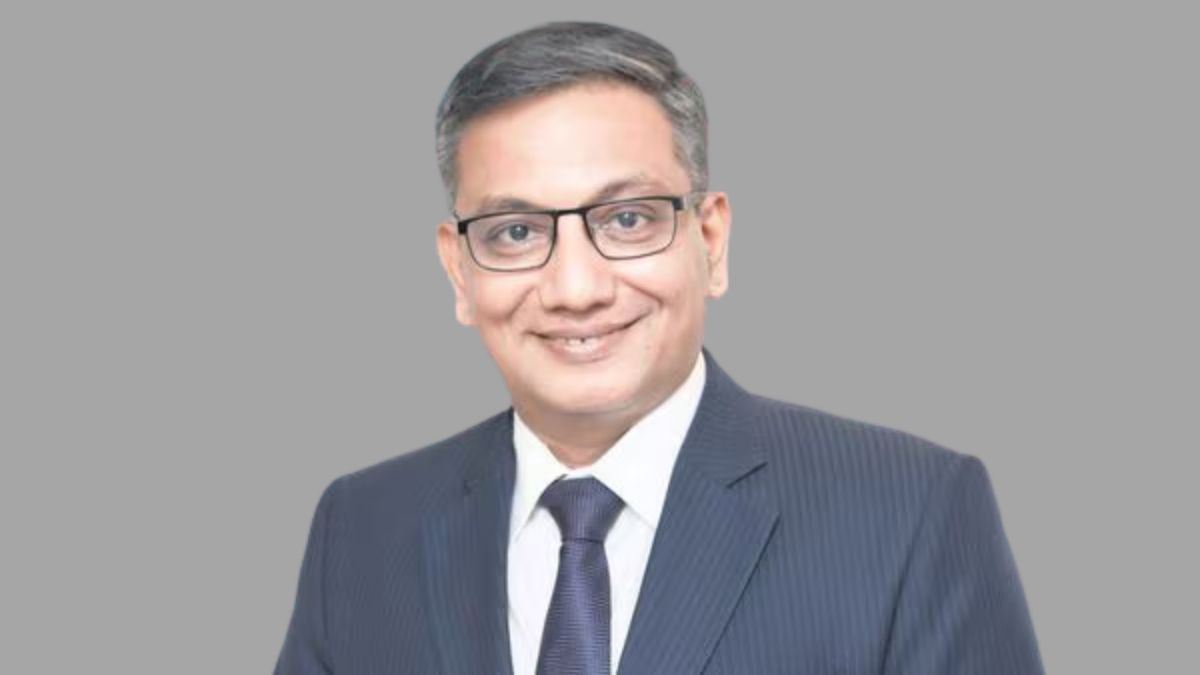
The Indian stock market is navigating a challenging phase amid the West Asia crisis and foreign portfolio investor outflows. However, Sundararaman Ramamurthy, MD & CEO, BSE, is not too perturbed. He tells Kushan Shah and Joydeep Ghosh that while geopolitical developments and volatility may influence the timing of issuances, they have not weakened the underlying IPO pipeline. Excerpts:
With two marquee IPOs — NSE and Jio Platforms — announced this week, do you see market sentiment improving?
The listing of NSE and Jio Platforms will naturally lead to higher market participation and increased liquidity across the ecosystem. Given the popularity of both companies, several investors who have been on the sidelines may enter the market.
There could also be secondary benefits, including inclusion in multiple indices and deeper derivatives activity. These listings will lead to portfolio rebalancing and improve the depth, velocity and liquidity of the market.
The IPO market has been subdued in recent months due to volatility and the West Asia crisis. Do you expect conditions to improve following the US-Iran peace developments?
It is important to distinguish between short-term market sentiment and the long-term capital formation story. While geopolitical events and periods of volatility can influence the timing of issuances, they have not altered the fundamental strength of India’s primary markets.
FY26 was a landmark year for fundraising. BSE ranked first globally in terms of the number of IPO listings, with 255 listings across the Main Board and SME platforms, raising around Rs 1.8 lakh crore. It was our strongest year in terms of both the number of issues and capital mobilisation.
The momentum continues into FY27. We currently have a strong pipeline of over 250 active applications seeking to raise nearly Rs 1.75 lakh crore, reflecting sustained confidence among entrepreneurs, issuers and investors.
The incessant selling by foreign portfolio investors has dominated discussions for quite some time. Do you see FPI flows reversing following measures to boost participation and improving geopolitical conditions?
Markets naturally move in cycles, and short-term capital flows should not be extrapolated into long-term conclusions. FPIs have historically adjusted allocations based on global events, valuations and geopolitical developments, and such movements are part of normal market behaviour.
What is structurally different today is the strength of domestic participation. Domestic institutional investors, supported by steady retail inflows, have emerged as a strong stabilising force.
India continues to remain an attractive long-term investment destination, supported by strong macro fundamentals, favourable demographics and expanding investor participation.
How do you see the impact of the STT hike and RBI regulations on lending by banks to market participants on derivatives market liquidity?
The increase in STT on derivatives appears aimed at encouraging greater alignment towards long-term investing and capital formation, while RBI’s measures seek to ensure that funding and market-making activities operate within a stronger risk-management framework.
Both measures are intended to enhance the resilience and sustainability of the market ecosystem.
India’s derivatives market has matured significantly, with participation from retail investors, domestic institutions, foreign investors and proprietary traders. This diversity provides depth and resilience, allowing the market to adapt to regulatory changes.
While there may be some short-term recalibration, it would be premature to draw conclusions on the long-term impact on liquidity or trading activity. Markets continuously adapt to changes in regulation, pricing and participant behaviour.
How will the introduction of longer-term derivative contracts, as proposed by the regulator, impact the market?
A longer-term approach in derivatives is important. Longer expiry contracts can allow investors’ views and strategies to play out over time at a lower cost.
It will also diversify participation by attracting larger investors. This can bring greater stability not only to the derivatives market but also to the underlying market.
You have raised concerns about pricing mechanisms between exchanges. Has price transparency improved?
An investor should ideally be exchange agnostic and receive the best available price. However, some approvals are still pending, including those that could enable a common contract note for the same order across exchanges for large institutional investors.
Allowing investors to access the best prices across exchanges would improve liquidity for both platforms.
Greater participation from high-frequency traders and algorithmic trading can also increase volumes and liquidity beyond the top 50 or 100 stocks. This can enable market participants to provide quotes across exchanges.
We continue to advocate an exchange-agnostic market and hope this becomes a reality in the near future.
Should retail investors have minimum qualification criteria before entering futures and options trading?
Investors participating in financial markets should understand the risks involved and assess their own risk tolerance. Investor education can reduce knowledge gaps, but it is equally important for individuals to understand the products they trade.
However, education alone cannot eliminate the impact of unrealistic expectations and sheer greed. Investors should remain cautious, avoid suspiciously large claims and invest only in products they understand.
What steps is BSE taking to strengthen investor protection?
Investor protection works best when supported by robust regulation, market integrity, financial literacy and informed participation.
SEBI’s collaborative approach, involving regulators, market infrastructure institutions, intermediaries and industry participants, has significantly strengthened investor confidence.
Initiatives such as Project Jagrook, Project Sudarshan and Project Shiksha focus on improving financial literacy, investor awareness and responsible investing.
Measures such as validated UPI payment mechanisms, stronger risk disclosures and tools like SEBI Check have helped create a safer and more transparent investment environment.
At BSE, investor education and trust-building remain central priorities. Every year, we conduct 12,000-15,000 investor awareness programmes, reaching nearly 10 lakh participants across the country. Our digital outreach initiatives engage over 45 lakh investors.
We have also launched Nivesh Mitra, a paper-trading platform that allows investors to gain practical market experience using historical data before committing real capital.
Our belief is simple: investors should understand what they trade and trade what they understand. Strong investor protection is ultimately about empowering investors with the knowledge, tools and confidence to participate responsibly in capital markets.