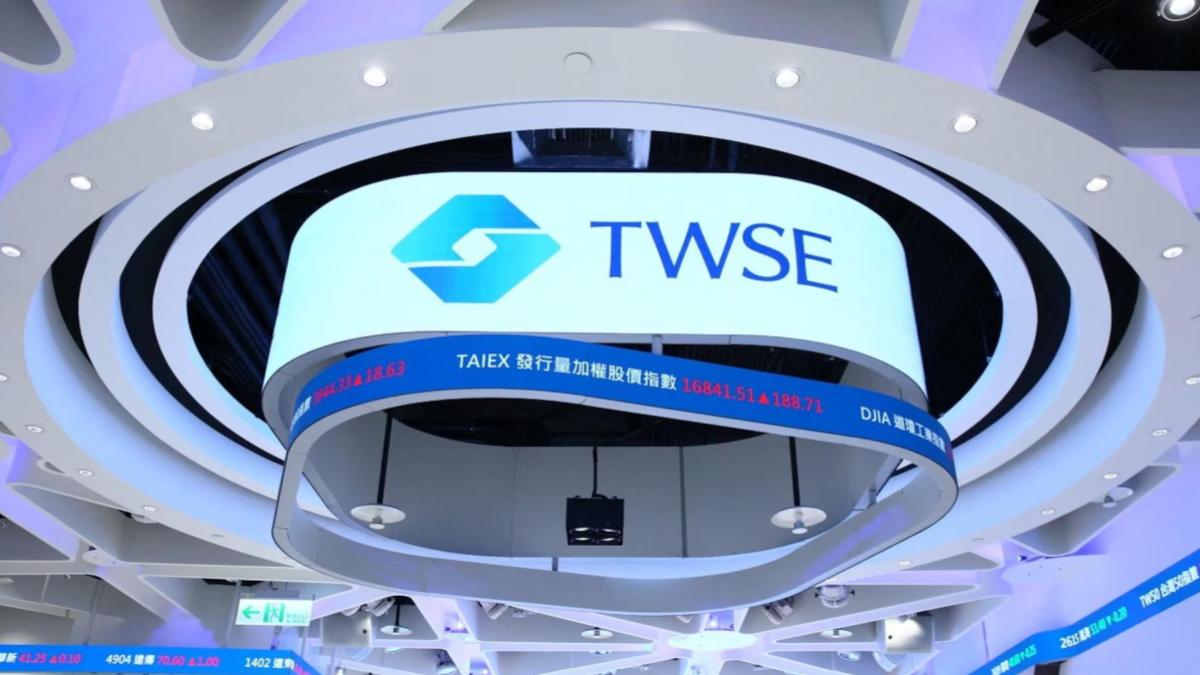
Taiwan stock market has overtaken India to become the world’s fifth-largest equity market by capitalisation. As of May 25, Taiwan’s total market value stood at about $4.95 trillion, narrowly ahead of India’s $4.92 trillion, according to data compiled by Bloomberg. The shift showed how investor flows are increasingly gravitating toward markets that sit at the heart of the AI hardware supply chain.
Taiwan’s rise has been powered overwhelmingly by a single company — Taiwan Semiconductor Manufacturing Co (TSMC). The world’s largest contract chipmaker now accounts for nearly 42% of Taiwan’s benchmark equity index TIAEX.
What led to the surge in TIAEX?
TSMC shares have surged 49% so far this year, fuelled by relentless demand for its advanced chips from global technology giants building AI data centres and related infrastructure. The company’s dominant role in producing cutting-edge semiconductors has turned it into a central beneficiary of the AI boom, pulling the broader Taiwanese market higher with it.
Policy moves at home have also worked in TSMC’s favour. According to the Bloomberg report, Taiwan’s financial regulator recently raised the ceiling on how much domestic equity funds can invest in a single stock. Funds that invest solely in Taiwanese shares may now allocate up to 25% of their net assets to any company whose index weight exceeds 10%, up from the previous limit of 10%.
At present, TSMC is the only stock that qualifies under this criterion, effectively allowing local funds to concentrate even more capital in the chipmaker and amplifying its impact on the overall market.
SEBI chief weighs-in
Securities and Exchange Board of India (SEBI) Chairman Tuhin Kanta Pandey played down the symbolic setback, stressing that India’s market structure is fundamentally different from Taiwan’s. “India is a very, very diversified market. In Taiwan, there are concentrated stocks. There are very few. There are specific companies. The TSMC and others which are very, very critical to the electronic supply chain, they are getting a lot more flows and leading to their higher valuations,” Pandey said at an event in Mumbai on May 26.
“This is something which goes on in a capital market,” he added, suggesting that such shifts reflect cyclical investor preferences rather than structural weakness.
Pandey noted that the ongoing global rally in AI and semiconductor stocks is reshaping equity market rankings across countries. “Some of the favourite investing companies at this moment are those related to AI directly or indirectly,” he said on the sidelines of the Mumbai event.
“Either they are doing investments around AI or they are doing investments around chips and memories and other kinds of electronics which are used for AI hard infrastructure.” As valuations in such pockets soar, market capitalisations in jurisdictions hosting these companies naturally rise on account of “exceptional investor interest”, he added.
India vs Taiwan’s size of economy
Taiwan’s new status places it behind only the US, mainland China, Japan and Hong Kong in terms of equity market size. Yet the island’s economic footprint remains far smaller than India’s.
According to International Monetary Fund projections, India’s economy is estimated at around $4.15 trillion, while Taiwan’s stands at roughly $977 billion.
For India, the episode reinforces both the opportunities and challenges ahead. The country has the advantage of a large, diversified and fast-growing economy but lags behind East Asian peers in high-end semiconductor manufacturing.
While Taiwan’s ascent has been built on a concentrated bet on one world-leading chipmaker, India’s policymakers are likely to see the latest shift as another reminder of the need to deepen its own presence in the electronics and semiconductor value chain if it wants its market size to keep pace with its economic ambitions.
Disclaimer: This article provides factual analysis only and is not, and should not be construed as, an offer, solicitation, or recommendation to buy or sell securities. Investors must conduct their own independent due diligence and seek advice from a registered financial advisor in the respective jurisdiction.